What Should You Know About Steel Plate Bending and Forming Before Ordering?
Steel Plate bending and forming is one of the most common fabrication processes for structural steel projects. Many purchasing teams encounter unexpected production issues, including cracking, spring-back, and dimensional deviation, after material arrival. These problems often stem from overlooking the bending performance of selected steel grades at the inquiry stage. Material hardness directly governs deformation performance, and buyers need to clarify forming-related parameters prior to order placement to avoid costly rework, production delays and material waste.
Hardness is the core factor affecting steel plate bending performance. Higher-hardness steel delivers better resistance against deformation. While this brings higher structural strength, it also imposes stricter limits on bending and forming work. High-strength thick steel plates cannot follow the same bending parameters used for thin galvanized sheets. If fabricators apply standard bending radii for ordinary sheets onto high-hardness plates, edge cracking, micro-fractures and hidden structural failures will easily occur.
Key Parameters for Simple Bending Tasks
For straightforward single-angle bending jobs, customers shall supply complete technical data to steel suppliers. Critical information includes target bend angle, inner bending radius, actual plate thickness and grain-aligned forming direction. The forming direction relative to the steel rolling grain deserves extra attention: bending across the rolling grain will greatly raise the risk of plate cracking.
| Parameter | Description & Reminder |
| Bend Angle | Final required angle after spring-back compensation; specify over-bending allowance if needed |
| Inner Bending Radius | Minimum inner radius is restricted by steel grade, hardness and plate thickness; cannot copy data of galvanized sheets |
| Plate Thickness | Actual finished thickness, not nominal thickness |
| Forming Direction | Bending parallel or perpendicular to steel rolling grain; perpendicular bending requires larger inner radius |
Complex Forming Requirements: Drawings Are Essential for Accurate Quotation
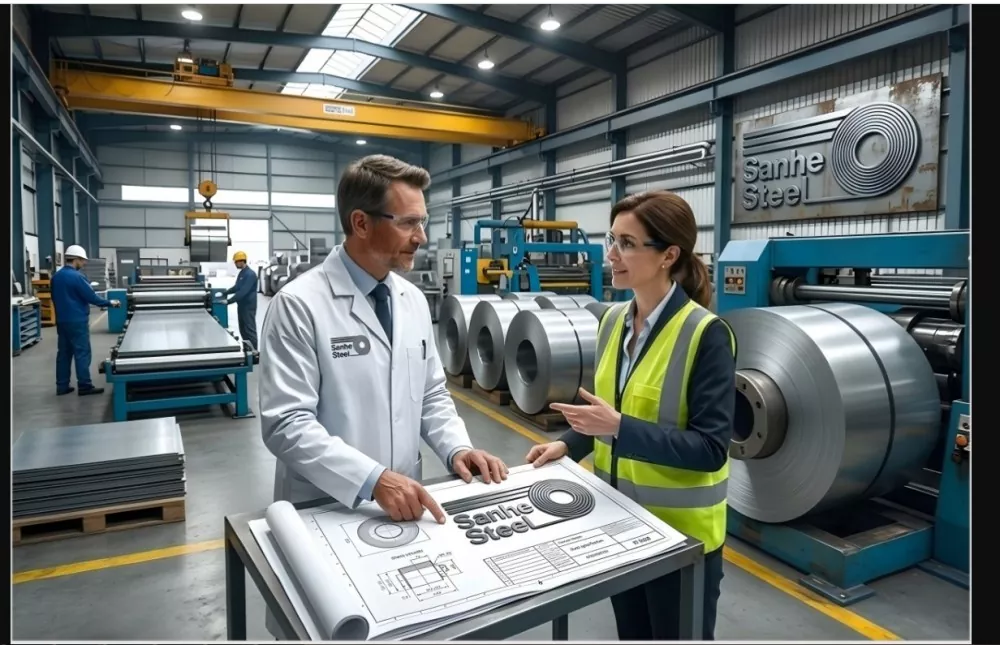
When projects involve multi-step bending, deep forming or irregular shaped components, simple parameter lists are insufficient. Customers are strongly advised to submit finished-part drawings at the quotation phase.
With drawings in hand, the steel manufacturer can evaluate comprehensively:
Whether the selected steel grade matches the complex forming process
Adjust suggested minimum bending radius for thick / high-strength plates
Forecast spring-back value for dimension correction
Flag potential cracking risk points and propose alternative material suggestions
Without drawing review, buyers risk ordering steel that cannot be successfully formed, resulting in returned goods, schedule delays and extra project expenditure.
Related News
- How Can Galvanized Floor Diamond Plate Improve Safety, Durability, and Long-Term Project Performance
- Why Is Hot Rolled Checkered Steel Plate for Platforms a Smart Choice for Safe and Durable Industrial Flooring
- What Makes SGCC Hot Dip Galvanized Steel Sheet a Reliable Choice for Corrosion-Resistant Industrial Applications
- How Can Wear Resistant Hot Rolled Heavy Steel Plate Structural Improve Service Life in Demanding Industrial Applications
- Why Is Wear Resistant Hot Rolled Heavy Steel Plate Structural Essential for Demanding Industrial Applications
- How Does Cold Rolled Steel Plate Improve Manufacturing Performance?
Leave me a message