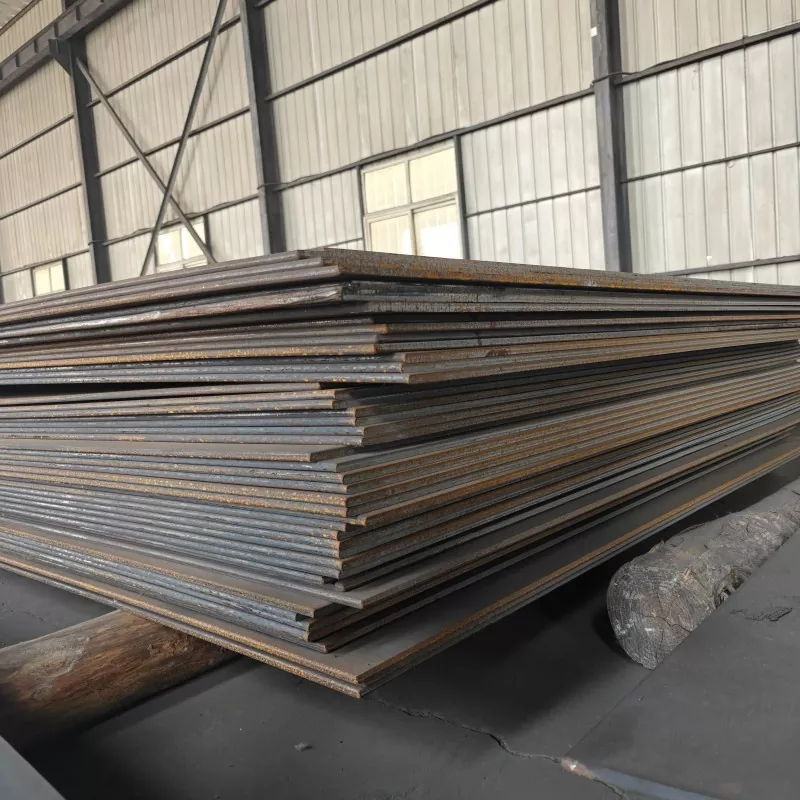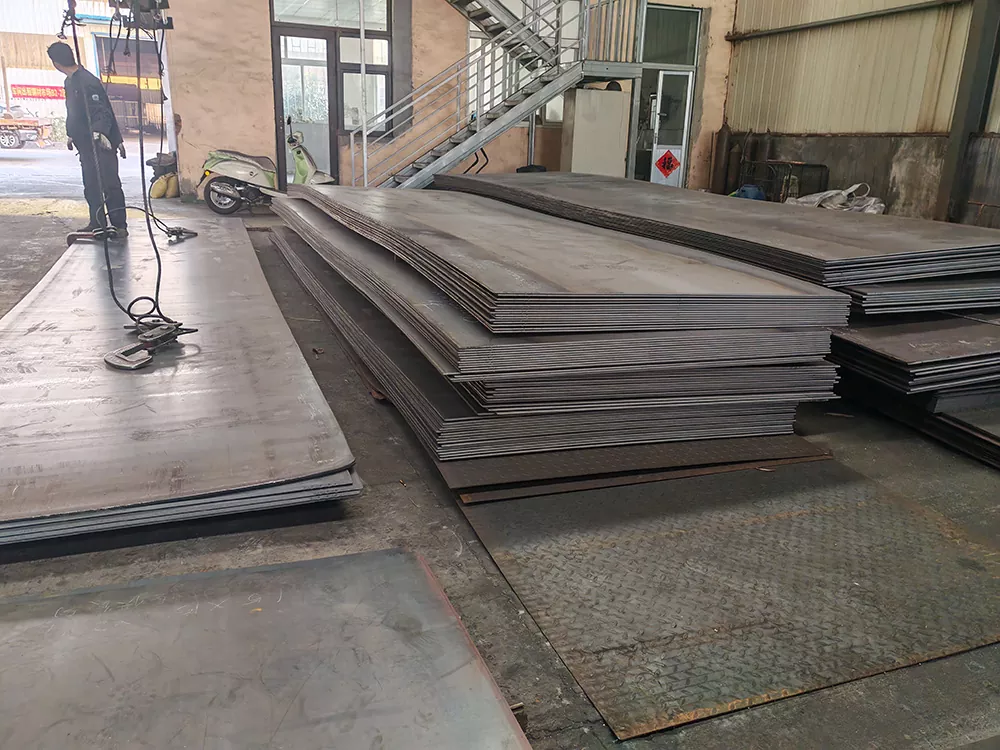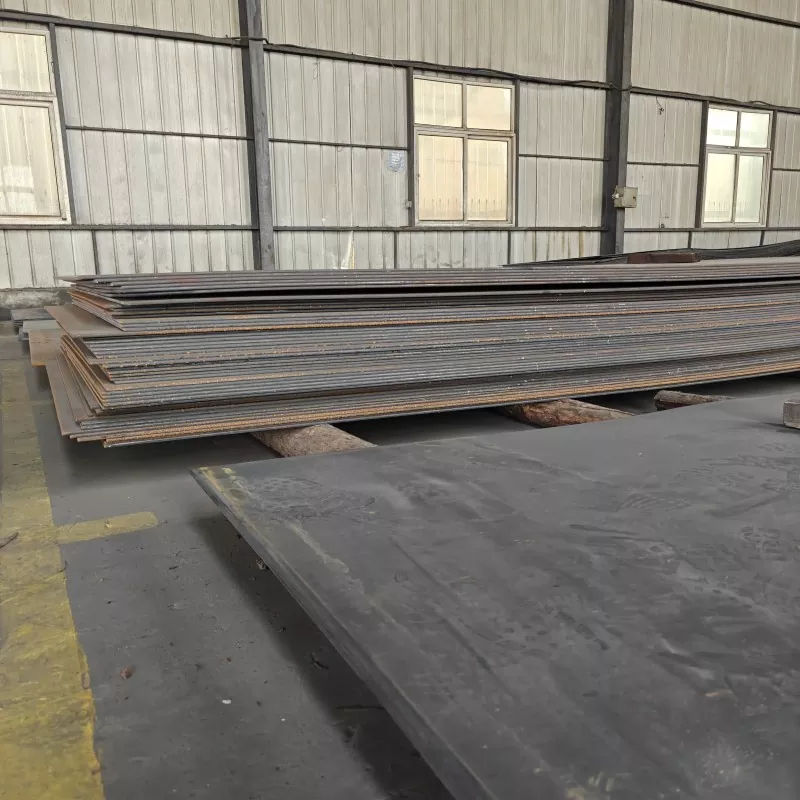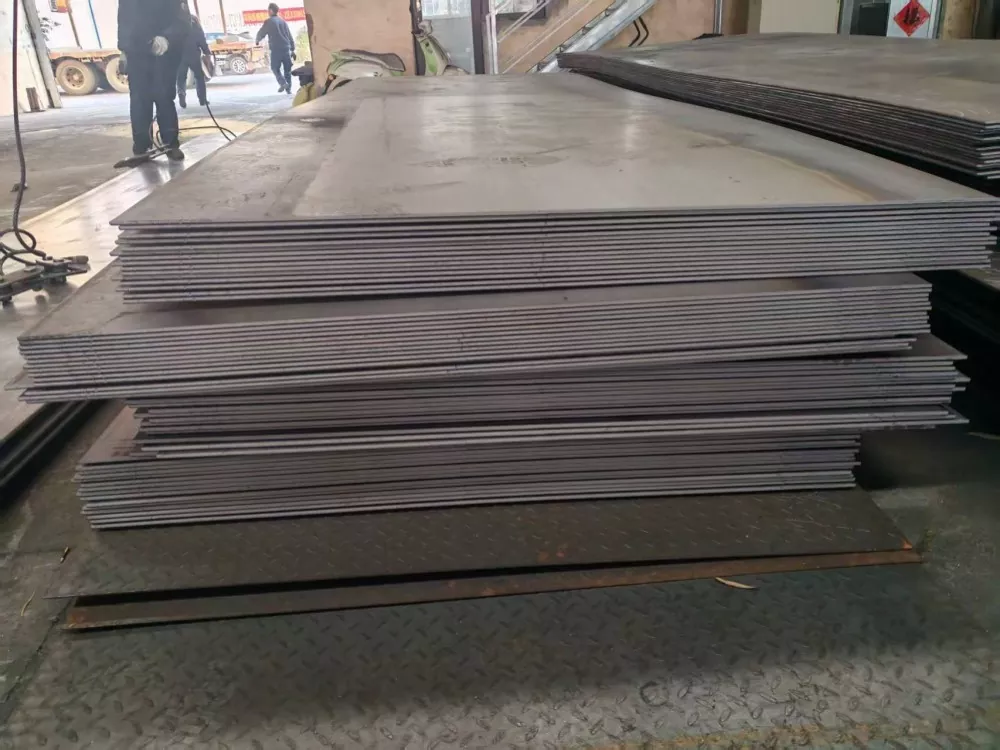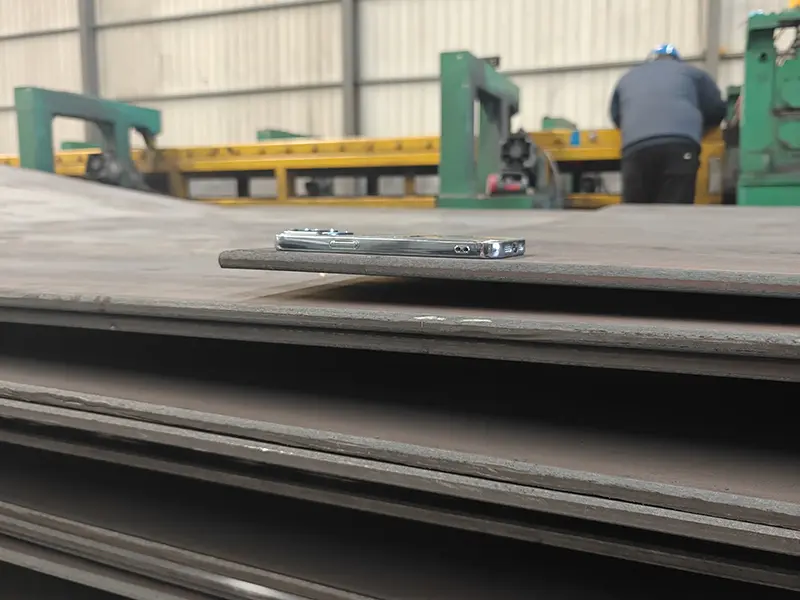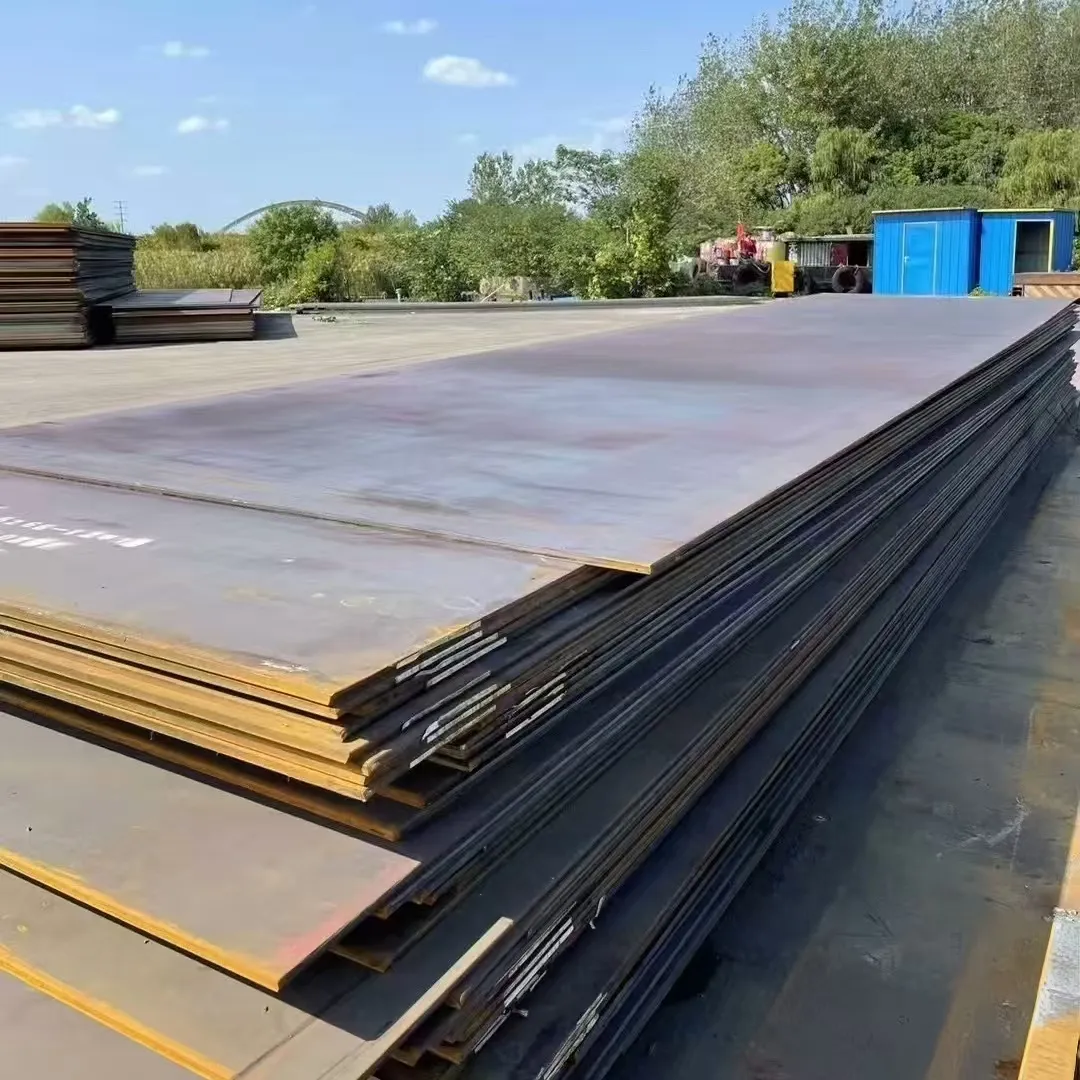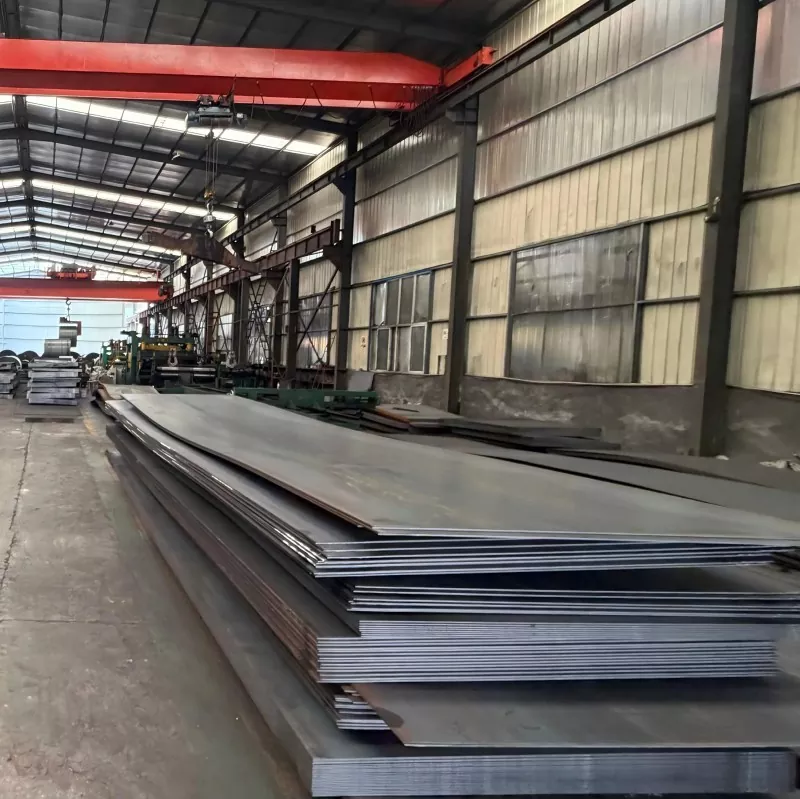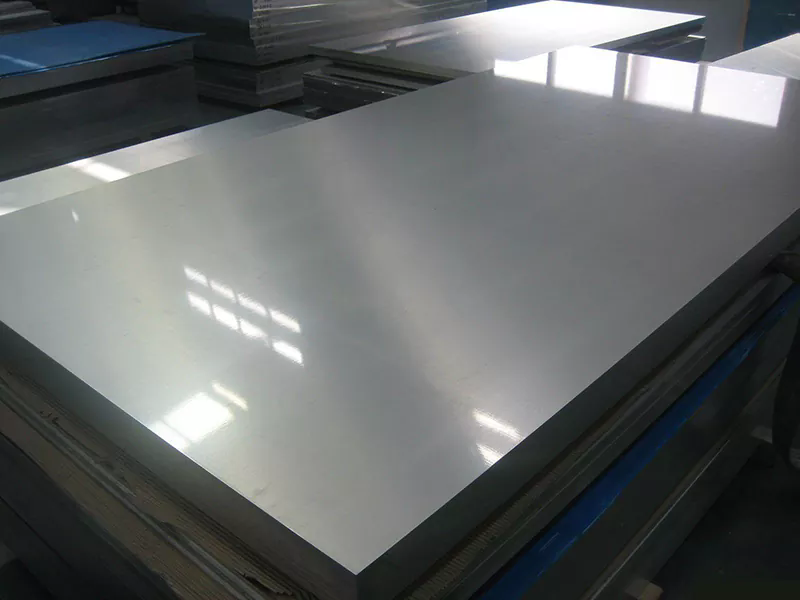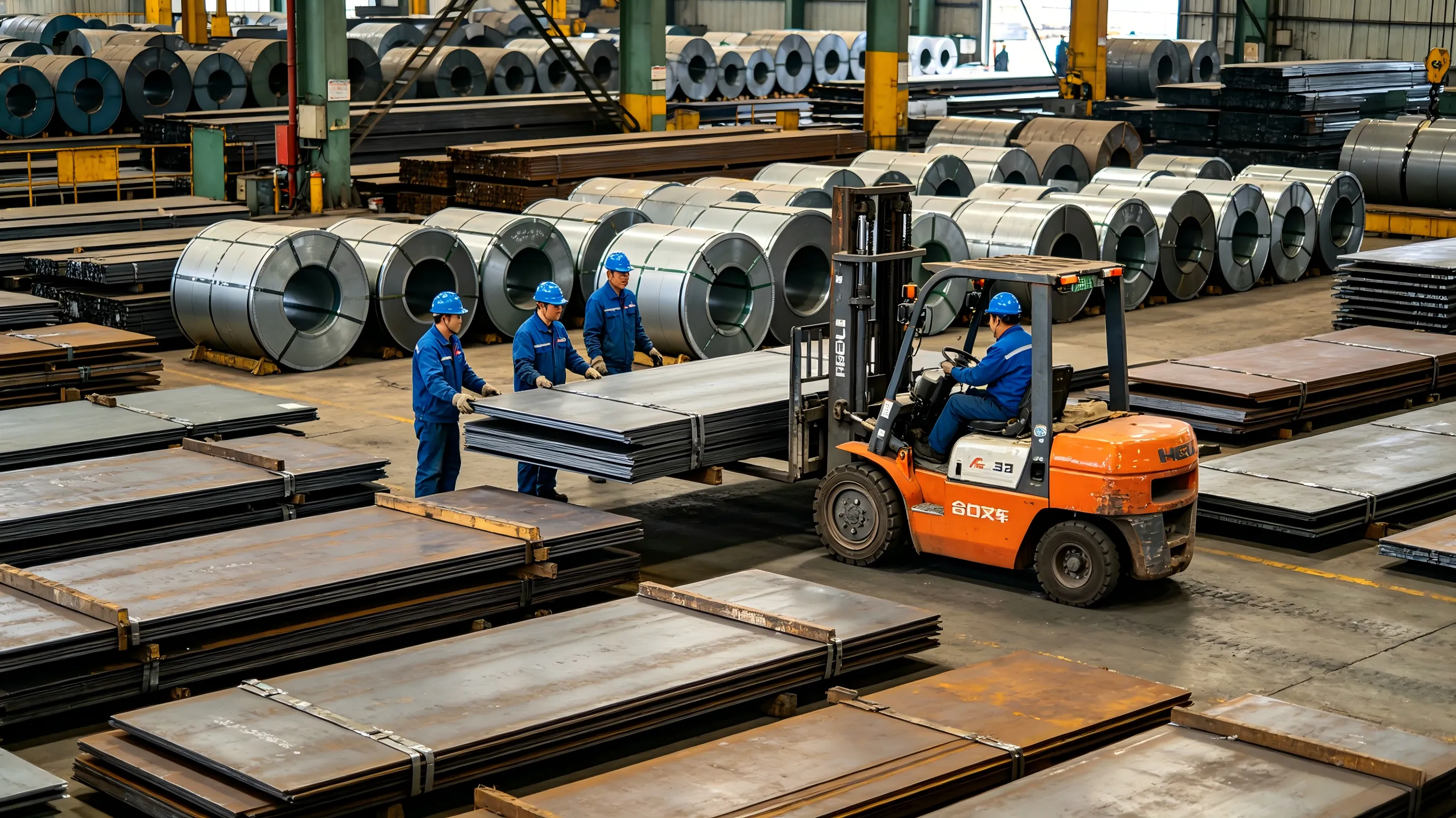
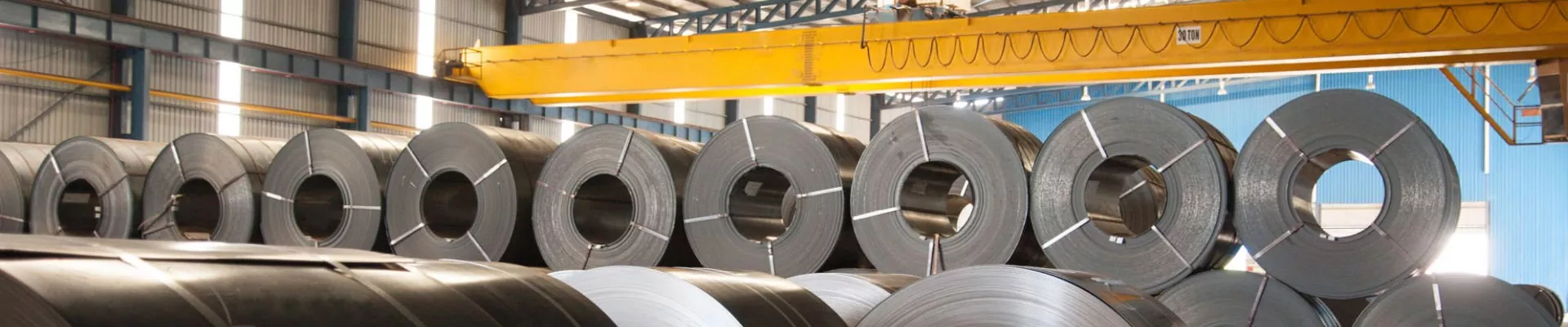
When industrial platforms must balance slip resistance, structural strength, fabrication flexibility, and long service life, Sanhe provides Hot Rolled Checkered Steel Plate for Platforms as a practical solution for walkways, maintenance platforms, stair landings, loading areas, and equipment access floors. Available in Q235B, Q355B, SS400, and A36 grades, the plate can be supplied in 3–12 mm standard thicknesses with customized dimensions and surface treatments.
Hot-rolled checkered steel plate combines a structural steel base with an integral raised pattern that improves surface traction while supporting industrial loads. Unlike separately attached anti-slip materials, the raised pattern is formed directly during the hot-rolling process. This construction makes the plate suitable for environments where workers, tools, machinery, carts, or vehicles regularly move across steel surfaces. Sanhe supports standard and customized sizes, CNC cutting, leveling, and surface treatments such as painting, oiling, and hot-dip galvanizing, helping engineering buyers obtain platform materials that are ready for fabrication or installation.
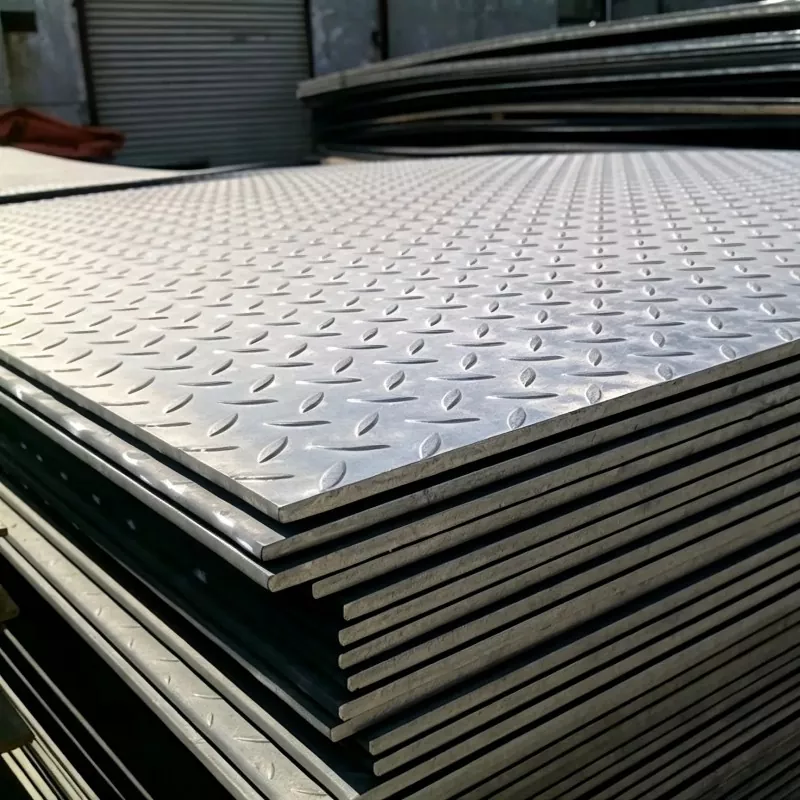
Table of Contents
- What Is Hot Rolled Checkered Steel Plate for Platforms?
- What Are the Main Advantages of Checkered Steel Plate?
- How Should You Select the Right Specification?
- Where Is Checkered Steel Plate Used?
- How Is Hot Rolled Checkered Steel Plate Manufactured?
- What Quality Factors Should Buyers Check?
- How Does Checkered Plate Compare With Plain Steel Plate?
- Frequently Asked Questions
- How Can You Get the Right Platform Steel Plate?
What Is Hot Rolled Checkered Steel Plate for Platforms?
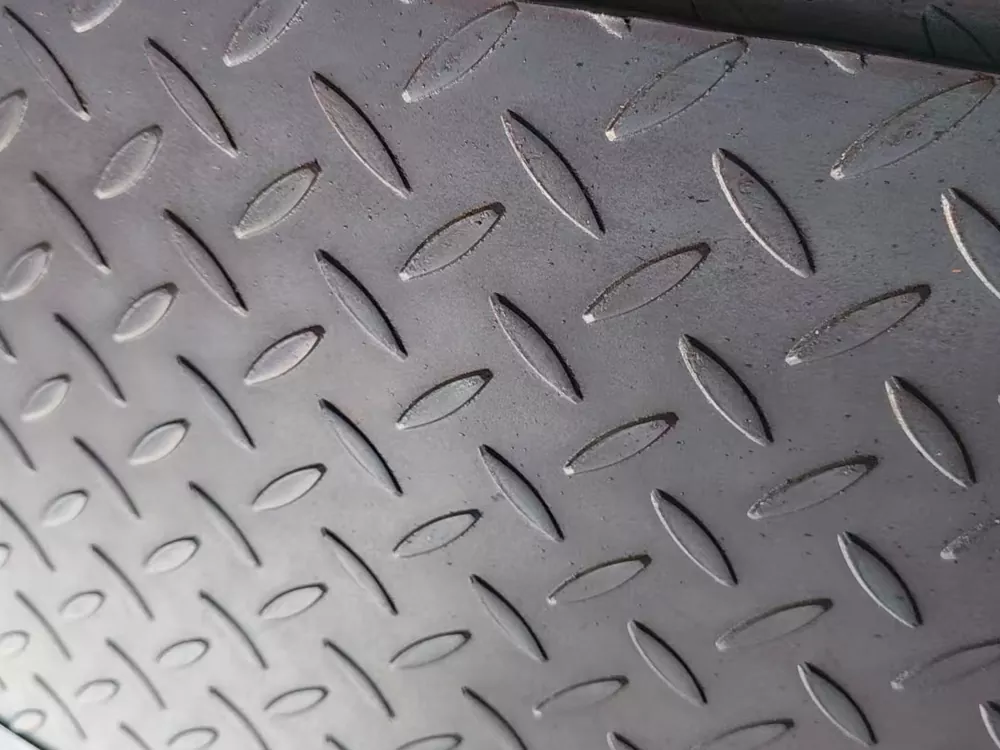
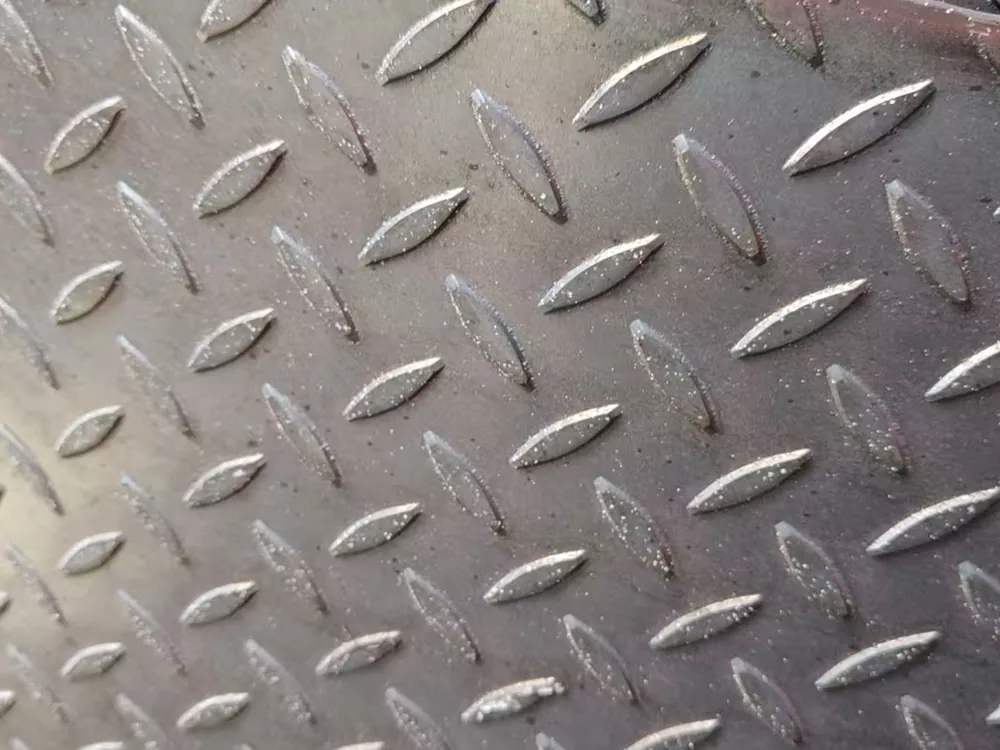
Hot rolled checkered steel plate is a steel plate manufactured with raised patterns on one surface. Common patterns include diamond, lentil, and round-bean designs. During production, the pattern is rolled directly into the hot steel rather than being attached afterward. This integral structure is one of the main reasons checkered plate is widely considered for industrial flooring and access applications.
For platform construction, the raised surface provides additional contact between footwear and the steel floor. It can also help reduce the accumulation of water or oil directly beneath a shoe compared with a completely flat steel surface. The result is a practical combination of structural steel and an anti-slip working surface.
For projects requiring additional corrosion protection, surface options such as hot-dip galvanizing, painting, or protective oiling can be selected according to the installation environment.
What Are the Main Advantages of Checkered Steel Plate?
Integral Anti-Slip Pattern
The raised pattern is formed as part of the plate during rolling. It does not depend on adhesive layers or separately welded anti-slip components. This makes the surface suitable for platforms that experience regular pedestrian traffic, equipment movement, or maintenance operations.
Structural Strength
Steel grades such as Q235B and Q355B provide different strength levels for different engineering requirements. Q235B is commonly selected for general-purpose platforms, while Q355B can be considered where higher structural strength and heavier loading requirements need to be addressed.
Fabrication Flexibility
Checkered plate can be cut, sheared, welded, bent, drilled, leveled, painted, or galvanized using conventional steel fabrication processes. CNC processing can further reduce manual cutting work and improve dimensional consistency for project-specific platform components.
Wide Application Range
The material can be used for factory walkways, stair treads, maintenance platforms, loading areas, vehicle decks, mezzanine floors, and machine-access structures. This versatility allows engineering teams to standardize platform flooring across different areas of an industrial facility.
How Should You Select the Right Specification?
Choosing the right plate requires more than selecting a thickness. Engineers should consider the expected load, support spacing, span, working environment, corrosion exposure, fabrication method, and applicable project standards.
| Parameter | Typical Range / Option | Selection Consideration |
|---|---|---|
| Steel Grade | Q235B, Q355B, SS400, A36 | Match strength and project requirements |
| Thickness | 3–12 mm standard | Determine according to load, span, and support structure |
| Width | 1,000–2,000 mm | Select according to platform layout and cutting plan |
| Length | 1,000–12,000 mm or customized | Consider transportation and installation dimensions |
| Pattern | Diamond, lentil, round bean | Select according to traction and application requirements |
| Pattern Height | Approx. 0.5–1.2 mm | Higher patterns can provide stronger surface engagement |
| Surface Treatment | Black, oiled, painted, galvanized | Match indoor, outdoor, humid, or corrosive conditions |
For platform projects, thickness should not be selected solely from a standard product chart. A proper engineering assessment should account for distributed loads, concentrated loads, support spacing, deflection limits, and local safety requirements.
Where Is Checkered Steel Plate Used?
The combination of structural strength and a raised surface makes checkered steel plate suitable for many industrial access and flooring applications.
- Industrial maintenance platforms: Provides a practical working surface around pumps, motors, tanks, and processing equipment.
- Factory walkways: Supports regular employee movement between production areas.
- Stair treads and landings: The raised pattern can improve traction on steel stair surfaces.
- Mezzanine floors: Suitable for selected structural flooring applications when properly engineered.
- Loading areas: Can be fabricated for platforms exposed to material handling activities.
- Vehicle and trailer floors: Useful where a durable steel floor with additional surface grip is required.
- Machine access platforms: Provides a robust surface for operators and maintenance personnel.
- Outdoor industrial structures: Galvanized or painted versions can be selected when additional corrosion protection is required.
How Is Hot Rolled Checkered Steel Plate Manufactured?
The manufacturing process begins with steel slabs that are heated and passed through rolling equipment. A patterned rolling surface forms the raised design while the steel remains at a suitable temperature for hot rolling. Because the pattern is created integrally with the plate, there is no separate anti-slip layer that needs to be bonded to the surface.
After rolling, the material can be leveled and processed according to the customer's requirements. Sanhe supports CNC shearing and leveling, allowing plates to be prepared to specified dimensions before shipment. Depending on the project, additional finishing can include painting, oiling, or galvanizing.
For international engineering projects, buyers can also request documentation such as material test certificates and inspection records. The final documentation should correspond to the steel grade, dimensions, applicable standard, and project specification stated in the purchase order.
What Quality Factors Should Buyers Check?
When purchasing platform flooring steel, price is only one part of the procurement decision. Consistency between ordered and delivered material is equally important for fabrication efficiency and project reliability.
- Steel grade verification: Confirm that the supplied grade corresponds to the purchase specification.
- Thickness and dimensional control: Check plate thickness, width, length, flatness, and cutting tolerance.
- Pattern consistency: Inspect pattern height, geometry, and surface continuity.
- Surface condition: Look for excessive rust, cracks, scale, deformation, or other visible defects.
- Documentation: Request mill test certificates and applicable inspection documents when required.
- Processing accuracy: For cut-to-size orders, verify that CNC cutting and leveling meet the approved drawings.
- Surface protection: Confirm whether galvanizing, painting, or oiling matches the installation environment.
Sanhe Steel states that its quality-control process includes material verification, dimensional inspection, pattern checks, and laboratory testing. The company also offers third-party inspection options for projects requiring independent verification.
How Does Checkered Plate Compare With Plain Steel Plate?
Plain steel plate offers a smooth surface and remains useful for structural fabrication, equipment bases, tanks, panels, and many other applications. However, where people or equipment regularly travel across the surface, a raised checkered pattern can provide an additional traction function.
| Feature | Checkered Steel Plate | Plain Steel Plate |
|---|---|---|
| Surface | Raised patterned surface | Generally flat |
| Traction | Designed for improved surface grip | Depends largely on surface condition or additional treatment |
| Platform Use | Well suited to walkways and access areas | Requires additional anti-slip measures in many applications |
| Fabrication | Can be cut, welded, bent, and drilled | Highly fabricable |
| Surface Treatment | Painting, oiling, galvanizing available | Painting, coating, galvanizing available |
The correct choice ultimately depends on the intended use. For an industrial access platform where surface traction is a design priority, checkered plate provides an integrated approach rather than requiring a separate anti-slip covering.
Frequently Asked Questions
What thickness is commonly used for industrial platforms?
There is no universal thickness for every platform. Light pedestrian walkways may use thinner plates, while platforms supporting heavy machinery, concentrated loads, or longer spans generally require a thicker and/or higher-strength grade. The final specification should be determined from load and structural calculations.
Which steel grade is suitable for heavy-duty platforms?
Q355B is a common option when higher yield strength is required compared with Q235B. However, the correct grade should be selected according to structural calculations, applicable standards, and the project's engineering specification.
Can checkered steel plate be used outdoors?
Yes. Outdoor applications can use suitable protective treatments such as hot-dip galvanizing or paint systems. For coastal, humid, or chemically aggressive environments, corrosion protection should be selected according to the actual exposure conditions.
Can Sanhe supply custom-cut checkered plates?
Yes. Sanhe supports CNC shearing, leveling, slitting, and cut-to-size processing. Customers can provide required dimensions or engineering drawings so the material can be prepared before delivery.
What documents can be provided with the steel plate?
Depending on project requirements, documentation can include material test certificates and inspection records. EN 10204 Type 3.1/3.2 documentation and third-party inspection options such as SGS or Bureau Veritas can be requested for applicable orders.
How Can You Get the Right Platform Steel Plate?
Selecting the right platform material requires a clear understanding of load requirements, dimensions, steel grade, pattern, surface treatment, fabrication needs, and delivery documentation. Sanhe Steel supplies Q235B, Q355B, SS400, and A36 checkered plates with standard and customized dimensions, together with processing services for industrial and construction projects.
If you are planning a factory walkway, maintenance platform, stair system, mezzanine, loading area, or other industrial flooring project, share your required grade, thickness, dimensions, loading conditions, and surface treatment with Sanhe. Contact us today for a suitable specification, customized processing solution, and quotation for your next steel platform project.