
Q345 Low Temperature Resistant Steel Plate
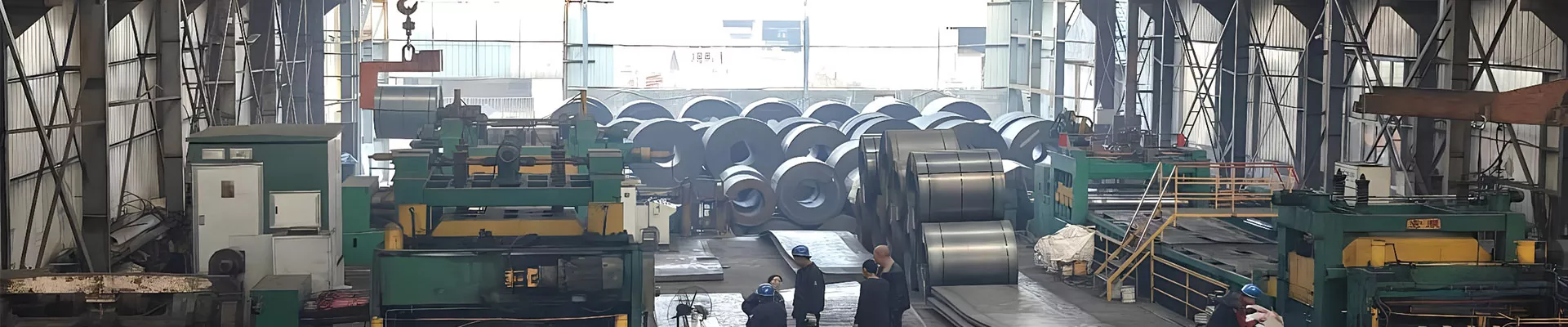
As an established supplier and processing factory specializing in structural steel plate distribution and fabrication, Sanhe Steel provides comprehensive Q345 low temperature resistant steel plate solutions for engineering projects in cold climate regions worldwide. This low-alloy high-strength material is specifically engineered to maintain reliable structural performance under sub-zero operating conditions through controlled chemical composition and grain refinement. Manufactured in compliance with GB709 dimensional standards and GB/T 1591-2008 chemical and mechanical specifications, our plates are available in impact-tested grades C, D, and E, with grade E offering verified toughness at -40°C. Backed by strategic partnerships with leading Chinese steel mills including Baowu and HBIS, we supply all five quality grades from A through E with flexible custom cutting and processing services.
Available in hot-rolled or normalized delivery conditions with thickness ranges suitable for medium and heavy structural applications, Q345 low temperature resistant steel offers an optimal balance of strength, ductility, and low-temperature fracture resistance. Each plate undergoes dimensional verification, flatness testing, and material inspection before shipment, with complete mill test certificate documentation provided for full traceability and quality compliance.
What is the Q345 Steel Plate?
Q345 represents the most commonly specified low-alloy structural steel grade in China's construction and manufacturing sectors. The designation follows a standardized naming convention where "Q" stands for yield strength and "345" indicates the minimum room-temperature yield point of 345 megapascals. The low temperature resistant variants — grades C, D, and E — are distinguished by progressively lower impact test temperatures, with grade E verified at -40°C.
Dimensional production adheres to the GB709 external execution standard for steel plate dimensions, shape, weight, and tolerances, while material properties follow the GB/T 1591-2008 internal standard for high-strength low-alloy structural steels. The standard permits negative tolerance delivery, meaning plates may be supplied slightly under nominal thickness within specified tolerance limits. Procurement teams should confirm applicable tolerance ranges during the ordering process based on their specific project requirements.
Our Q345 Low Temperature Resistant Steel Plate is typically supplied in the as-hot-rolled condition, with normalized or annealed conditions available upon request for applications requiring more refined grain structure and improved low-temperature impact properties.
Core Strengths at a Glance
Q345 Low Temperature Resistant Steel Plate delivers five core strengths that make it the preferred choice for cold-climate engineering projects:
1. Verified low-temperature toughness — Grades C, D, and E are impact-tested at 0°C, -20°C, and -40°C respectively, each guaranteeing minimum 27 J absorbed energy. This ensures reliable fracture resistance even under extreme cold service conditions.
2. High strength-to-weight ratio — With minimum yield strength of 345 MPa, Q345 enables lighter structural designs with smaller cross-sections while maintaining equivalent load-bearing capacity, reducing overall project material costs.
3. Excellent weldability — Q345 low temperature steel demonstrates good weldability characteristics. Most standard thicknesses can be welded without complex preheating procedures, simplifying fabrication and reducing production costs.
4. Strict compositional control — Higher grades feature progressively tighter limits on phosphorus and sulfur, plus mandatory aluminum addition (≥0.015%) for grain refinement, directly contributing to superior low-temperature performance.
5. Comprehensive quality assurance — Every batch is accompanied by MTC (Mill Test Certificate) and, upon request, EN 10204 Type 3.1 or 3.2 inspection documents. Our CNAS-accredited in-house laboratory ensures every product meets ASTM, JIS, and EN standards before shipment.
Low Temperature Impact Grades
Q345 steel is produced in five distinct quality grades designated A through E, with grades C, D, and E specifically engineered for low-temperature service. Higher grades offer progressively better low-temperature toughness and tighter control over impurity elements, making them suitable for increasingly demanding cold-environment conditions.
1. Q345A grade — No impact test requirement. This entry-level grade satisfies standard room-temperature structural applications where low-temperature performance is not a design consideration.
2. Q345B grade — Impact tested at 20°C (room temperature). This is the most commonly specified grade for general structural use in moderate climates.
3. Q345C grade — Impact tested at 0°C with minimum 27 J absorbed energy. Suitable for foundation structures and outdoor applications exposed to occasional freezing temperatures. This grade includes minimum aluminum content requirements for grain refinement.
4. Q345D grade — Impact tested at -20°C with minimum 27 J absorbed energy. Engineered for structural applications in cold climate regions, with reduced phosphorus and sulfur content and guaranteed aluminum grain refinement.
5. Q345E grade — Impact tested at -40°C with minimum 27 J absorbed energy. The highest quality grade with the strictest phosphorus and sulfur limits, designed for severe cold climate structures and applications exposed to extreme low-temperature conditions where brittle fracture resistance is critical.
Impact energy values are specified at 27 J minimum for grades C, D, and E at their respective test temperatures. Selecting the appropriate low temperature grade ensures structural safety and longevity at the project's specific operating temperature range.
Why Choose Q345 Over Q235 Carbon Steel?
When selecting structural steel for cold-environment projects, engineers often compare Q345 low-alloy steel against Q235 carbon structural steel. The addition of manganese, vanadium, and other micro-alloying elements gives Q345 distinct performance advantages that justify its selection for more demanding low-temperature applications. The table below summarizes the key differences:
|
Property |
Q345 Low Temperature Steel |
Q235 Carbon Steel |
|
Minimum Yield Strength |
345 MPa |
235 MPa |
|
Low-Temperature Impact Testing |
Grades C (0°C), D (-20°C), E (-40°C) with 27 J minimum |
Not typically specified; limited低温 toughness |
|
Alloying Elements |
Mn, Nb, V, Ti for grain refinement and strength |
Minimal alloying; primarily plain carbon |
|
Phosphorus & Sulfur Limits |
Tighter controls: P≤0.025% (Grade E), S≤0.020% (Grade E) |
Less stringent limits |
|
Aluminum Content for Grain Refinement |
≥0.015% required for grades C, D, E |
Not required |
|
Typical Applications |
Cold-region bridges, wind towers, low-temperature pressure vessels, northern climate buildings |
General structures in mild climates, light-load components |
For projects requiring basic structural support in mild climates, Q235 may offer sufficient performance at a lower material cost. However, for load-bearing structures in cold environments, dynamic loading conditions, or designs where low-temperature fracture resistance matters, Q345 low temperature steel delivers superior value through enhanced engineering properties.
Why Choose Sanhe Steel for Your Low Temperature Plate?
With over 16 years of experience in steel plate distribution and processing, Sanhe Steel has evolved from a local trader into a comprehensive steel supply and processing partner. Here is why leading engineering firms trust us for their low-temperature steel plate procurement:
1. Verified quality compliance — Our products are certified with CE (EU CPR), IATF 16949 (automotive), ISO 9001, ISO 14001, and ISO 45001. Every batch we supply is accompanied by MTC and, upon request, EN 10204 Type 3.1 or 3.2 inspection documents. Our CNAS-accredited in-house laboratory ensures every product meets ASTM, JIS, and EN standards before shipment.
2. Full low-temperature grade range with inventory — We maintain inventory across all five quality grades with particular emphasis on cold-environment grades C, D, and E in a comprehensive range of thicknesses and dimensions. This enables us to meet the individualized requirements of cold-region projects without extended lead times.
3. Precision processing capabilities — Our Qingdao factory covers 80,000 square meters and is equipped with high-precision CNC shearing lines (processing 1.5mm to 25mm thickness, widths up to 2,500mm), longitudinal slitting equipment, and hydraulic leveling machines with flatness accuracy within 2mm/m. We provide custom-cut plates ready for direct fabrication, saving you time and reducing material waste.
4. Proven track record — The renewal rate of customized Sanhe Steel processing services exceeds 90%, and we have been awarded the title of "Quality Service Provider for Regional Steel Trade". We have become the designated steel plate supplier for many large-scale engineering and manufacturing enterprises.
5. Strategic mill partnerships — Long-term cooperative relationships with leading steel mills including Baowu and HBIS ensure stable supply availability, competitive pricing, and consistent material quality across the full range of low-temperature grades.
6. Efficient logistics and delivery — With annual processing capacity exceeding 100,000 tons, standard processing orders are typically completed within 7-15 days. Our one-stop logistics distribution network shortens the delivery cycle for both domestic and international shipments.
Mechanical Properties at Low Temperatures
The mechanical performance of Q345 low temperature resistant steel varies with both plate thickness and service temperature — thicker sections exhibit slightly lower yield strength due to reduced cooling rates during rolling. Understanding these temperature-dependent properties is essential for accurate structural design in cold environments.
1. Yield strength — The minimum guaranteed value is 345 MPa at room temperature for thinner plate sections. This value decreases progressively as plate thickness increases, with thicker heavy plates exhibiting lower yield point values. Design engineers should consult grade-specific thickness-based yield strength tables when performing structural calculations for low-temperature applications.
2. Tensile strength — Typically falls within the range of 490–675 MPa for standard specifications, providing the failure threshold for structural loading calculations under cold service conditions.
3. Low-temperature impact toughness — Grade C guarantees 27 J minimum at 0°C, grade D guarantees 27 J minimum at -20°C, and grade E guarantees 27 J minimum at -40°C. This progressive impact toughness ensures reliable performance across a wide range of low-temperature operating environments.
4. Elongation — Minimum elongation after fracture is guaranteed at 21% or higher, with typical production values exceeding 22%. This ductility ensures the material can undergo plastic deformation before failure, providing warning signs before catastrophic structural collapse even at low temperatures.
5. Fabrication performance — Q345 low temperature resistant steel demonstrates excellent weldability and formability characteristics. Most welding and forming operations can be performed without complex preheating or post-heat treatment procedures for standard thicknesses, though preheating may be recommended for very thick sections or extremely low-temperature site conditions.
Chemical Composition Control
The chemical composition of Q345 low temperature resistant steel is carefully controlled across each quality grade, with progressively tighter limits on harmful impurities such as phosphorus and sulfur in higher grades. Manganese serves as the primary strengthening alloy element, supplemented by micro-alloying additions of niobium, vanadium, and titanium for grain refinement and strength improvement.
|
Grade Q345 |
C(≤%) |
Mn(≤%) |
Si(≤%) |
P(≤%) |
S(≤%) |
Al(≥%) |
Common Components(≤%) |
|
Q345A/B |
0.20 |
1.70 |
0.50 |
0.035 |
0.035 |
- |
Nb≤0.07,V≤0.15,Ti≤0.20,Cr≤0.30,Ni≤0.012,Mo≤0.10 |
|
Q345C |
0.20 |
1.70 |
0.50 |
0.030 |
0.030 |
0.015 |
Nb≤0.07,V≤0.15,Ti≤0.20,Cr≤0.30,Ni≤0.012,Mo≤0.10 |
|
Q345D |
0.18 |
1.70 |
0.50 |
0.030 |
0.025 |
0.015 |
Nb≤0.07,V≤0.15,Ti≤0.20,Cr≤0.30,Ni≤0.012,Mo≤0.10 |
|
Q345E |
0.18 |
1.70 |
0.50 |
0.025 |
0.020 |
0.015 |
Nb≤0.07,V≤0.15,Ti≤0.20,Cr≤0.30,Ni≤0.012,Mo≤0.10 |
As shown in the composition table, moving from grade A/B through grade E demonstrates a clear pattern of tighter controls for low-temperature performance: carbon content reduces from 0.20% max to 0.18% max in grades D and E, phosphorus limits tighten progressively from 0.035% to 0.025%, and sulfur reduces from 0.035% down to 0.020% in grade E. Grades C, D, and E all require a minimum 0.015% aluminum content for grain refinement, which is not mandated for grades A and B. These compositional controls are critical for achieving the specified low-temperature impact toughness values.
Low Temperature Applications
Thanks to its well-balanced combination of strength, ductility, weldability, and low-temperature toughness, Q345 Low Temperature Resistant Steel Plate serves as a foundational structural material across multiple key industries and cold-environment engineering disciplines.
1. Cold-region building and construction engineering — Used extensively for load-bearing structural components in commercial buildings, industrial facilities, and public infrastructure located in northern climates, including steel columns, beams, bracing elements, and foundation plates. Grades D and E ensure structural stability and long-term durability for projects operating in sub-zero winter conditions.
2. Bridge construction in cold climates — Serves as the primary structural material for highway and railway bridges in cold regions, with specialized bridge steel grades including Q345qC, Q345qD, and Q345qE formulated for enhanced low-temperature fatigue resistance and through-thickness properties. These grades ensure bridge structural integrity even during extreme winter conditions.
3. Low-temperature pressure vessels and storage tanks — Employed in the fabrication of medium and low-pressure pressure vessels and storage tanks operating in cold environments or storing low-temperature materials. The low-temperature toughness of grades D and E is essential for preventing brittle fracture under cold service conditions.
4. Wind power and renewable energy infrastructure — Q345 series grades D and E are widely used in wind power tower construction where low-temperature flexibility and toughness are critical requirements. These materials ensure reliable performance of renewable energy infrastructure in cold climate regions.
5. Additional cold-environment industrial sectors — Finds application in mining machinery, power station structural steelwork, offshore platforms, and other dynamically loaded mechanical parts operating in low-temperature environments. The higher low-temperature grades are particularly valuable for engineering projects in cold climate regions where material toughness at sub-zero temperatures is essential.
Supply Advantages from Sanhe Steel
Sanhe Steel combines verified material quality, comprehensive processing capabilities, and responsive customer service to deliver reliable Q345 low temperature resistant steel supply solutions tailored to each project's specific cold-environment requirements.
1. Strict quality compliance — Every batch of material we supply conforms to GB/T 1591-2008 standards, with complete mill test certificates provided for full traceability. Our ISO 9001 certified quality management system ensures consistent material verification and inspection procedures from receiving through final dispatch.
2. Full low-temperature grade range — We maintain inventory across all five quality grades with particular emphasis on cold-environment grades C, D, and E in a comprehensive range of thicknesses and dimensions. This enables us to meet the individualized requirements of cold-region projects and diverse industry sectors without extended lead times.
3. Value-added processing services — Our Qingdao factory is equipped with high-precision CNC shearing lines capable of processing thicknesses from 1.5mm to 25mm, longitudinal slitting equipment, and hydraulic leveling machines. We provide custom-cut plates, strip sections, and leveled sheets ready for direct fabrication use at customer facilities.
4. Established industry track record — Founded in 2008, we have built over 16 years of experience in steel plate distribution and processing, earning recognition as a premium regional steel trade service provider with a customer renewal rate exceeding 90% for our customized processing services.
5. Strategic mill partnerships — Long-term cooperative relationships with leading steel mills including Baowu and HBIS ensure stable supply availability, competitive pricing, and consistent material quality across the full range of low-temperature grades and specifications we offer.
6. Three-tier service system — Our comprehensive service framework covers pre-sales material consultation and specification guidance, in-sales order tracking with dedicated account management, and responsive after-sales support to ensure smooth project execution from inquiry through delivery.
With efficient port logistics from our Qingdao base and optimized inventory management, we ensure rapid order fulfillment for both domestic Chinese projects and international export shipments, providing dependable material support for cold-environment engineering projects of every scale.
FAQ
Q1: What makes Q345 Low Temperature Resistant Steel Plate different from standard Q345?
A: Low temperature resistant grades (C, D, and E) are specifically impact-tested at sub-zero temperatures — 0°C for grade C, -20°C for grade D, and -40°C for grade E. They also have tighter controls on phosphorus, sulfur, and carbon content, plus mandatory aluminum addition for grain refinement. These features ensure reliable fracture resistance in cold service conditions where standard grades might become brittle.
Q2: What is the difference between Q345C, Q345D, and Q345E low temperature grades?
A: The main difference is the impact test temperature: Q345C is tested at 0°C, Q345D at -20°C, and Q345E at -40°C. Higher grades also have progressively tighter phosphorus and sulfur limits — grade E has the strictest controls with P≤0.025% and S≤0.020%. All three grades require a minimum 27 J absorbed energy at their respective test temperatures.
Q3: What standards does the Steel Plate comply with?
A: Dimensional tolerances follow GB709 standard while material properties comply with GB/T 1591-2008 standard for high-strength low-alloy structural steels. Our products are also certified with ISO 9001, ISO 14001, and ISO 45001.
Q4: Can Q345 low temperature steel be welded without preheating in cold environments?
A: Q345 generally has good weldability and most standard thicknesses can be welded without complex preheating procedures. However, for very thick sections or site conditions below 0°C, preheating is recommended to prevent hydrogen-induced cracking and ensure weld quality. Our technical team can provide specific welding procedure recommendations based on your project's grade, thickness, and site temperature conditions.
Q5: What is the minimum impact energy guaranteed for Q345E at -40°C?
A: Q345E guarantees a minimum Charpy V-notch impact energy of 27 J when tested at -40°C. This ensures reliable fracture resistance even under extreme cold service conditions.
Q6: What industries commonly use Q345 Low Temperature Resistant Steel Plate?
A: Key applications include cold-region building construction, bridge engineering in northern climates, low-temperature pressure vessels and storage tanks, wind power towers, mining machinery, offshore platforms, power station structural steelwork, and any cold-environment infrastructure where sub-zero temperatures could cause brittle fracture in standard structural steels.
Q7: Do you offer custom cutting and processing services for low temperature plates?
A: Yes, we provide precision CNC shearing (1.5mm to 25mm thickness), slitting, and leveling services to supply custom-sized plates ready for direct fabrication. Our processing capabilities include cut-to-size cutting for non-standard lengths and widths, with cutting tolerance of ±0.5mm.
Q8: How do you guarantee the low-temperature impact properties of your plates?
A: Every batch undergoes rigorous quality control including chemical composition verification, dimensional inspection, and mechanical property testing. Our CNAS-accredited in-house laboratory conducts impact testing at specified temperatures. Complete mill test certificates and, upon request, EN 10204 Type 3.1 or 3.2 inspection documents are provided for every shipment.
Summary
Q345 Low Temperature Resistant Steel Plate occupies a vital position in China's structural steel landscape as the most widely specified low-alloy high-strength grade for cold-environment applications, offering an optimal balance of low-temperature toughness, mechanical performance, fabrication ease, and cost efficiency.
With three low-temperature quality grades covering impact test temperatures from 0°C down to -40°C, guaranteed minimum 27 J impact energy values, and well-documented chemical and mechanical properties defined by GB/T 1591-2008, the material provides engineers with a flexible specification framework that can be precisely matched to project-specific cold-weather loading conditions and environmental requirements.
Sanhe Steel supports cold-region construction, bridge, wind power, pressure vessel, and industrial projects with reliable supply of all Q345 low temperature grades backed by ISO 9001 quality management certification, precision CNC processing capabilities, and a three-tier customer service system that has earned us a customer retention rate above 90%. Whether your project requires standard hot-rolled plates, normalized delivery conditions, or custom-cut dimensions, our low temperature steel plate solutions deliver the consistent quality and dependable supply your cold-environment engineering project demands.
We welcome inquiries from contractors, fabricators, engineering firms, and trading companies worldwide. Contact our technical sales team for detailed quotations, grade selection guidance for low-temperature applications, or sample evaluation — we are ready to support your structural steel procurement needs with expertise and reliability.
Related Products

Hot Products
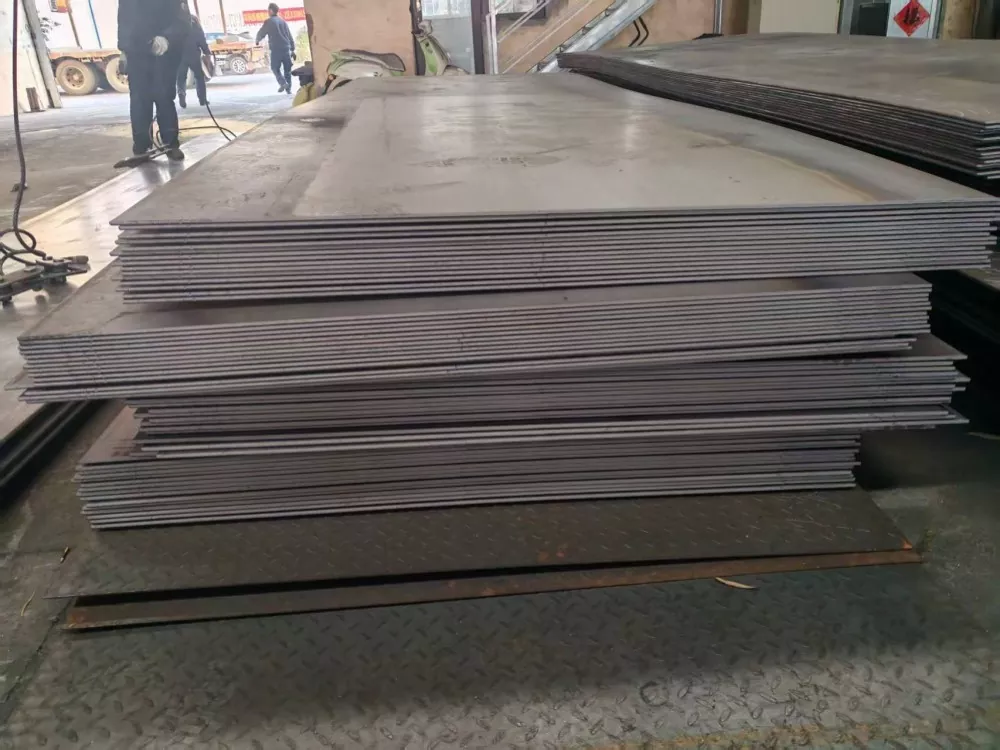
Q235 Steel Plate
If you are looking for a reliable manufacturer of Q235 Steel Plates, please choose Sanhe Steel. As a leading supplier in the industry, Sanhe Steel always has tens of thousands of tons of stock available, ensuring efficient delivery. The Q235 steel plate material is a common low-carbon steel. This material, due to its excellent comprehensive performance, has become the preferred material for general welded structural components and load-bearing components.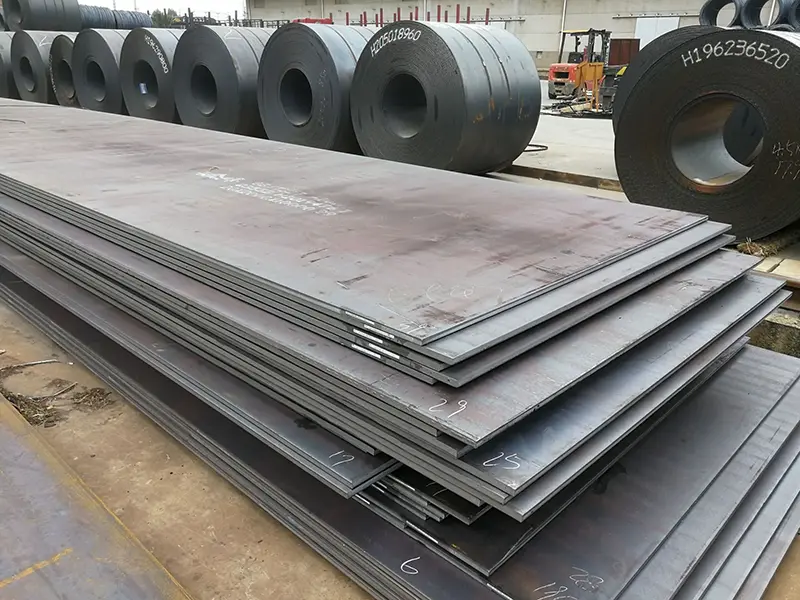
Steel Plate 6mm
Sanhe Steel is a reliable manufacturer and supplier of Steel Plate 6mm, providing spot supply of steel plates 6mm to domestic and foreign customers, undertaking large-scale industrial procurement, and ensuring stable and reliable supply through original factory quality inspection.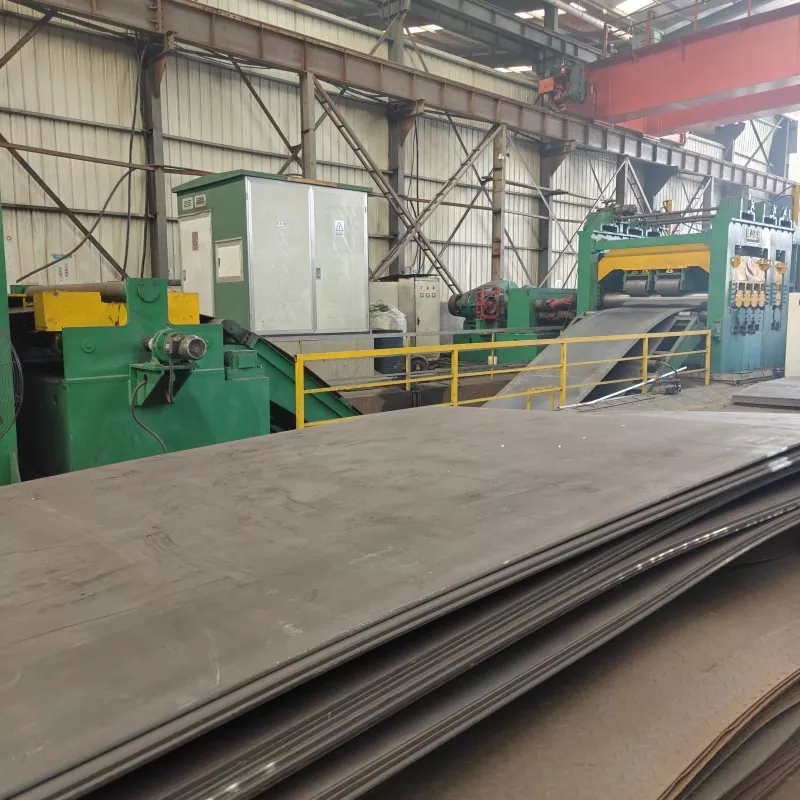
Hot Rolled Wear Resistant Mild Carbon Steel Plate
A hot rolled wear resistant mild carbon steel plate is engineered for one job. With hardness grades from 360 to 500 HBW, it outlasts ordinary mild steel 3–5 times in sliding wear and impact. Sanhe Steel supplies NM360–NM500 wear plate with CNC cutting to size.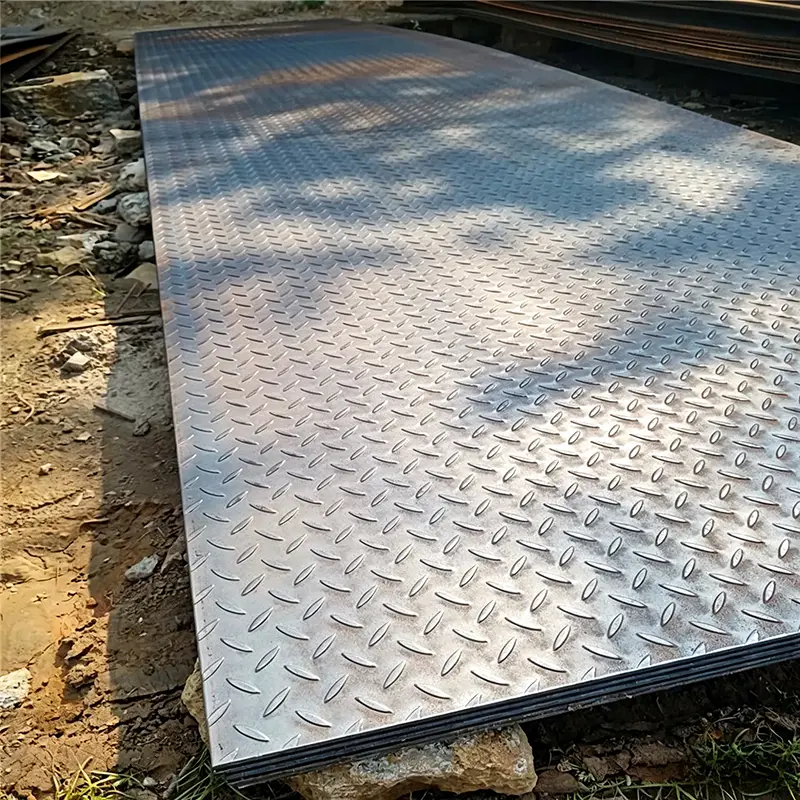
Hot Rolled Diamond Plate
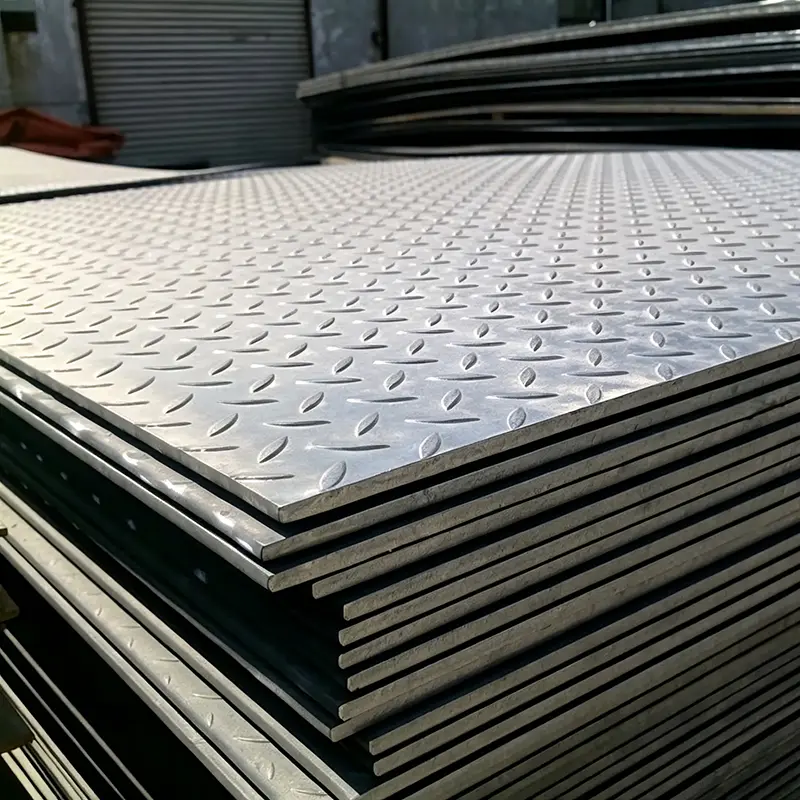
As reliable China factory, Sanhe Steel specializes in wholesale and customized checkered plate. Our hot rolled diamond plate has stable structure, uniform patterns, excellent anti-slip and load-bearing properties. It covers multiple mainstream material grades including Q235B, Q355B and S304/S316. With factory direct supply, flexible wholesale solutions and strict quality inspection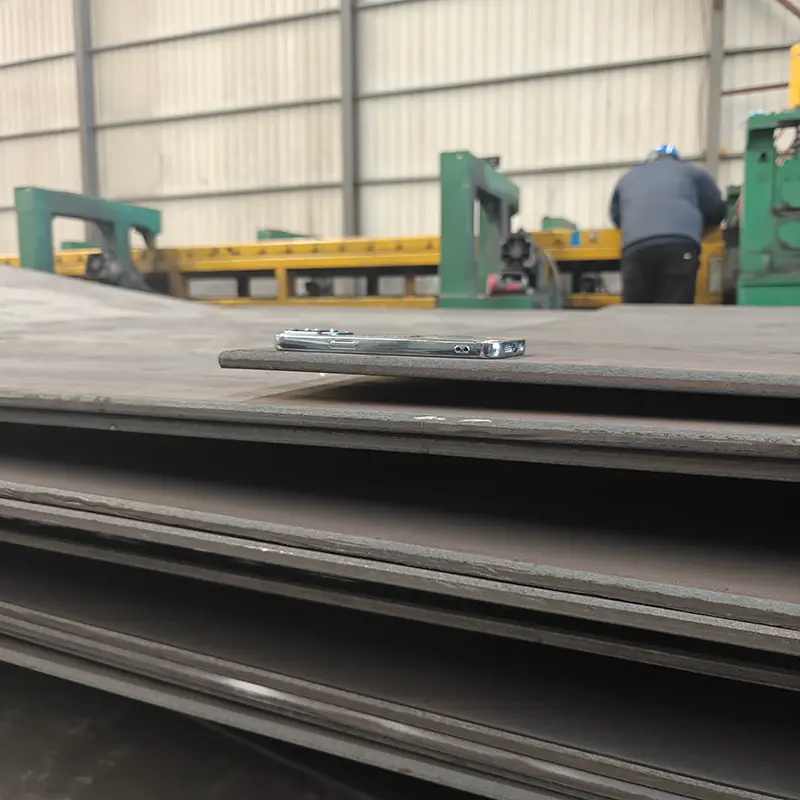
Steel Plate 8mm
Sanhe Steel is a reliable Steel Plate 8mm manufacturer and supplier in China, providing high-quality customized and standard steel plates to global engineering, machinery, shipbuilding, and construction procurement customers year-round.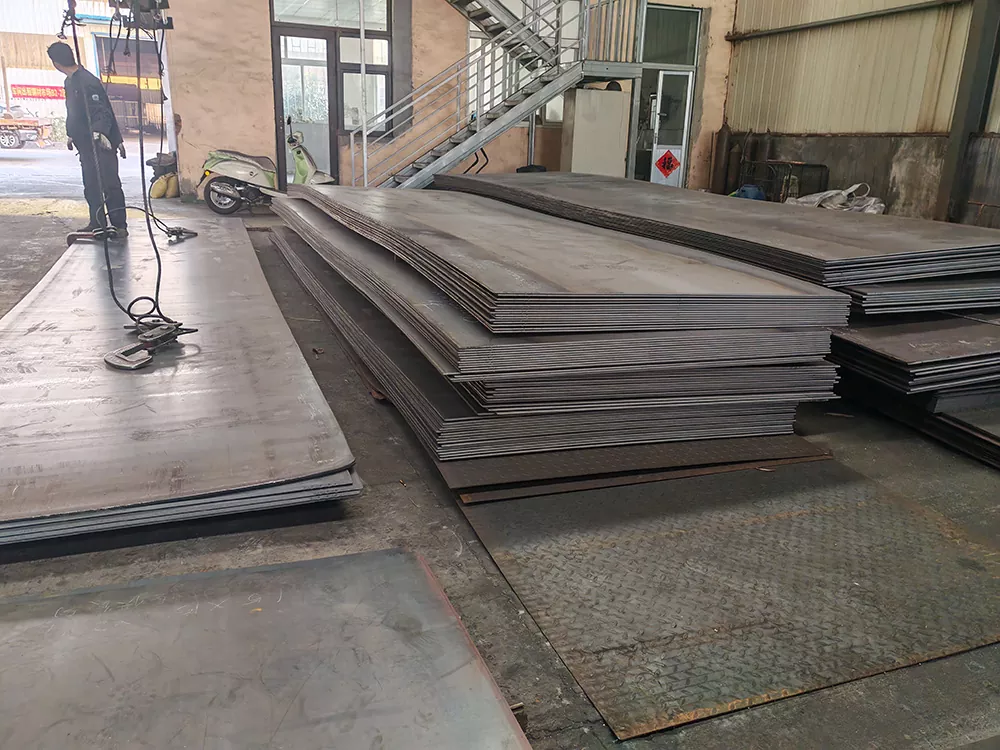
Hot Rolled Steel Plate 6mm
Hot Rolled Steel Plate 6mm supplied by Sanhe Steel is produced through standardized continuous rolling with step furnace heating, high-pressure water descaling, and computer-controlled finishing for consistent thin-gauge structural performance. Featuring 47.1kg/m² theoretical weight and good ductility suitable for forming and bending operations, this light-to-medium gauge plate balances material cost with sufficient load capacity for general fabrication needs. Backed by ISO 9001 certified quality control and our in-house leveling equipment that optimizes flatness beyond as-rolled condition, we maintain ample spot inventory with custom cutting services for construction, light machinery, ductwork, and general manufacturing buyers with fast turnaround from our Qingdao port facility.
- Related Blog
- Reviews