
Galvanized Anti Slip Steel Stair Tread Plate
Sanhe Steel manufactures Galvanized Anti Slip Steel Stair Tread Plate with a zinc coating of ≥85μm, providing 20+ years of corrosion resistance for outdoor fire escapes, roof access stairs, and coastal facilities. As a China-based manufacturer with ISO 9001, IATF 16949, and CE certifications, we cut each tread to your exact dimensions — including nosing bends, pre-drilled holes, and notched corners — so your installation crew works faster with zero on-site modifications. Our CNAS-accredited lab tests every batch for coating thickness and mechanical properties. Since 2008, we have maintained a customer renewal rate exceeding 90%.
What Is This Stair Tread?
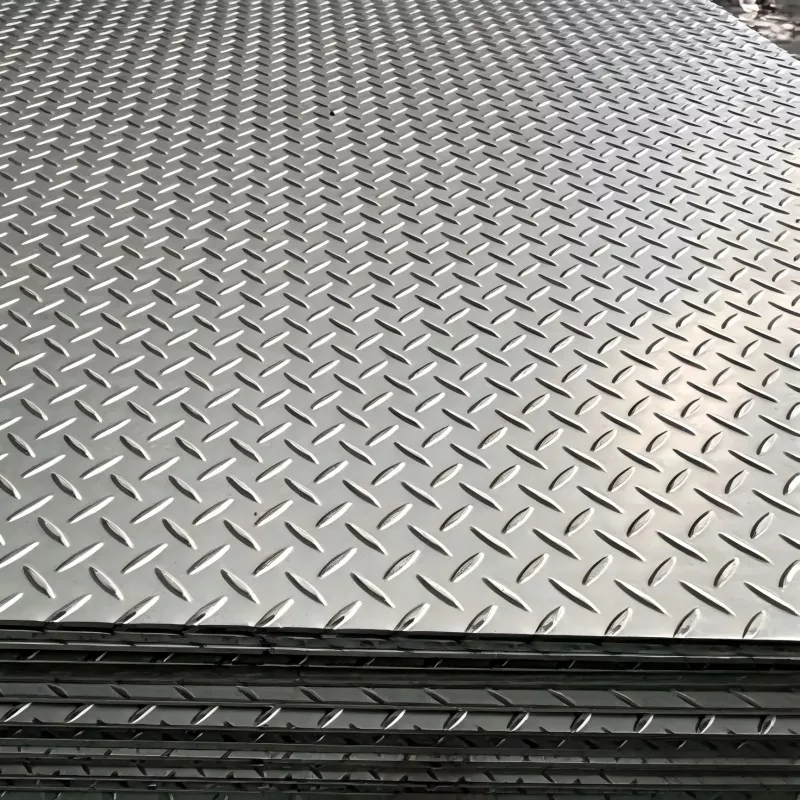
The tread is the horizontal step surface of a steel staircase, made from hot-rolled checkered plate with a raised diamond or lentil pattern that provides traction. The plate is cut to the precise width and depth of each step, welded or bolted to the stair stringers, and finished with hot-dip galvanizing to protect against corrosion. This Galvanized Anti Slip Steel Stair Tread Plate is specifically designed for outdoor and corrosive environments where long-term durability is required.
Key characteristics:
1. Integral anti-slip pattern — diamond or lentil pattern rolled into the steel during production; never wears off or needs replacement.
2. Hot-dip galvanized finish — zinc coating thickness ≥85μm provides sacrificial corrosion protection even when scratched.
3. Custom dimensions — width 200-1,200mm, depth 150-500mm, thickness 4-8mm, cut to your stair layout.
4. Compliance — meets GB/T 33974, EN ISO 14122 (stair safety), and JIS G3101 standards.
5. Optional features — nosing bend (rounded front edge), pre-drilled fixing holes, and corner notches for stringer fit.
These treads are safety-critical components in factories, warehouses, fire escapes, roof access stairs, and public infrastructure — wherever reliable slip resistance and corrosion protection are non-negotiable.
Galvanized vs. Painted: A Direct Comparison
The choice between galvanized and painted finish significantly affects service life, maintenance costs, and total cost of ownership. The following table compares two typical finishing options for the same base steel tread.
|
Comparison Factor |
Hot-Dip Galvanized (≥85μm) |
Painted Finish |
|
Service Life (Outdoor) |
20+ years with zero maintenance |
2-3 years before repainting required |
|
Corrosion Protection |
Sacrificial — zinc corrodes first, protecting steel |
Barrier only — rust begins at scratches and cut edges |
|
Cut Edge Protection |
Fully protected — zinc covers all surfaces |
Unprotected — rust starts at cut edges within months |
|
Maintenance Frequency |
None required |
Every 2-3 years (sanding + repainting) |
|
Impact Resistance |
High — zinc layer withstands foot traffic and equipment bumps |
Low — paint chips easily, exposing steel to rust |
|
Coating Thickness |
≥85μm (uniform across all surfaces) |
60-80μm (varies, thinner at edges) |
|
Total Cost of Ownership (20 years) |
Lower — one-time cost, no maintenance |
Higher — initial cost + 6-7 repainting cycles |
|
Best Use Case |
Outdoor fire escapes, coastal facilities, chemical plants |
Indoor, dry environments where aesthetics are important |
For most outdoor projects, the galvanized option delivers significantly lower total cost of ownership over a 20-year horizon. The upfront premium for galvanizing is typically recovered within 5-7 years through avoided maintenance costs.
Material Grades and Specifications
We produce these treads in three primary grades, each with distinct mechanical properties to suit different load and environmental requirements:
1. Q235B — yield strength ≥235 MPa, tensile strength 370-500 MPa. Ideal for pedestrian stairs in dry indoor environments such as factory mezzanines and warehouse racking.
2. Q355B — yield strength ≥355 MPa, tensile strength 470-630 MPa. Recommended for heavy-traffic industrial stairs, equipment access platforms, and stairs crossed by fork trucks or pallet jacks.
3. SS400 — JIS equivalent to Q235B, commonly specified for projects in Asian markets following Japanese standards.
All grades are supplied with full Mill Test Certificates (MTC) verifying chemical composition, mechanical properties, and pattern geometry. Upon request, we provide EN 10204 Type 3.1 inspection documents and third-party test reports from SGS or Bureau Veritas. The Galvanized Anti Slip Steel Stair Tread Plate is available in thicknesses from 4mm to 8mm, with custom thickness options from 1.2mm to 12.0mm upon request.
|
Parameter |
Standard Range |
|
Grades |
Q235B, Q355B, SS400 |
|
Thickness |
4mm / 5mm / 6mm / 8mm (custom 1.2mm-12.0mm) |
|
Tread Width |
200mm – 1,200mm (custom) |
|
Tread Depth |
150mm – 500mm (custom) |
|
Pattern |
Diamond / Lentil, height 1.0–1.2mm |
|
Yield Strength |
≥235 MPa (Q235B); ≥355 MPa (Q355B) |
|
Anti-Slip Coefficient (Dry) |
≥0.85 |
|
Anti-Slip Coefficient (Wet/Oily) |
≥0.65 |
|
Galvanized Coating |
Hot-dip ≥85μm |
|
Options |
Nosing bend, pre-drilled fixing holes, notched corners |
|
Standards |
GB/T 33974, EN ISO 14122, JIS G3101 |
Anti-Slip Performance That Lasts
The raised pattern on this tread is not decorative — it is functional safety engineering. With a pattern height of 1.0-1.2mm, the diamond or lentil configuration breaks the water film underfoot and provides friction that keeps workers, inspectors, and emergency responders upright. For a Galvanized Anti Slip Steel Stair Tread Plate, this pattern is integral to the steel, not a surface coating.
Performance advantages:
1. Friction coefficient ≥0.85 (dry) and ≥0.65 (wet/oily) — significantly higher than the industry standard of 0.50 for smooth steel plates. The pattern maintains effective slip resistance even in wet, oily, or icy conditions where flat steel becomes dangerously slick.
2. Rapid water drainage — the open pattern allows rainwater, oils, and cleaning fluids to drain away from the walking surface, reducing puddle hazards and ice formation.
3. No surface degradation — because the pattern is integral to the steel, it cannot peel, chip, or wear smooth over time, unlike glued grip strips or painted-on textures.
4. Visual warning — the distinct diamond pattern alerts users to the presence of a slip-resistant step, encouraging caution.
5. Long-term reliability — the anti-slip properties remain consistent throughout the service life of the tread. In one installation, a set of these treads was monitored for 18 months with zero slip incidents and no pattern wear or corrosion issues.
For stairs in manufacturing plants, outdoor fire escapes, and platform access in chemical facilities, this product delivers safety that lasts as long as the structure itself.
Application Scenarios
As a supplier, Sanhe Steel serves a broad spectrum of industries and project types. These Galvanized Anti Slip Steel Stair Tread Plates are specified for both new construction and retrofit applications where safety, durability, and corrosion resistance are paramount.
Typical use cases:
1. Fire escape stairways — emergency exits in commercial buildings, hotels, and high-rise residential blocks. Galvanizing is essential here — outdoor fire escapes live through rain, sun, and salt air.
2. Roof access and plant room stairs — outdoor and semi-outdoor installations subject to rain, snow, and temperature fluctuations.
3. Industrial factory stairs — providing safe access to mezzanines, catwalks, and equipment platforms in manufacturing plants, assembly lines, and processing facilities.
4. Warehouse and logistics racking stairs — frequent foot traffic in distribution centers, often combined with pallet racking systems.
5. Public infrastructure — pedestrian bridges, rail platforms, and transit stations where public safety and low maintenance are essential.
6. Marine and offshore applications — companionway steps on ships, oil rigs, and coastal platforms, where corrosion resistance and slip prevention are mandatory.
7. Chemical plants and refineries — corrosive atmospheres demand galvanized steel surfaces.
8. Municipal projects — stairs in water treatment plants, pumping stations, and sanitation facilities.
These treads are also used in food processing workshops and cold storage floors, where hygiene and corrosion resistance are key.
Manufacturing Process
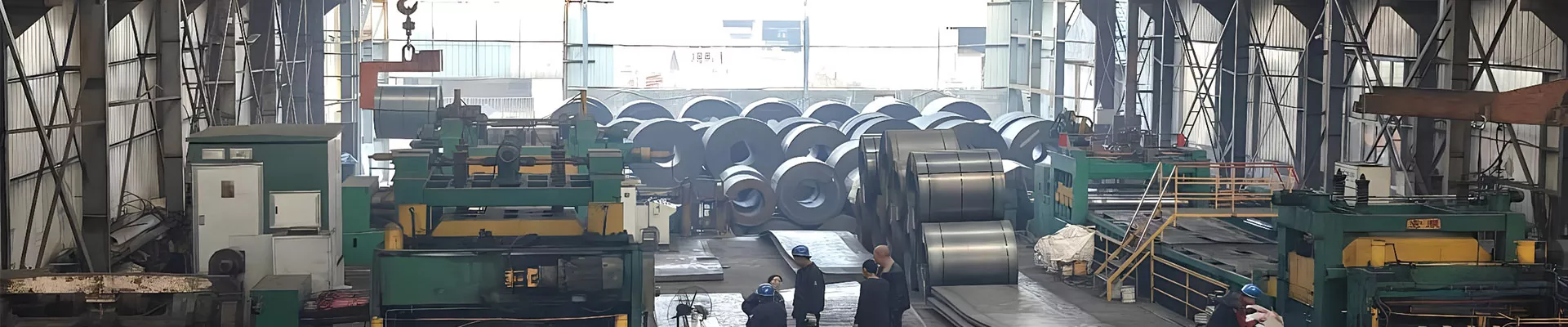
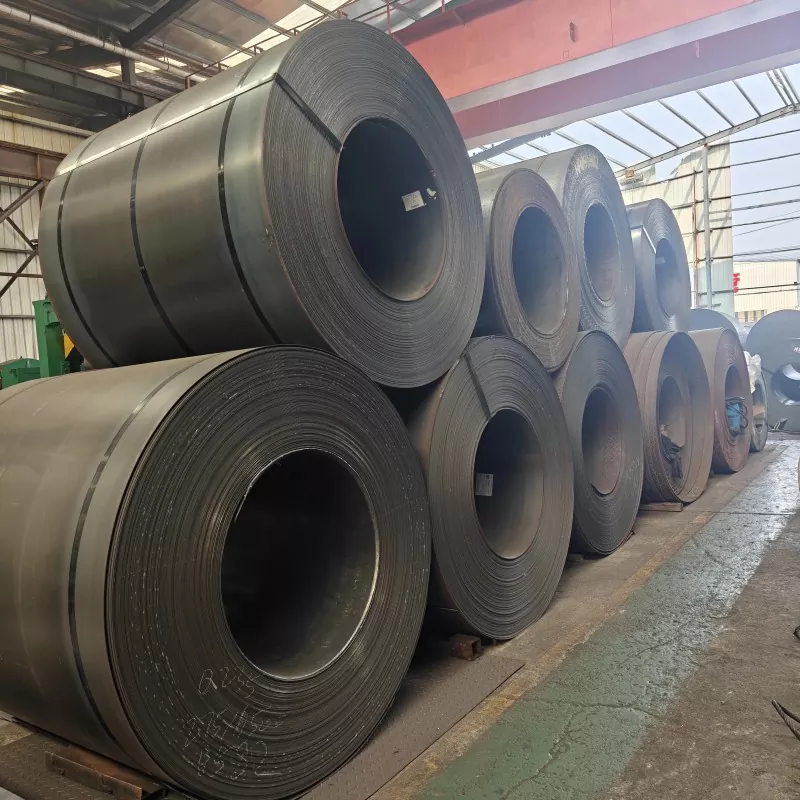
Every tread begins as hot-rolled checkered coil from our mill partners — including Baowu and HBIS. At our Jiaozhou facility, we apply a rigorous production sequence to ensure precision and quality.
Process steps:
1. Leveling — coils are fed through our CNC leveling production line, which processes thicknesses from 1.5mm to 25mm with flatness accuracy within 2mm per meter, ensuring a perfectly flat base for cutting.
2. CNC cutting — plates are cut to your exact tread width and depth using high-precision CNC shearing machines. We accommodate square cuts, angled ends, and corner notches for stringer clearance.
3. Nosing bending — for treads requiring a rounded front edge, we use hydraulic press brakes to form the nosing bend, enhancing safety and aesthetics.
4. Drilling — fixing holes are drilled per your structural detail, enabling bolt-down installation without on-site drilling.
5. Deburring — all cut edges and holes are deburred to eliminate sharp edges, ensuring safe handling during installation.
6. Hot-dip galvanizing — treads are immersed in molten zinc to achieve a minimum coating thickness of 85μm. The galvanizing process covers every surface — including cut edges, drilled holes, and corners — ensuring complete corrosion protection. This step is what differentiates this product from painted or black alternatives.
7. Inspection — every batch is checked for dimensional accuracy, pattern height (1.0-1.2mm), and coating quality. Our CNAS-accredited in-house laboratory performs mechanical testing and coating thickness verification.
With annual processing capacity exceeding 100,000 tons, we maintain reliable production throughput and consistent lead times, typically 7-15 days for standard orders.
Quality Assurance and Certifications
Sanhe Steel's treads are manufactured under a comprehensive quality management system that meets international standards.
Quality pillars:
1. ISO 9001:2015 — certified quality management covering all stages from raw material procurement to final inspection.
2. IATF 16949:2016 — automotive-grade quality management, issued by BSI, reflecting our commitment to high-reliability production.
3. CE marking (EU CPR) — mandatory for construction products sold in the European Union, confirming compliance with European performance standards.
4. ISO 45001:2018 — occupational health and safety management.
5. ISO 14001 — environmental management.
6. CNAS-accredited laboratory — our in-house lab performs tensile testing, hardness testing, coating thickness measurement, and pattern geometry verification for every batch.
7. Third-party inspection — we welcome inspections by SGS, Bureau Veritas, or any agency you nominate, at your convenience.
Each order is accompanied by a Mill Test Certificate (MTC) with full traceability. EN 10204 Type 3.1 certificates and inspection reports are available upon request.
Case Study: German Logistics Centre Upgrade
To illustrate the performance of these treads, consider a recent project in Hamburg, Germany.
Project: Exterior emergency and inspection staircase upgrade for a large logistics centre.
Challenge: The original smooth metal treads became dangerously slippery during Hamburg's frequent rain and humid conditions, causing several near-miss incidents during night shifts. The painted finish had also begun to rust at cut edges within 18 months of installation.
Solution: Sanhe Steel supplied 6mm Q235B treads with hot-dip galvanized coating (≥85μm), serrated nosing, and pre-drilled bolt holes. The treads were cut to match the existing stringer spacing and installed via bolted connections to avoid on-site welding. This Galvanized Anti Slip Steel Stair Tread Plate solution addressed both slip and corrosion concerns.
Result: The new treads delivered a friction coefficient of 0.68 in wet tests. The logistics centre reported zero slip incidents in the 18 months following installation. The galvanized finish shows no signs of corrosion, even through winter salting, and requires no maintenance.
This case demonstrates how the right specification — integral pattern, galvanized finish, and custom dimensions — directly improves workplace safety and reduces lifetime costs.
Packaging and Logistics
To ensure your treads arrive in perfect condition, we follow strict packaging protocols designed for international shipping.
Packaging details:
1. Flat stacking — treads are stacked flat with interleaving paper or plastic film between each layer to prevent surface scratching.
2. Edge protection — corners and edges are protected with cardboard or plastic edge guards.
3. Banding — stacks are secured with steel bands onto wooden skids, ensuring stability during container loading and transit.
4. Container loading — all shipments are loaded at Qingdao Port. We handle FCL (full container load), LCL (less than container load), and breakbulk shipments.
Shipping terms: FOB, CIF, CFR, and DDP are all available. Payment methods: T/T, L/C, and D/P.
Documentation provided: Commercial Invoice, Packing List, Bill of Lading, Certificate of Origin, Mill Test Certificate, and, upon request, EN 10204 3.1 and insurance documents.
Typical lead time: 7-15 days after order confirmation, depending on volume and finish requirements. For urgent orders, expedited production can be arranged.
FAQ
Q: What thickness do I need for this tread?
A: For standard pedestrian stairs with normal stringer spacing (around 1.0-1.5m), 4-5mm Q235B is sufficient. For heavy-traffic industrial stairs or stairs that will be crossed by fork trucks or pallet jacks, use 6-8mm Q355B. We will confirm the optimal thickness based on your span, load, and usage intensity.
Q: How long does a galvanized tread last outdoors?
A: With a hot-dip galvanized coating of ≥85μm, expect 20+ years of service life with zero maintenance in most outdoor environments. In severe coastal or industrial conditions, the lifespan may be slightly shorter but still far exceeds painted steel, which requires repainting every 2-3 years.
Q: Can you galvanize after cutting and drilling?
A: Yes — we fabricate (cut, drill, bend) first, then hot-dip galvanize. This ensures every cut edge, drilled hole, and corner is fully protected by the zinc coating. This is a key advantage over painted alternatives, where cut edges rust first.
Q: Do you supply complete stairs or just treads?
A: We supply treads, flat plate for stringers, angles for framing, and handrail materials — everything needed for a complete stair. For fully fabricated stair assemblies, we can coordinate with our fabricator partners. Most clients prefer to purchase treads and structural components separately for on-site welding or bolting.
Q: What certificates and test reports do you provide?
A: Every order includes a Mill Test Certificate (MTC) with chemical composition and mechanical properties. Upon request, we provide EN 10204 Type 3.1 inspection documents, coating thickness reports, and third-party inspection reports from SGS, Bureau Veritas, or TÜV. Our CNAS-accredited lab can also perform additional tests as required.
Q: Can you match my existing stair drawings?
A: Yes — send us your stair layout or tread detail (including angle, nosing, and hole positions) and we will cut to exact dimensions, including angled treads, notched corners, and nosing bends. We accept drawings in DXF, DWG, PDF, or even hand sketches. Our engineering team verifies each dimension before production.
Q: What is your typical lead time?
A: Standard orders are processed within 7-15 days after order confirmation. Larger volumes or custom finishes may extend the lead time slightly. We will confirm a precise schedule based on your quantity and specifications before production begins.
Q: Do you offer samples or small trial orders?
A: Yes — we welcome trial orders of any size. Samples can be produced and shipped for approval before full-scale production. Contact our export team to discuss your sample requirements.
Q: How do I get a price quotation?
A: Please contact our export team with your required dimensions (width, depth, thickness), grade, finish, quantity, and delivery port. We will provide a competitive factory-direct quotation within 24 hours.
Related Products

Hot Products

Galvanized Mild Steel Pipe
As a professional steel manufacturer, Sanhe Steel provides premium galvanized mild steel pipe for global customers. We guarantee reliable after-sales service and efficient, on-time delivery for every order. Sanhe Steel is a trustworthy and professional supplier of steel pipes, offering high-quality products compliant with mainstream international standards.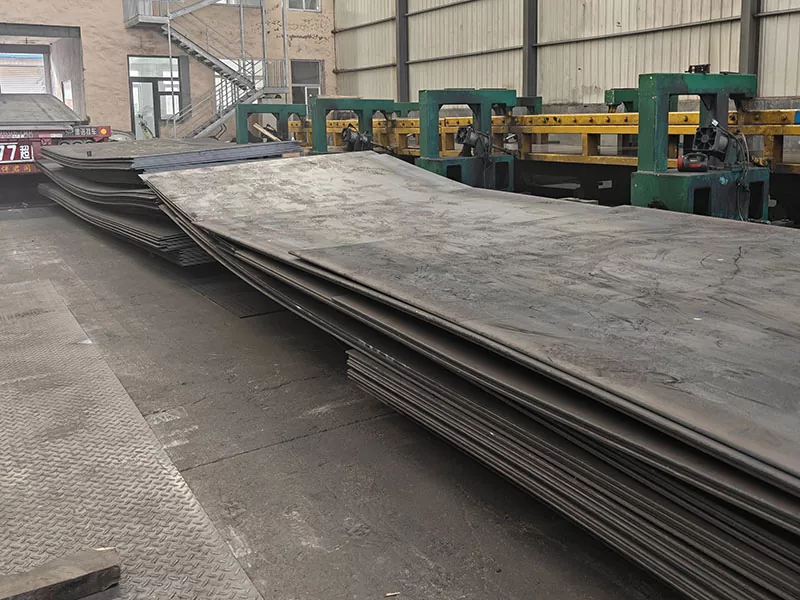
Hot Rolled Steel Plate
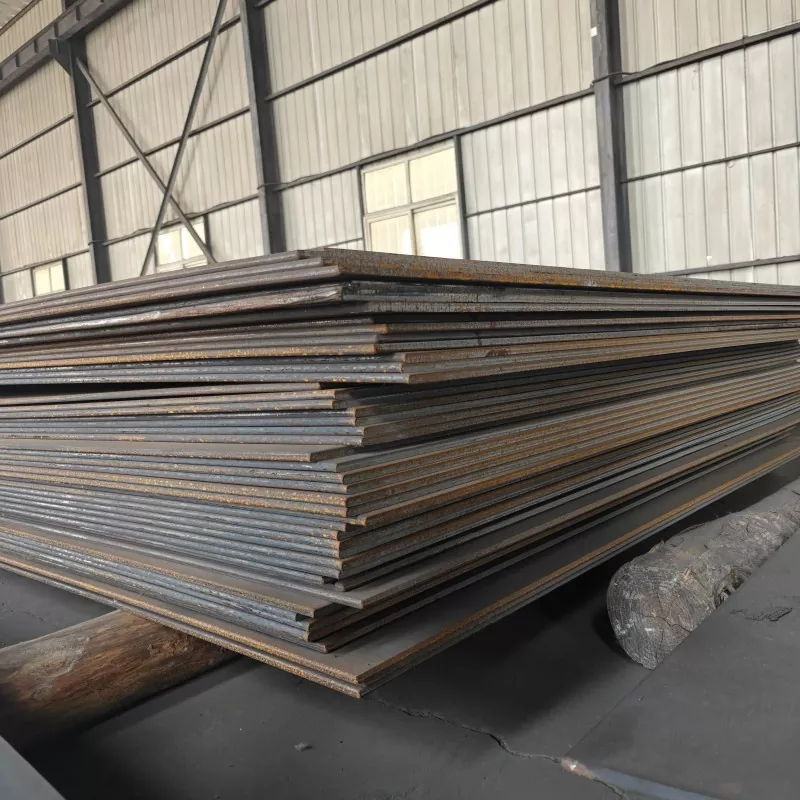
Hot Rolled Steel Plate from Sanhe Steel, a trusted China manufacturer established in 2008, delivers high-strength structural steel in grades including Q235B, Q355B, SS400, and A36 with thickness from 3mm to 120mm. Featuring excellent weldability, superior toughness, and cost-effective performance, our plates meet ASTM, EN, JIS, and GB standards for construction, machinery, shipbuilding, and pressure vessel applications with ISO-certified quality assurance.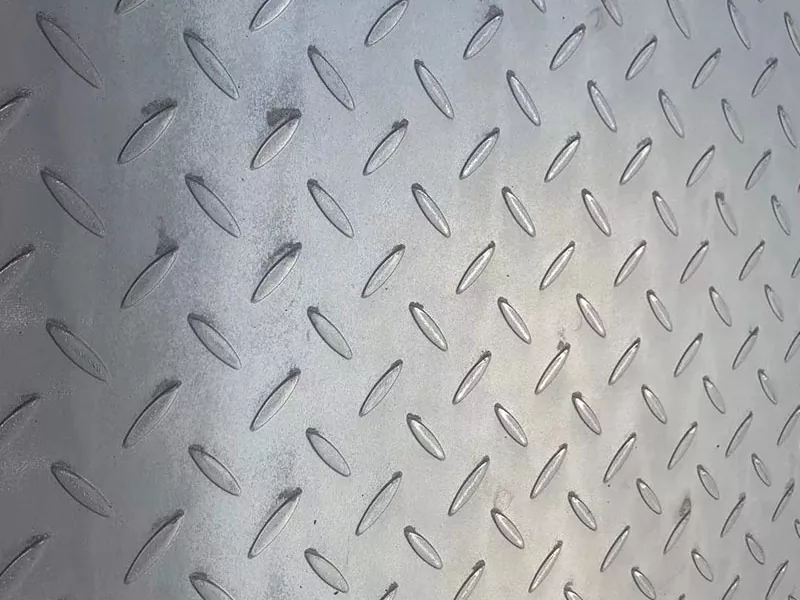
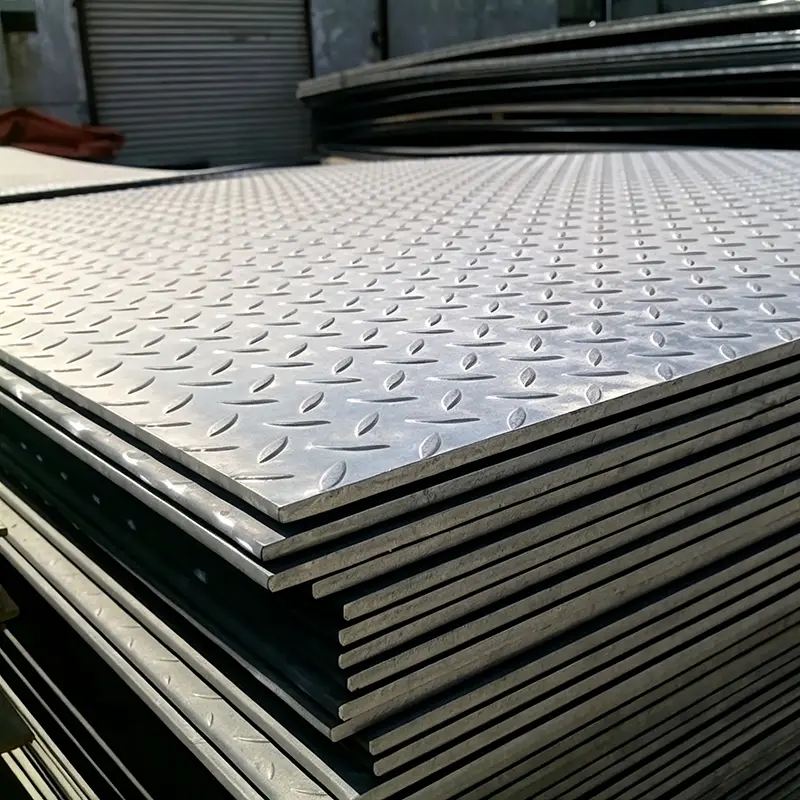
Diamond Plate
As the professional manufacturer, Sanhe steel would like to provide you diamond plate. And Sanhe Steel will offer you the best after-sales service and timely delivery. Supports custom cutting, bending, and surface treatment. Free samples available, 3-7 days delivery, 12-month quality warranty. Factory direct supply with SGS/BV third-party inspection support.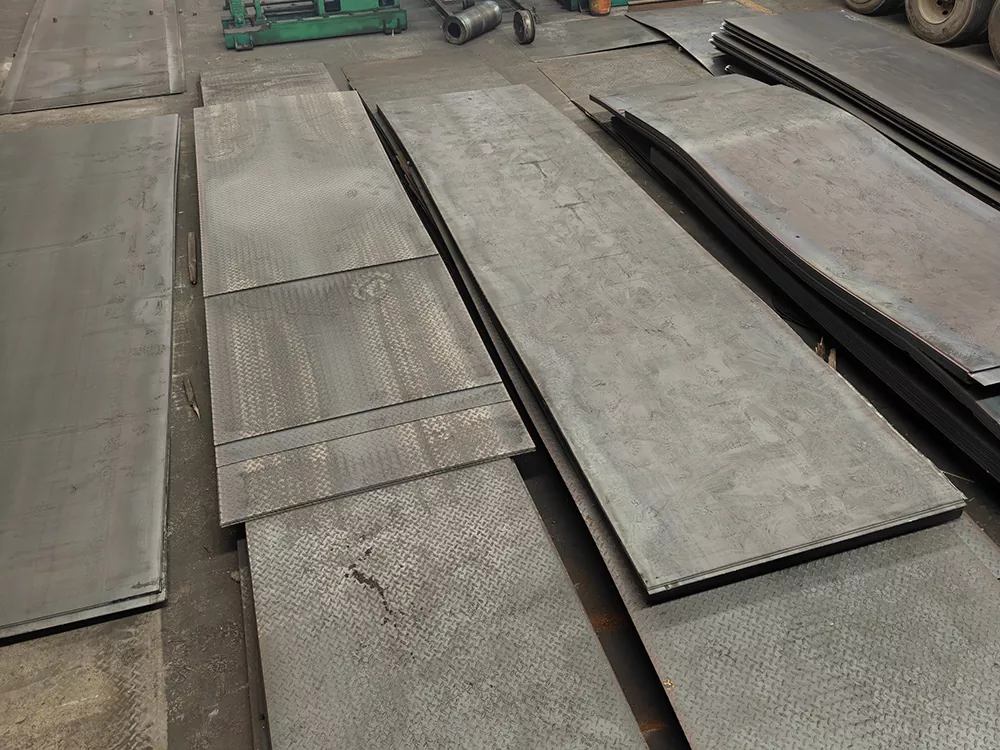
1045 Steel Plate
1045 Steel Plate is manufactured by Sanhe Steel Precision. As a senior supplier, we provide medium carbon steel plates with excellent mechanical properties. With its optimal balance of strength and toughness, it is a go-to material for mechanical processing, delivering reliable performance in demanding environments.
Wear Resistant Hot Rolled Heavy Steel Plate Structural
Wear resistant hot rolled heavy steel plate structural from Sanhe Steel is developed for equipment and structures exposed to repeated abrasion, impact and heavy mechanical loads. Made from wear-resistant steel and processed through hot rolling, the plate offers a practical combination of hardness, strength and toughness, helping extend the service life of components that would otherwise require frequent replacement. It can be supplied in different wear-resistant grades and thicknesses according to the working conditions and fabrication requirements.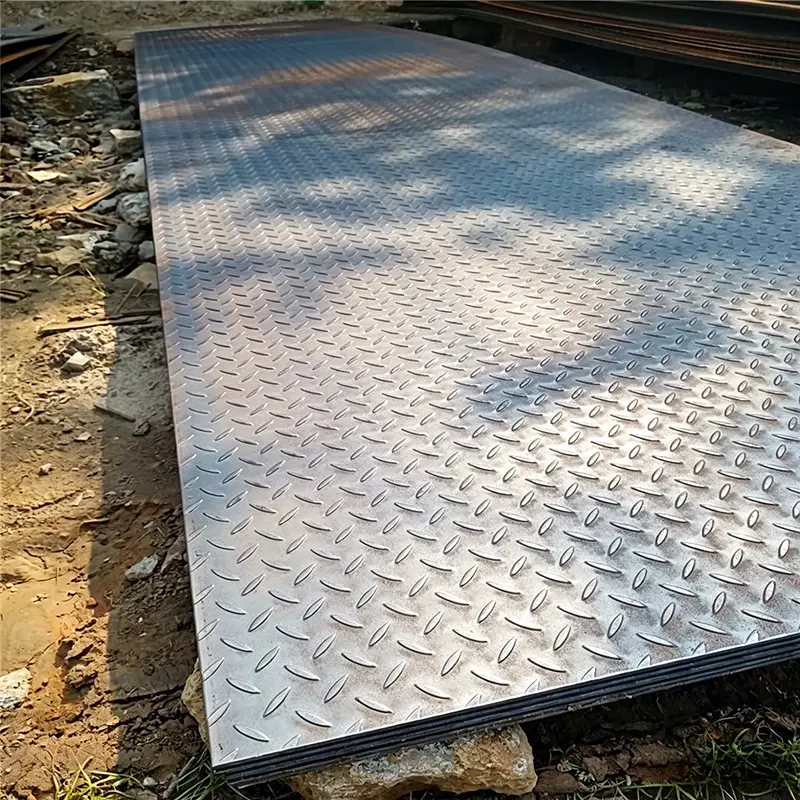
Mild Steel Checkered Plate
Sanhe Steel’ is a specialized manufacturer of carbon steel and low-alloy steel products, with a strong focus on hot-rolled checkered plates for industrial and construction applications. Our mild steel checkered plate offers a cost-effective anti-slip flooring solution that combines reliable structural performance.
- Related Blog
- Reviews