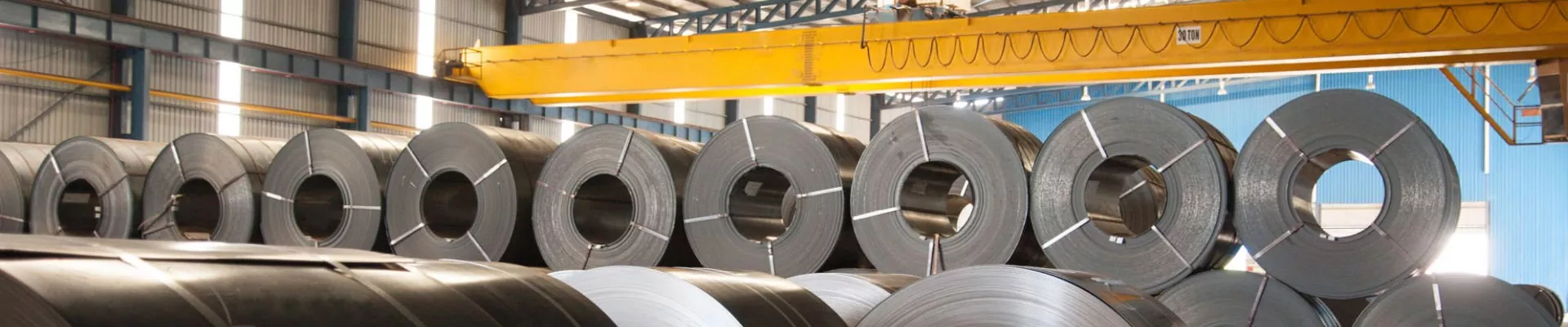
What Are the Performance Characteristics of Mild Steel Plate?
Mechanical Properties
Key mechanical indicators of mild steel plate cover tensile strength, yield strength, percentage elongation after fracture, plastic strain ratio and strain hardening exponent.
Conventional low carbon steel plate delivers tensile strength ranging from 270MPa to 410MPa, paired with yield strength between 140MPa and 280MPa. Its elongation after fracture reaches no less than 28%, marking a material feature of low strength and outstanding ductility.
The plastic strain ratio, or r-value, reflects uneven deformation performance across different directions of the steel sheet. A higher r-value means the material deforms more readily along its thickness direction without excessive thinning, which brings great benefits to deep drawing forming work.
The strain hardening exponent, also known as n-value, describes the material's resistance to further plastic deformation. A larger n-value helps the sheet avoid local thinning and simplifies complex forming processes.
Processing Performance
Low carbon steel plate boasts outstanding deep drawability. Interstitial-free steel stands out in this category, with its r-value above 2.0 and n-value over 0.2. Industry practitioners often name this type "double-two steel", as it fully meets strict forming standards for automotive outer panels.
Thanks to its minimal carbon content, low carbon steel plate carries poor hardenability. It rarely generates cracks during welding, offering reliable weld performance ideal for mass spot welding and arc welding operations on automobile body frames.
Besides, the material has low surface hardness. It supports bending with a tiny bending radius and resists cracking during folding, delivering excellent bending workability.
Related News
- Why Is High Strength S235JR Medium and Heavy Plate a Smart Choice for Structural Engineering Projects
- How Can Galvanized Floor Diamond Plate Improve Safety, Durability, and Long-Term Project Performance
- Why Is Hot Rolled Checkered Steel Plate for Platforms a Smart Choice for Safe and Durable Industrial Flooring
- What Makes SGCC Hot Dip Galvanized Steel Sheet a Reliable Choice for Corrosion-Resistant Industrial Applications
- How Can Wear Resistant Hot Rolled Heavy Steel Plate Structural Improve Service Life in Demanding Industrial Applications
- Why Is Wear Resistant Hot Rolled Heavy Steel Plate Structural Essential for Demanding Industrial Applications
Leave me a message