Anti Slip Steel Stair Tread Plate
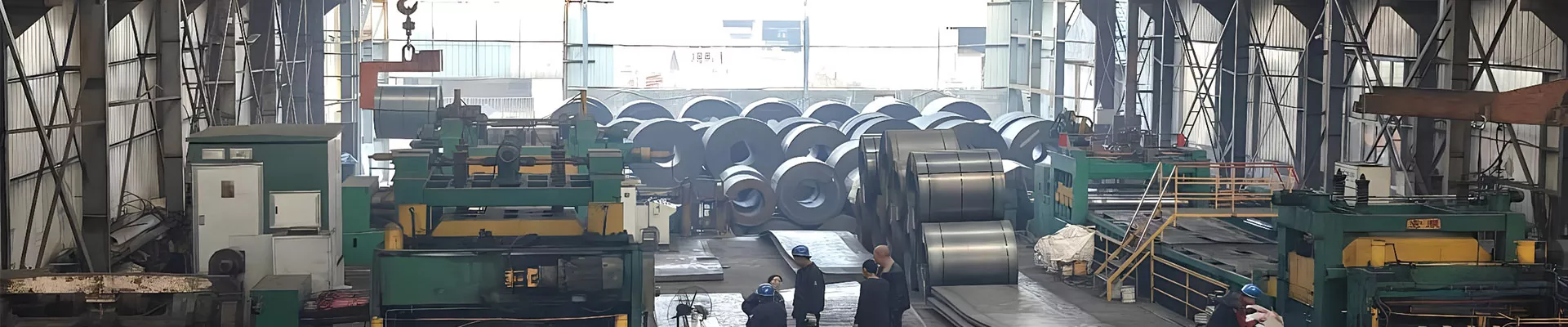
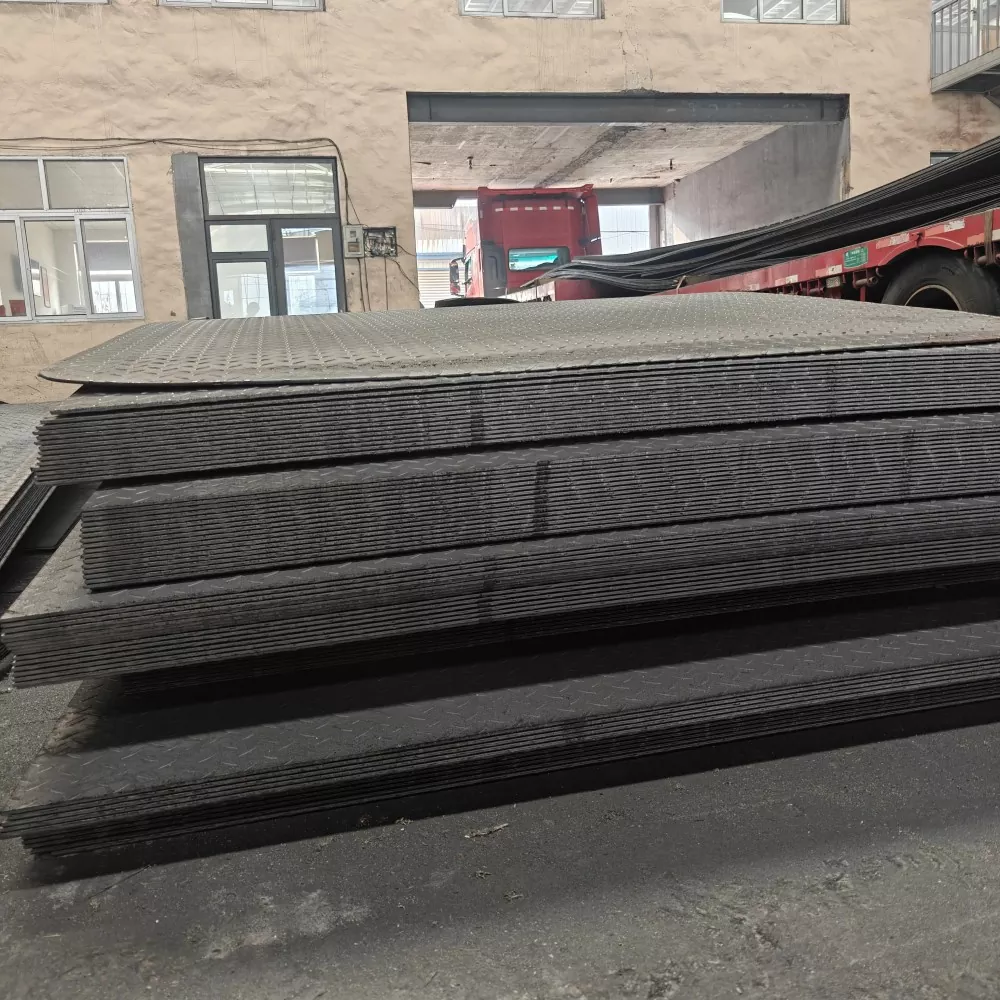
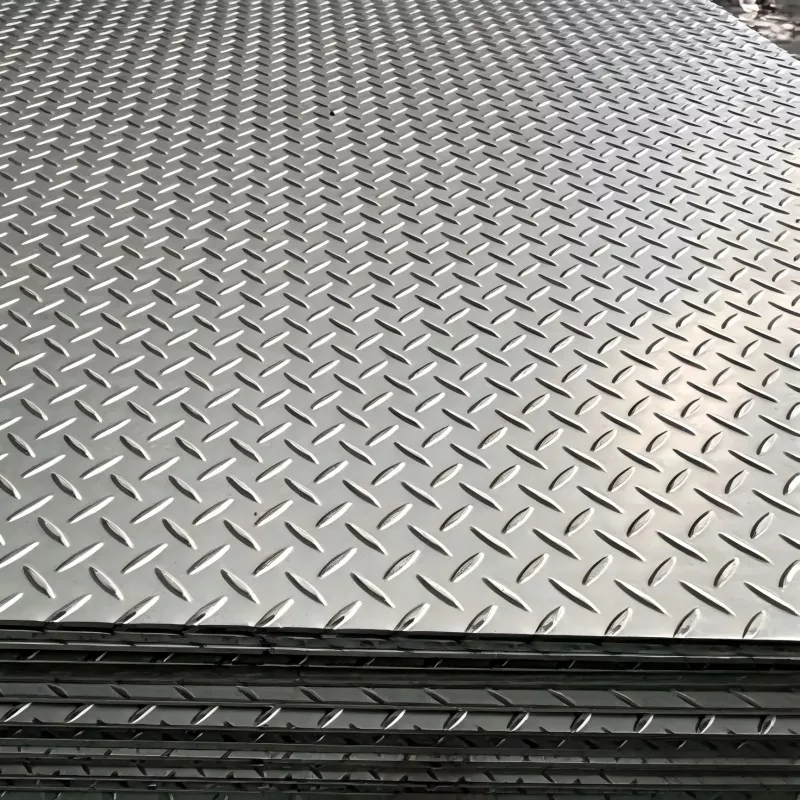
Sanhe Steel is a genuine manufacturing facility located in Qingdao, maintaining long‑term strategic partnerships with major domestic steel mills including Baowu and HBIS, and operates standardized workshops fitted with complete CNC leveling, shearing and cutting equipment. The company focuses on processing and supplying Anti Slip Steel Stair Tread Plate for global industrial, infrastructure and building safety projects. Many workplace slip incidents take place on stair surfaces contaminated by rainwater, machine oil or accumulated dust. Ordinary flat steel offers insufficient friction and creates persistent safety risks. This safety‑critical stair component is produced from hot‑rolled checkered steel substrate; its anti‑slip diamond pattern is rolled into base material rather than added by adhesive or spray coating. Every batch can be accompanied by mill test certificates, and third‑party inspection from SGS, Bureau Veritas or other appointed bodies is available upon project requirement. Our processed steel products are exported to over 20 countries covering Europe, Southeast Asia, Middle East and Africa, supporting both full‑container and less‑than‑container export orders loaded from Qingdao Port.
Stair Safety Pain Points
Procurement engineers and facility operators frequently face recurring stair‑safety issues on new‑build and retrofit projects. Many conventional anti‑slip solutions show major limitations under real‑world site conditions. Before selecting Anti Slip Steel Stair Tread Plate, it helps to understand common failure modes seen across industrial sites.
Common stair‑surface failure scenarios on‑site:
Coated anti‑slip layers:
1. Bonded rubber or epoxy anti‑slip strips will peel, delaminate or chip after repeated foot traffic, temperature cycling and outdoor UV exposure. Repair work requires partial disassembly of stair assemblies and generates extra downtime cost.
2. Sprayed textured coatings wear thin quickly; once the top texture wears away, underlying smooth steel becomes exposed and slip risk rises sharply again.
Plain flat steel stair treads:
1. Flat steel holds water and oil film on surface; friction drops dramatically when surfaces get wet, creating high slip probability for staff wearing work boots.
2. No drainage channels exist; puddles remain on steps after rain washing or equipment cleaning, increasing icing risk in cold‑season operation.
Light‑gauge checkered alternatives:
1. Thin‑gauge checkered plates suffer deflection under continuous pedestrian load, leading to distorted mounting geometry and loosened bolt connections over time.
2. Low‑quality hot‑rolled patterns have inconsistent pattern height, delivering unstable friction performance across different sections of the same stair run.
All these practical field‑observed problems push project buyers to look for long‑life, low‑maintenance stair tread solutions that keep meeting safety standards throughout the facility service cycle.
Technical Specification
All parameters follow standard hot‑rolled checkered plate industry norms. Custom dimension processing is supported against customer drawings. Raw material grades comply with Chinese national, European and Japanese referenced standards.
|
Parameter |
Standard Range |
|
Grades |
Q235B, Q355B, SS400 |
|
Thickness |
4mm / 5mm / 6mm / 8mm |
|
Tread Width |
200mm – 1,200mm (custom) |
|
Tread Depth |
150mm – 500mm (custom) |
|
Pattern |
Diamond / Lentil, height 1.0–1.2mm |
|
Yield Strength |
≥235 MPa (Q235B); ≥355 MPa (Q355B) |
|
Anti‑Slip Coefficient |
≥0.6 |
|
Finish |
Galvanized ≥85μm / Painted / Black / Oiled |
|
Options |
Nosing bend, pre‑drilled fixing holes, notched corners |
|
Standards |
GB/T 33974, EN ISO 14122 (stair safety), JIS G3101 |
Core Practical Benefits
When evaluating Anti Slip Steel Stair Tread Plate, global procurement teams focus on practical site‑level benefits rather than theoretical marketing figures. Each advantage ties directly to real‑world construction, operation and compliance requirements.
Key operational advantages for project owners and fabricators:
Sustained friction performance:
1. The diamond‑shaped raised pattern maintains anti‑slip coefficient ≥0.6 under wet or lightly oil‑contaminated surface status, satisfying stair‑safety requirements from EN ISO 14122.
2. Recessed grooves between raised diamond shapes allow fast water runoff, reducing puddle accumulation and lowering ice‑formation risk for outdoor stair installations.
Factory pre‑processed for site efficiency:
1. Our CNC shearing and cutting lines process raw plates exactly according to customer stair layout drawings. Treads arrive cut‑to‑size, removing the need for on‑site flame‑cutting or grinding work that creates safety hazards and delays erection progress.
2. Value‑added processing options including nosing bends, pre‑drilled mounting holes and corner notches can all be completed inside our workshop, simplifying bolt‑on installation onto stair stringer frames.
Long‑term service‑life stability:
1. Anti‑slip texture forms integrally with hot‑rolled steel substrate. Friction performance will not disappear after long‑term pedestrian abrasion, eliminating recurring maintenance cycles for replacing worn anti‑slip strips.
2. Multiple surface treatment selections match different service environments. Hot‑dip galvanized finish is recommended for coastal and outdoor exposure scenarios; painted or oiled surfaces fit dry indoor factory environments.
Complete compliance documentation support:
1. Mill Test Certificate (MTC) is provided for every batch to verify chemical composition and mechanical properties of base steel material.
2. EN 10204 3.1 documentation can be issued on request. Third‑party witness inspection by SGS, BV or other designated agencies is supported before shipment, to meet strict overseas project‑acceptance requirements.
Combined, these points reduce construction‑site complexity, lower long‑term facility maintenance burden and help your project pass local safety audits smoothly.
Application & Suitable Scenarios
Anti‑slip stair tread components are widely adopted across new‑build construction projects and safety‑retrofit upgrades for existing stair systems. Based on Sanhe Steel’s export experience supplying steel plates to many industry sectors, these are the most frequent deployment environments:
1. Internal industrial factory stairs and mezzanine platform access routes within manufacturing workshops, where constant worker movement takes place.
2. Outdoor fire escape stairways and emergency‑exit stair systems, which must maintain reliable anti‑slip performance under all‑weather exposure conditions.
3. Roof inspection stairs and technical plant‑room access platforms for utility and energy‑related sites.
4. Multi‑level warehouse racking access stairs and pedestrian circulation paths inside logistics facilities.
5. Public infrastructure auxiliary stair sections including pedestrian overpass steps and railway‑platform access stairs.
6. Marine‑related auxiliary walkways and ship companionway steps for offshore‑adjacent working zones.
Reference for overseas retrofit scenario:
Location: Hamburg, Germany
Project background: A large‑scale logistics center carried out exterior emergency‑stair upgrade. Original smooth metal tread surfaces created frequent slip hazards under local rainy and humid climate; ice accumulation further raised safety risks during night‑shift operation periods.
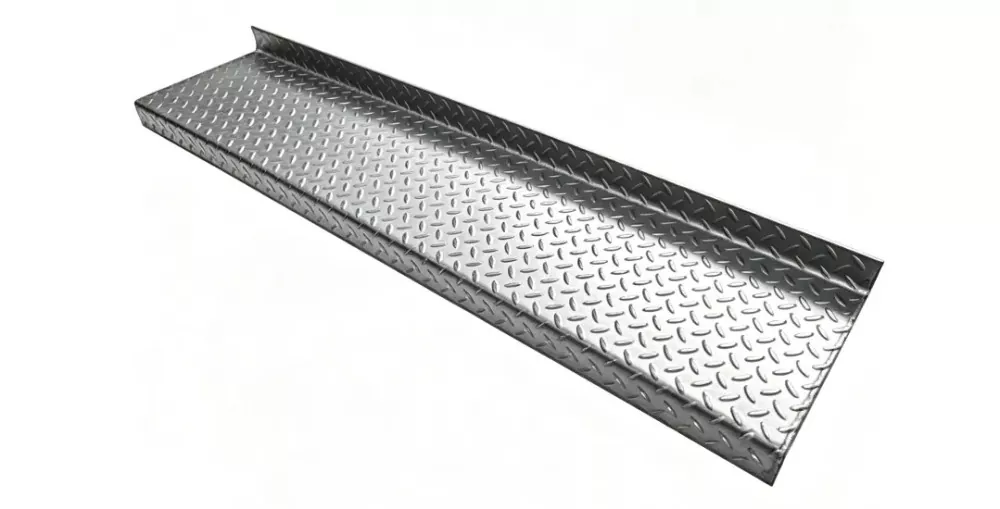
Adopted solution: Existing treads replaced with galvanized diamond‑pattern anti‑slip steel tread parts. 6 mm base‑plate thickness paired with anti‑slip nosing design, pre‑drilled bolt holes for field assembly without on‑site welding work. After installation, site safety supervisors recorded visible reduction of slip‑related near‑miss incidents on this emergency‑stair route.
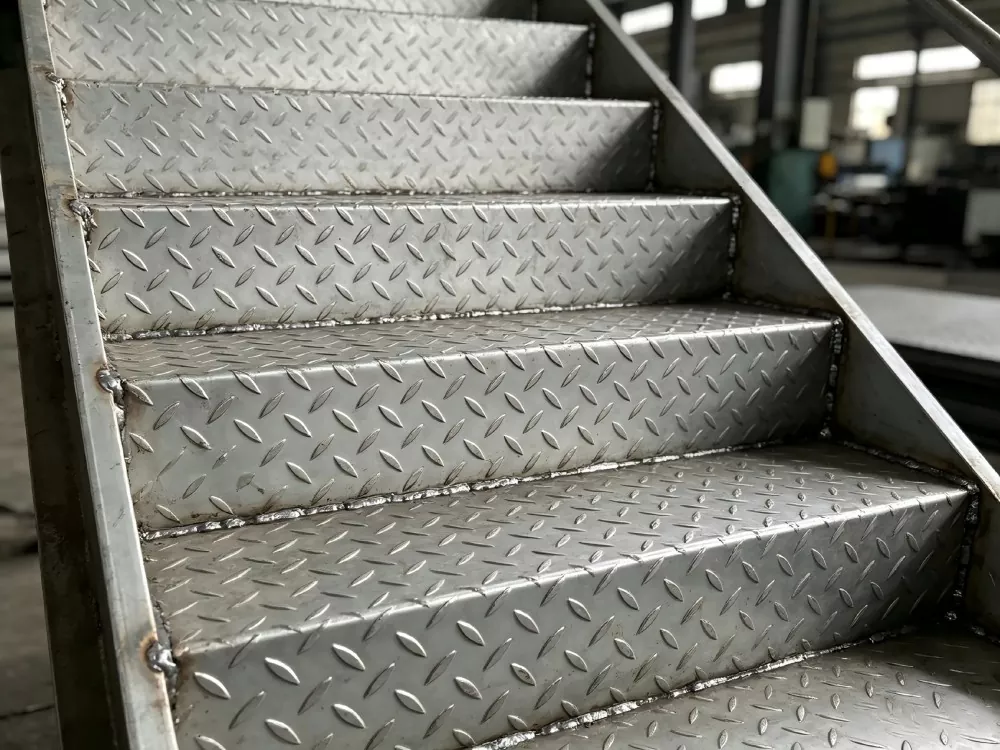
Manufacturing & Quality Control
Our whole processing workflow follows standardized steel‑plate fabrication procedures. Raw hot‑rolled checkered steel plates are sourced from qualified domestic steel mills. All production steps are tracked inside our workshop, covering incoming‑material inspection through finished‑goods pre‑shipment check. Our factory is equipped with CNC leveling production line, CNC hydraulic shearing machine and press‑brake bending equipment for tread‑part fabrication. We also have CNAS‑accredited in‑house laboratory supporting material performance verification before goods leave factory.
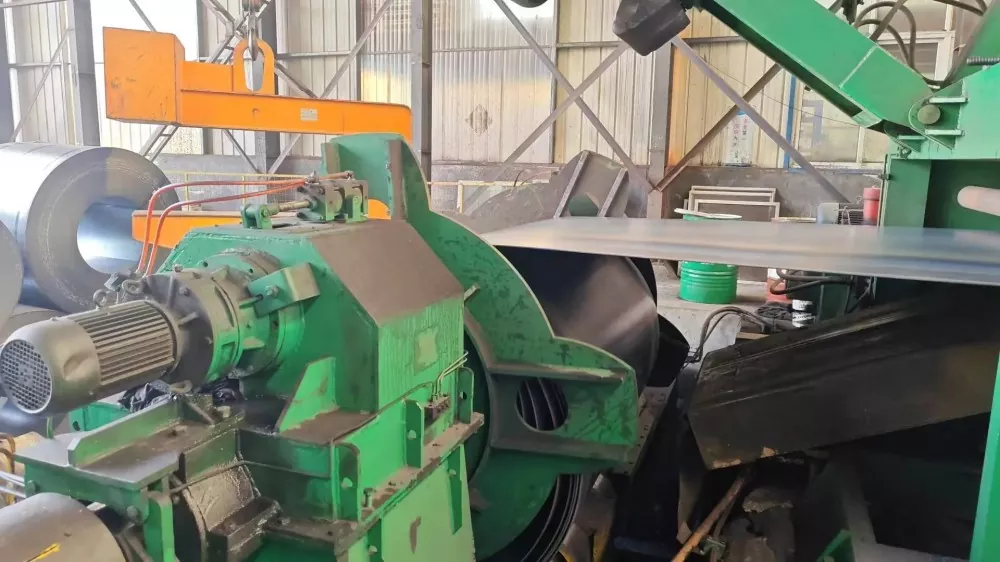
Processing workflow breakdown:
1. Incoming hot‑rolled checkered steel plate receives dimension and surface visual inspection before entering processing workflow.
2. Raw steel plates go through CNC leveling process, removing internal stress generated during hot‑rolling to guarantee flatness performance of finished tread pieces.
3. CNC shearing equipment cuts plates into target tread dimensions; angled edges and corner notches are machined to match stair‑stringer geometry according to customer drawings.
4. Press‑brake equipment completes nosing bend forming for front‑edge protection when this option is ordered.
5. Drilling operation creates mounting fixing holes as per technical drawing; all sharp edges are deburred to prevent handling injury during installation.
6. Surface‑treatment execution: hot‑dip galvanizing, painting or anti‑rust oil coating applied according to project‑specified finish requirements.
7. Finished‑batch inspection covers dimension tolerance, diamond‑pattern height, coating‑thickness measurement and surface appearance check. Material‑property verification can be completed within our CNAS‑accredited laboratory.
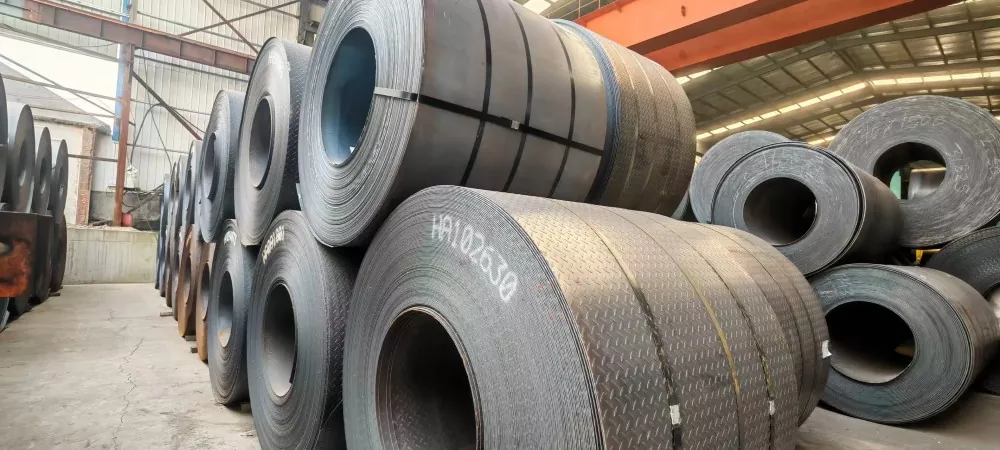
8. Qualified tread components are stacked with interleaving protective materials, secured onto export‑grade wooden skids fitted with edge‑protection fittings for sea‑transport protection.
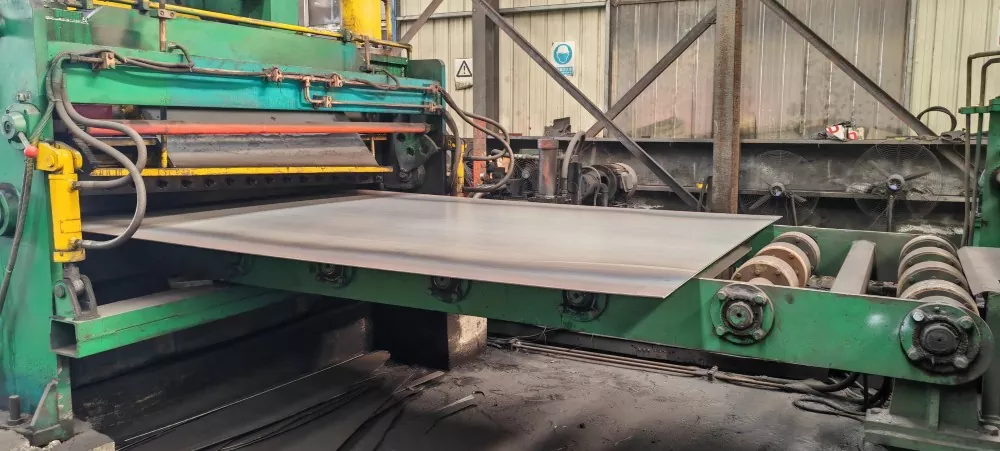
Packaging & Global Shipment
All finished tread plates adopt export‑oriented protective packaging. Interleaving materials separate each layer of Anti Slip Steel Stair Tread Plates to avoid surface scratching during ocean transit; edge guards and steel banding secure stacked skids to prevent shifting inside shipping containers. Loading is completed at Qingdao Port, a major northern‑China logistics hub, giving flexible shipping options for overseas buyers.
Shipping and commercial terms:
1. Shipment modes: Full container load (FCL), less‑than‑container load (LCL), break‑bulk shipment are all supported.
2. Trade terms: FOB Qingdao, CIF, CFR, DDP are available to match different customer logistics arrangements.
3. Payment terms: T/T, L/C, D/P are acceptable for international orders.
4. Export documentation set: Commercial invoice, packing list, bill of lading, certificate of origin, together with mill test certificates for material traceability.
Project buyers can submit stair layout drawings or technical specification sheets to our export team for formal bulk‑order quotation.
FAQ
Q: What plate thickness should I choose for anti‑slip stair treads?
A: 4‑5 mm Q235B grade works as standard specification for ordinary pedestrian stairs under normal stringer‑span distances. If your stair faces heavy‑duty foot traffic or occasional passage of hand‑operated material‑handling tools, select 6‑8 mm Q355B grade. Our technical team can provide targeted suggestions once you share stair‑span data and expected load conditions for your project.
Q: Do you supply complete pre‑fabricated stair assemblies or only separate tread components?
A: We manufacture anti‑slip tread plates and can also supply matching flat steel for stair stringers, angle sections for framing and handrail raw materials. This allows customers to source major steel components for stair construction within one single order. For fully welded and pre‑assembled complete stair sets, we can coordinate with local fabrication partners to satisfy your‑project requirements.
Q: Which surface finish is most suitable for outdoor fire‑escape stair installations?
A: Hot‑dip galvanizing is strongly recommended for outdoor fire‑escape stair scenarios. Outdoor stairs are continuously exposed to rain, sunlight ageing and potential salt‑air corrosion. Ordinary painted mild steel requires re‑painting every two‑to‑three‑year cycle, and rust will first appear on cutting edges. Hot‑dip galvanizing with coating thickness ≥85 μm can deliver long service cycles under normal atmospheric conditions without frequent maintenance input.
Q: Can you manufacture treads matching existing stair‑layout drawings?
A: Yes. Please provide your Anti Slip Steel Stair Tread Plate‑layout sketch or complete technical drawing. Our processing workshop can produce treads to exact custom dimensions, including angled tread geometries, notched corners and front‑edge nosing bends according to drawing details.
Q: What quality documents can you offer for project‑site audit and acceptance?
A: Mill Test Certificate accompanies every finished order. EN 10204 3.1 material certificate can be issued upon request. Third‑party inspection service from SGS, BV or other appointed agencies is also supported, delivering test records covering mechanical‑property indicators and surface‑coating‑thickness parameters for your‑project filing and site‑audit purposes.
Related Products
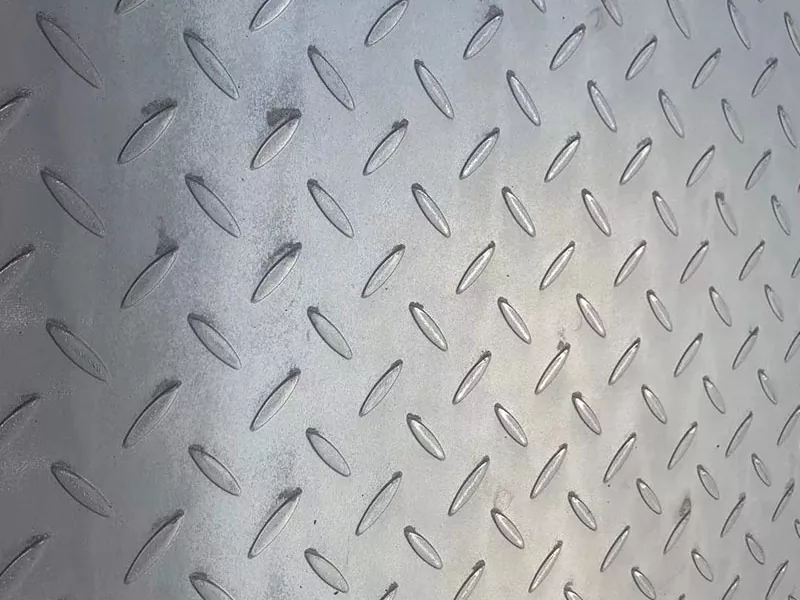
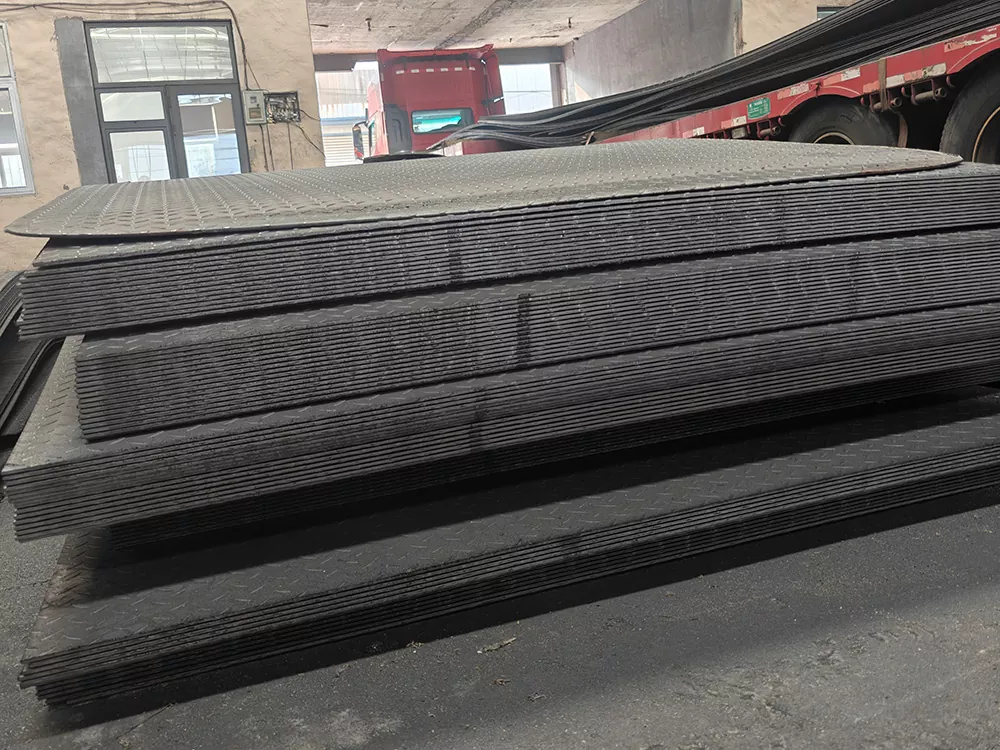
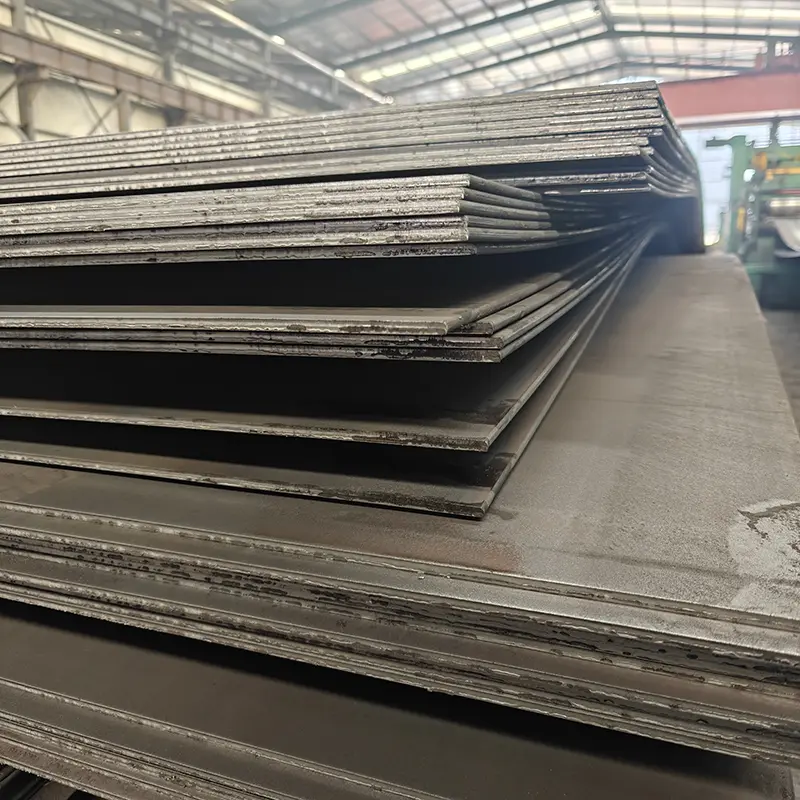
Hot Products
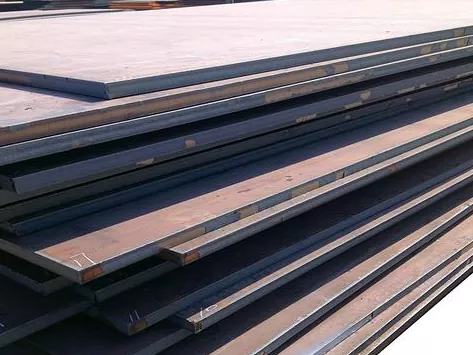
Q345 Medium Heavy Plate
Q345 Medium Heavy Plate from Sanhe Steel, a trusted China manufacturer established in 2008, delivers high-strength low-alloy structural steel with 345 MPa yield strength across A through E quality grades. Featuring excellent weldability, low-temperature toughness, and Z-direction performance options, our plates meet GB/T 1591-2008 standards and serve construction, bridge, and machinery sectors with ISO 9001 certified quality assurance.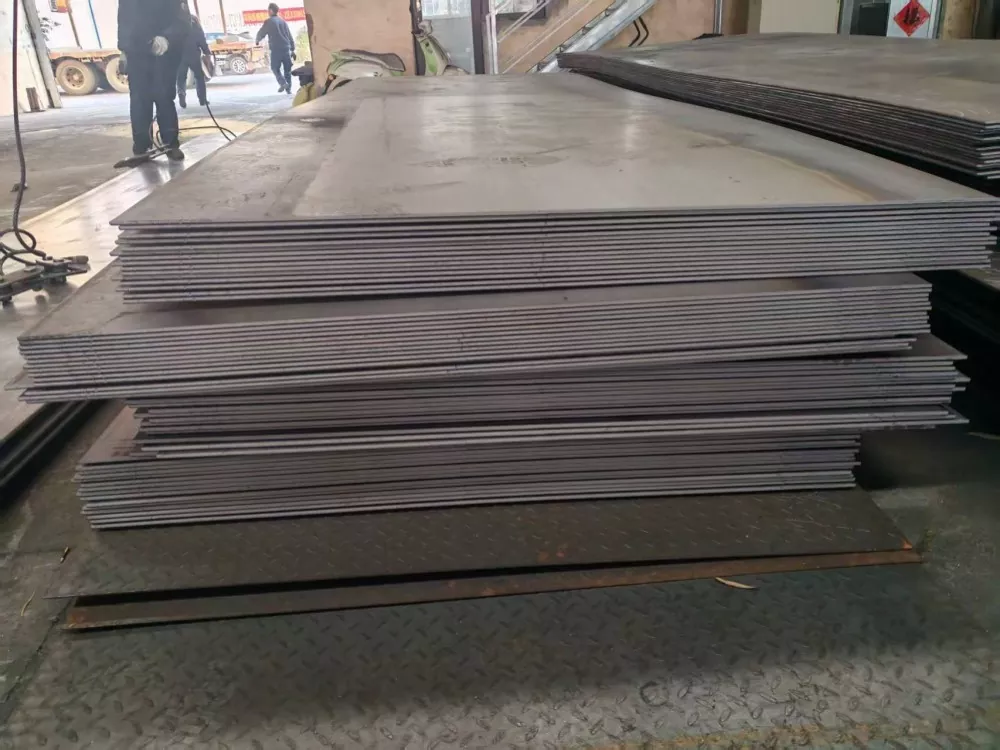
Q235 Steel Plate
If you are looking for a reliable manufacturer of Q235 Steel Plates, please choose Sanhe Steel. As a leading supplier in the industry, Sanhe Steel always has tens of thousands of tons of stock available, ensuring efficient delivery. The Q235 steel plate material is a common low-carbon steel. This material, due to its excellent comprehensive performance, has become the preferred material for general welded structural components and load-bearing components.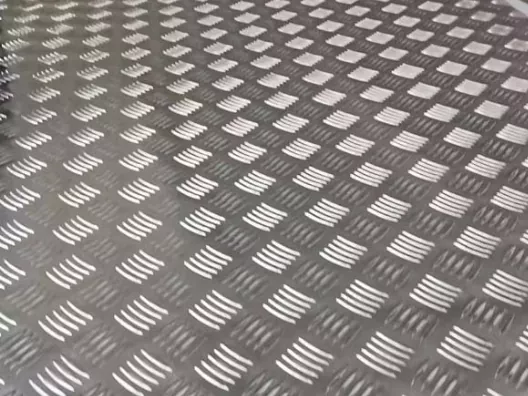
Aluminum Checkered Plate
Aluminum Checkered Plate from Sanhe Steel, a professional China supplier with over 15 years of industry experience, delivers versatile anti-slip aluminum solutions across 1060, 3003, and 5052 alloy grades with seven pattern styles including five-rib, diamond, and spherical designs. Featuring excellent corrosion resistance, lightweight strength, and decorative appeal, our ISO-certified plates serve construction flooring, marine decks, industrial platforms, and decorative packaging with reliable, consistent quality.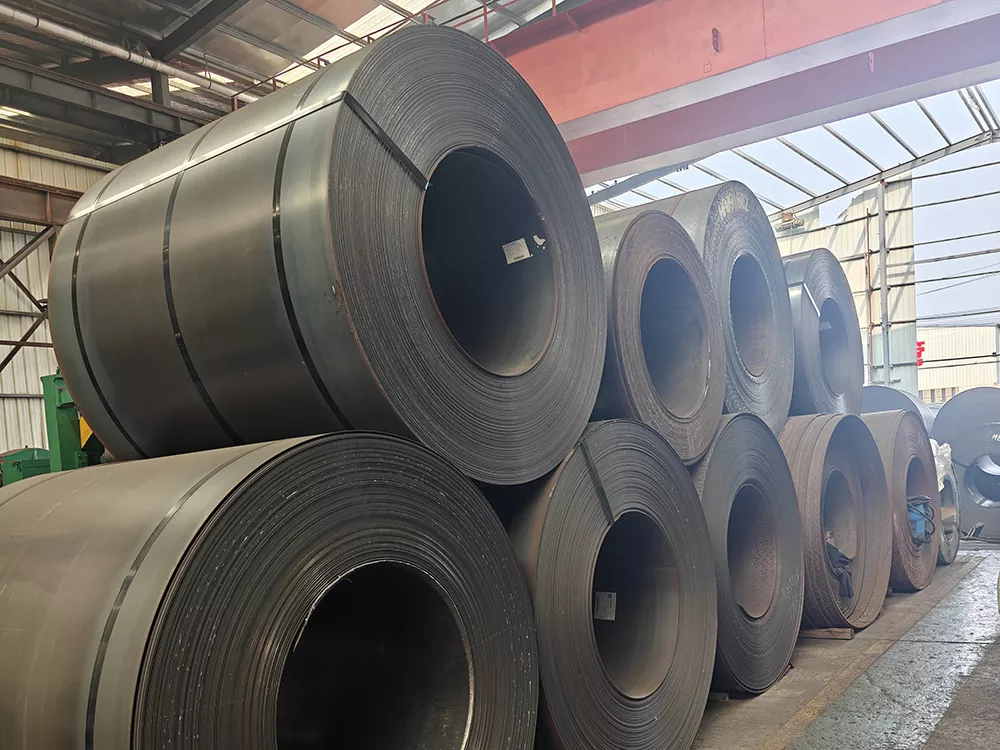
Hot Rolled Coil
Hot Rolled Coil is produced through continuous high-temperature rolling above the steel's recrystallization temperature, featuring excellent ductility and reliable weldability across ASTM, DIN, JIS, EN, and GB/T international standards including grades Q235B, Q355B, SS400, S235JR, A36, and SAE1006/1008. Available in thickness from 1.2mm to 25.4mm and width from 600mm to 2000mm with standard inner diameters of 508mm, 610mm, and 760mm at 15 to 30 tons per coil, it comes in original black mill scale, pickled, and pickled & oiled surface finishes. This versatile material format supports precision slitting and cut-to-length processing, serving as essential feedstock for pipe manufacturing, cold rolling, automotive structures, construction, and general industrial fabrication with consistent mechanical properties throughout the full coil length.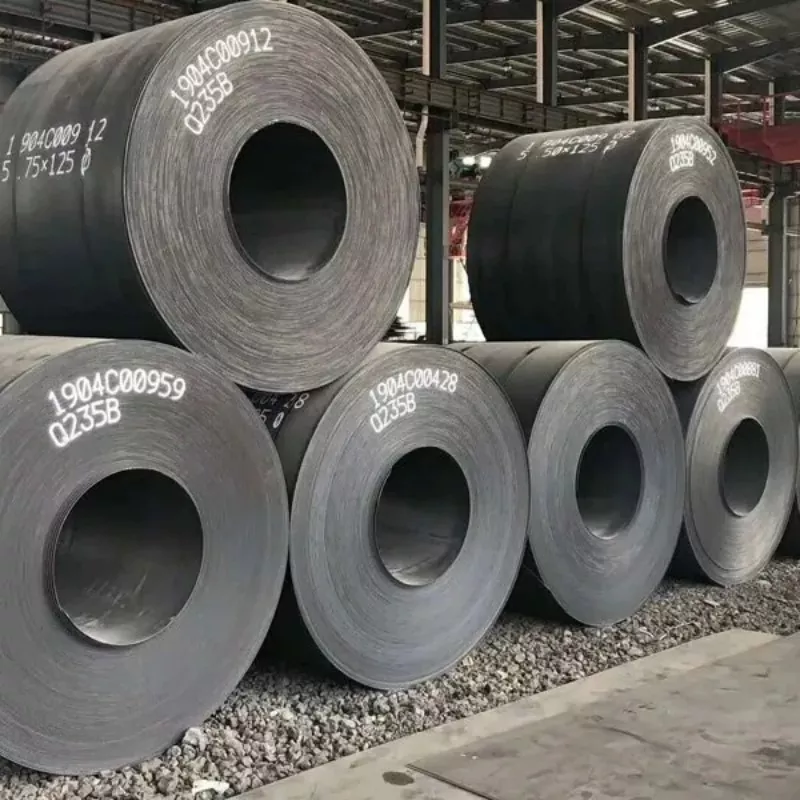
6mm Black Hot Rolled Plate
Sanhe Steel, a professional steel processing factory in Qingdao China, supplies standard 6mm black hot rolled plate with full CNC cutting and shearing customization service. Our hot rolled steel sheet owns stable flatness, precise dimensional tolerance and great coating adaptability for galvanizing treatment. The plates fit construction, machinery, fire protection and solar bracket projects, all finished goods pass full pre-shipment inspection before delivery.
Galvanized Floor Diamond Plate
Sanhe Steel is a trusted Chinese manufacturer and supplier, operating its own processing factory with complete rolling. Its galvanized floor diamond plate from Sanhe Steel combines the raised anti-slip pattern of a checker plate with the corrosion protection of a galvanized zinc coating. The raised surface provides additional traction for people and equipment, while the zinc coating helps protect the underlying steel from moisture and atmospheric corrosion.
- Related Blog
- Reviews