Shipbuilding Hot Rolled Carbon Steel Checkered Plate
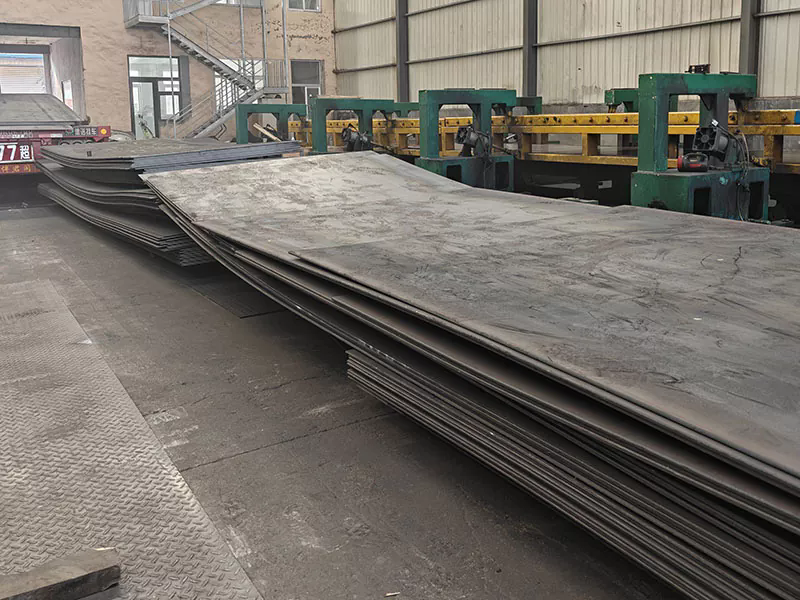
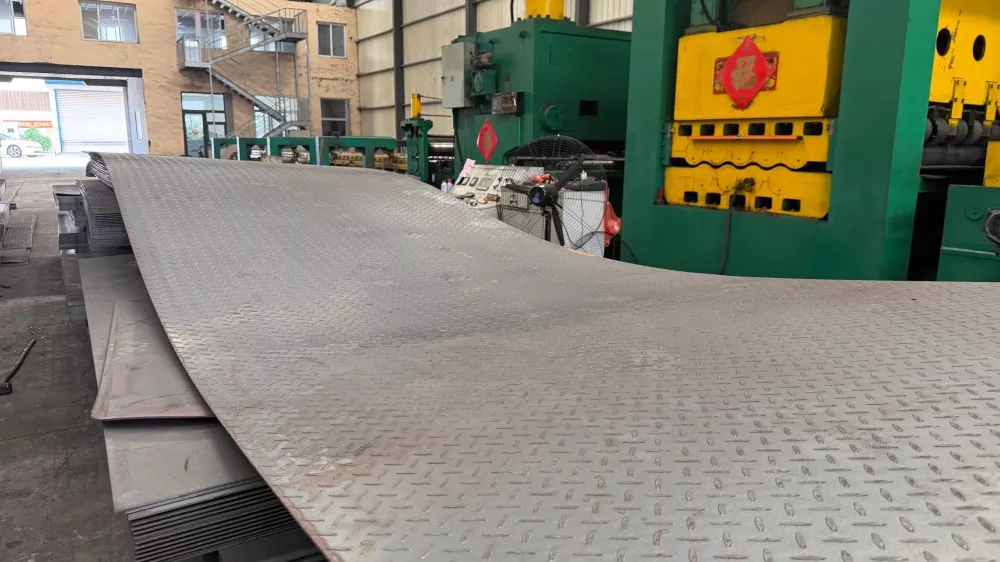
Sanhe Steel, a China manufacturer, produces shipbuilding hot rolled carbon steel checkered plate with the anti-slip pattern rolled into hull structural grades for decks, engine room floors and stairways. Thickness runs from 2.5 mm to 16 mm at 1.0-1.5 mm pattern height. Send the grade and class rule for a quotation.
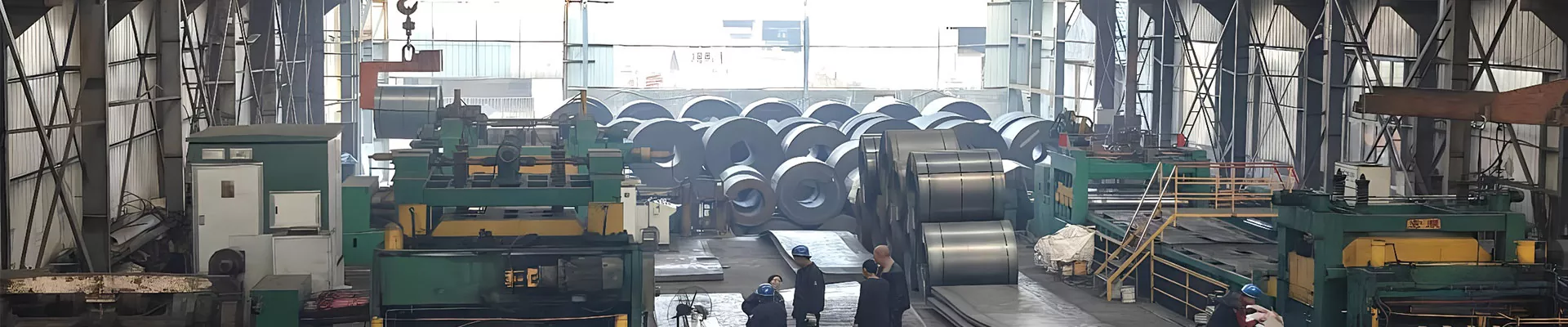
Sanhe Steel is a shipbuilding hot rolled carbon steel checkered plate manufacturer and supplier in China, supplying deck and engine room plate against class rules. Base grade, pattern and thickness are quoted together. Pattern height and slip resistance are checked on the finished plate, and the figures are recorded rather than assumed from the pattern name. Cutting, oiling for transit, priming and galvanizing are handled at the works, and documentation is prepared before loading. Mill test certificates ship with every batch, and class society certification with third-party inspection can be arranged. MOQ, lead time and price list follow the grade: stock ships in 7-15 days from Qingdao, certified orders in 15-35 days.
What This Product Is and Where It Goes On Board
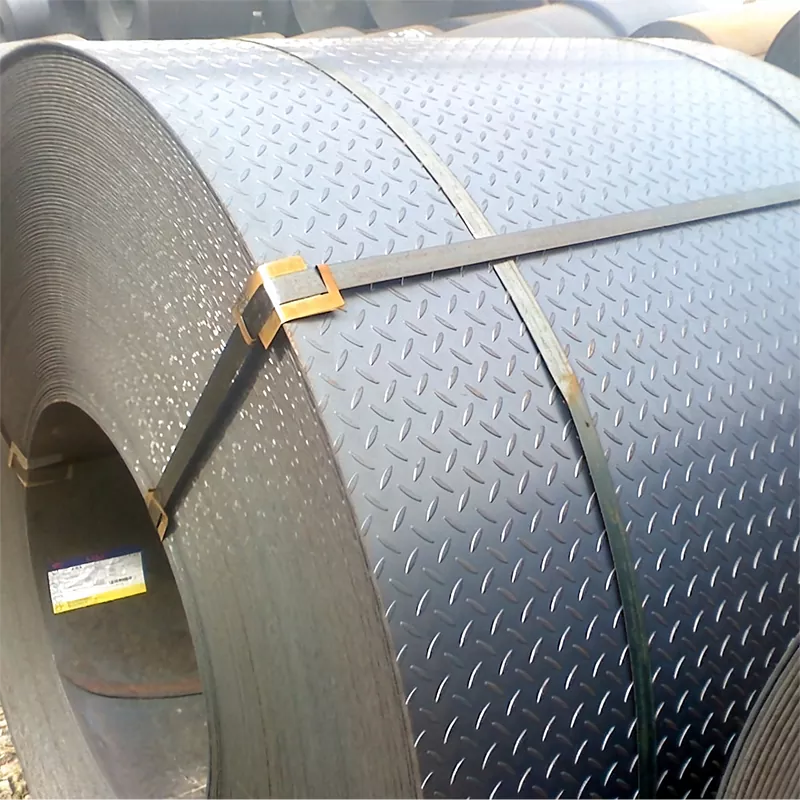
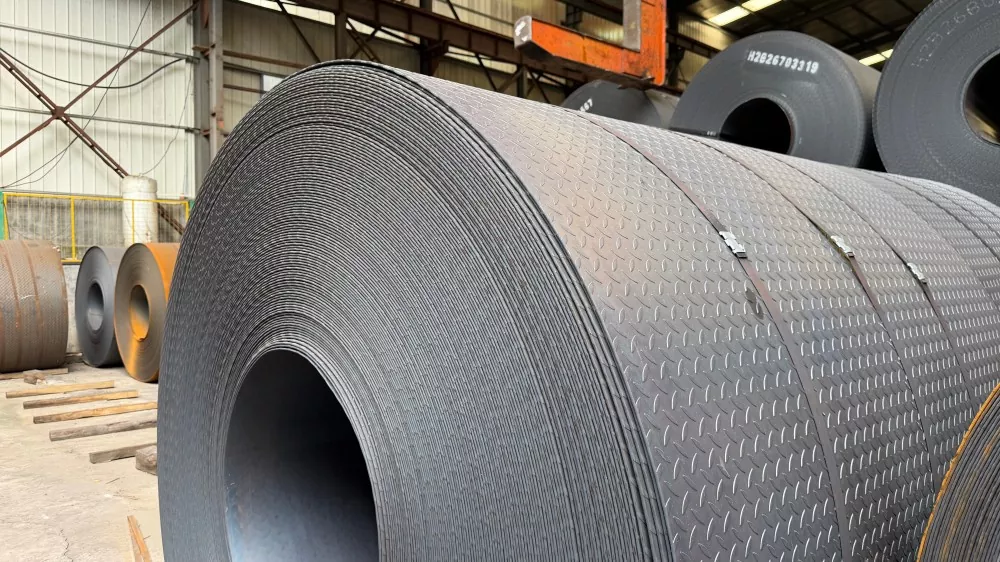
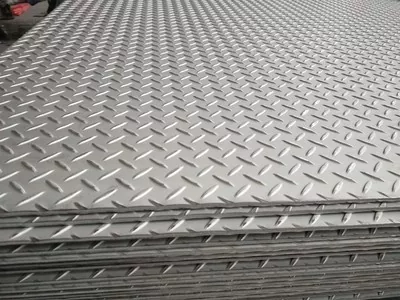
Shipbuilding hot rolled carbon steel checkered plate is anti-slip plate made from hull structural steel rather than ordinary commercial plate. The base plate is produced to a shipbuilding grade, and the pattern is rolled into the surface in the same pass sequence, so the plate does two jobs: it is structural deck material, and it is the walking surface.
The distinction matters at acceptance. A yard buying checkered plate for a weather deck needs the base plate to hold a hull grade with a class society certificate, not simply a pattern plate of the right thickness. When the plate is used for engine room floor plates or stair treads the grade requirement may be lower, but the pattern requirement is stricter, because those surfaces are walked on in oily and wet conditions.
Two numbers describe the anti-slip side of the specification: pattern height, which controls how far the raised bars stand above the plate, and the friction coefficient measured on the finished surface. Both are quoted per order and confirmed on a sample.
Grade and Pattern Combinations
|
Base grade |
Pattern options |
Thickness |
Typical location |
|
Grade A / B (hull structural) |
Teardrop, diamond, 5-bar |
2.5 mm - 16 mm |
Deck plating, walkways, stair treads |
|
Grade D / E (low temperature) |
Teardrop, diamond, 5-bar |
2.5 mm - 16 mm |
Weather decks on cold-route vessels |
|
AH32 / AH36 (high strength) |
Diamond, 5-bar |
3 mm - 16 mm |
Deck areas under high load |
|
DH32 / DH36 (high strength) |
Diamond, 5-bar |
3 mm - 16 mm |
Decks and platforms in cold service |
Grade and pattern are ordered together. A yard that mixes a high strength base with a light pattern, or a commercial plate with a hull grade label, will find the mismatch at inspection rather than on the drawing.
Slip Resistance in Wet and Oily Service
Deck and engine room surfaces are not dry floors. Fuel, lubricating oil, wash-down water and sea spray all end up on the plate, and the gripe that matters is the behaviour of the pattern when it is covered in a film rather than when it is clean.
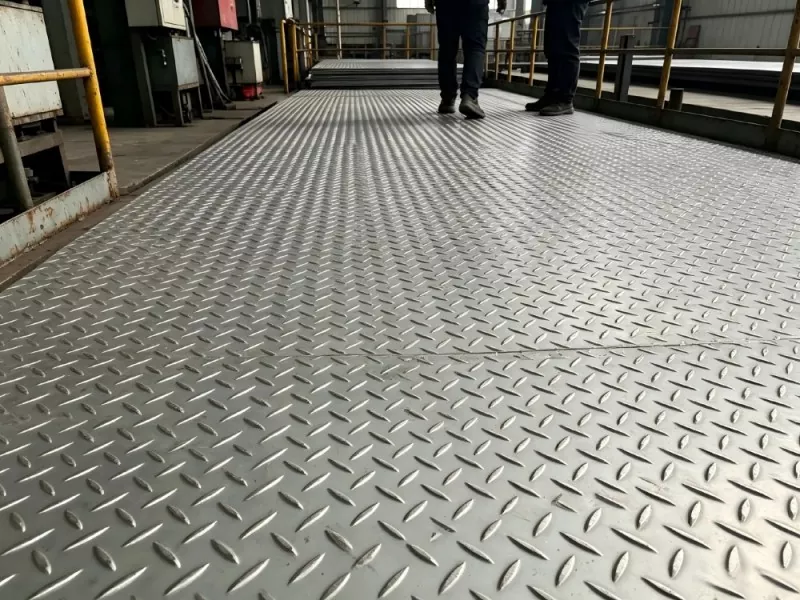
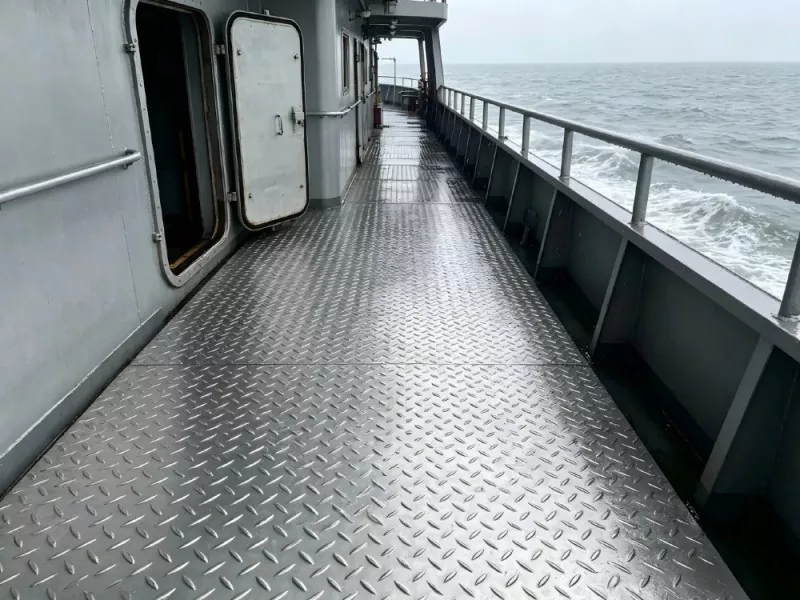
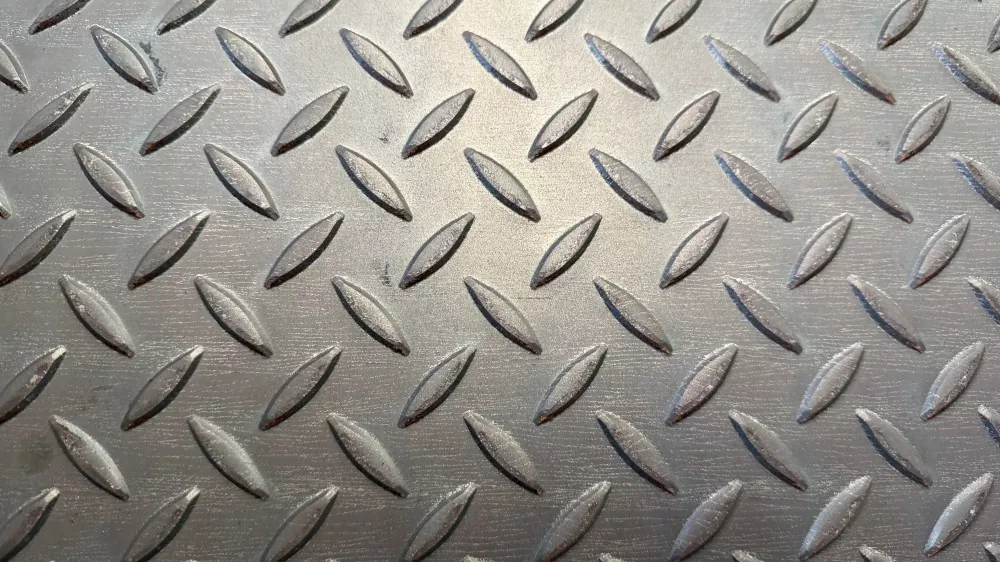
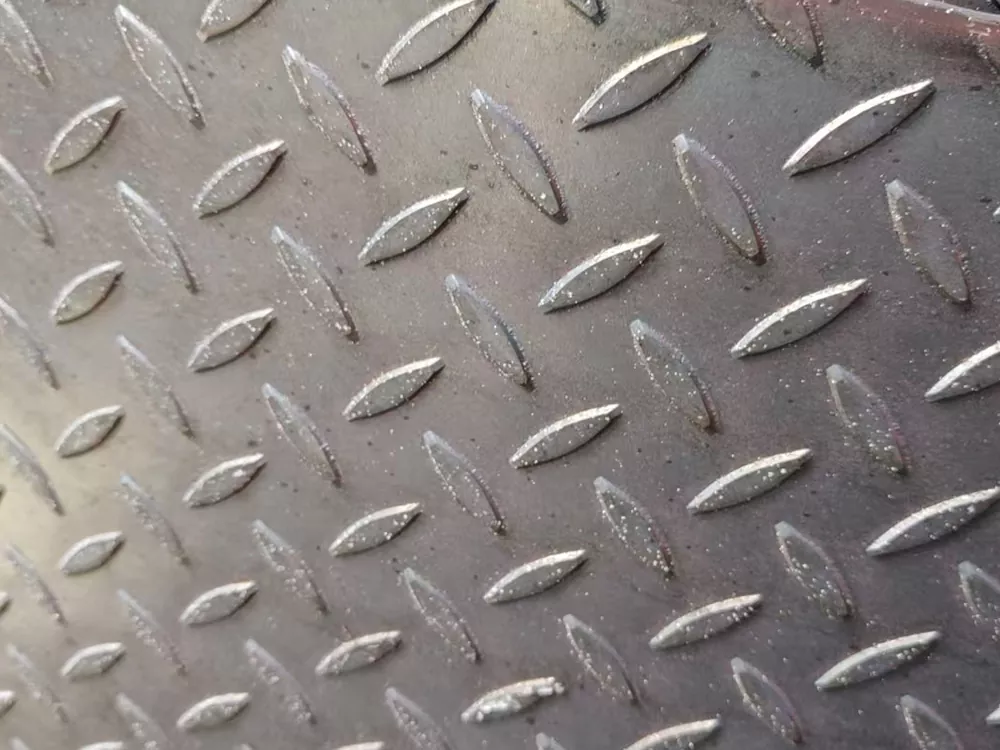
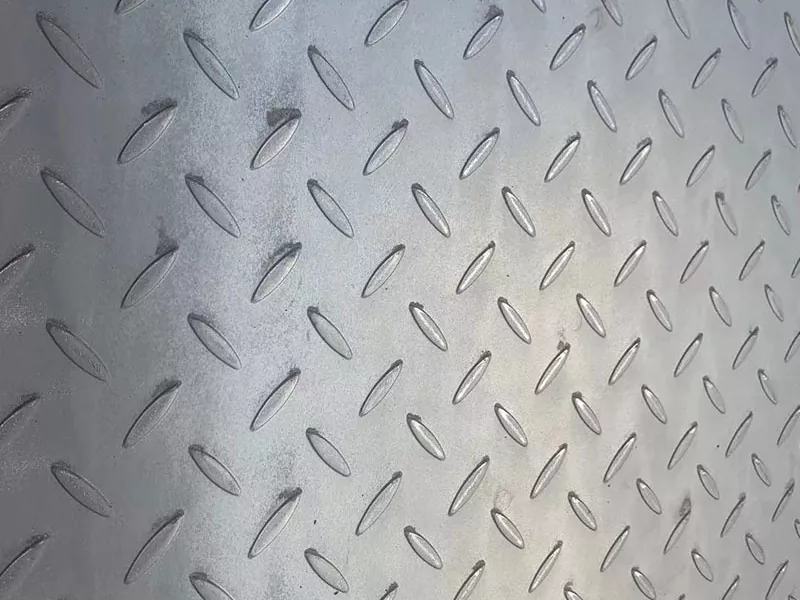
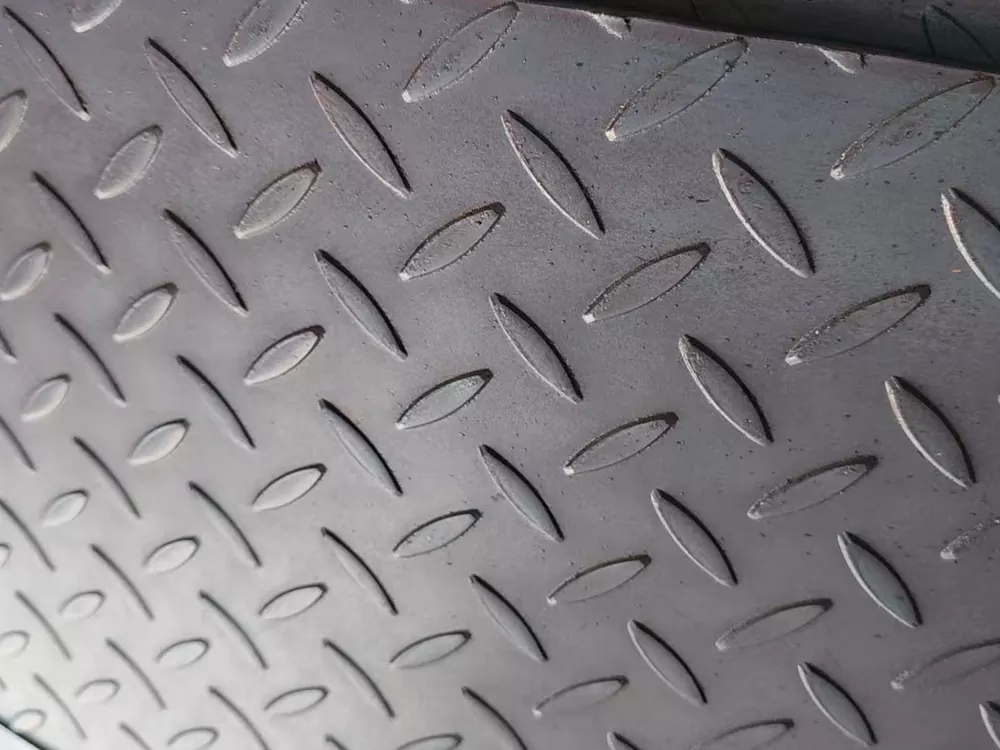
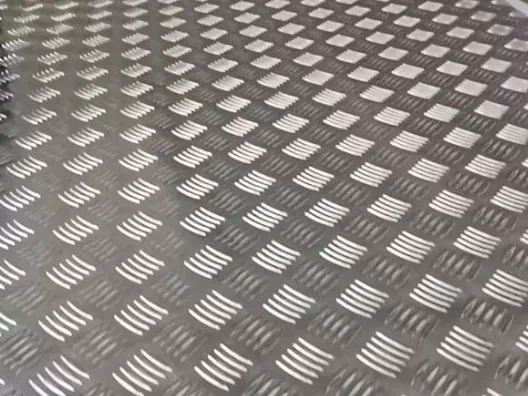
The pattern families behave differently. Teardrop gives directional grip and is commonly used on stair treads and walkways. Diamond grips in two directions and is used where loads move across the surface. The 5-bar (willow) pattern, with five raised bars per group, is the usual choice for the wettest areas because water drains between the bar groups instead of being held in a closed pocket.
On the finished surface the pattern height is held to 1.0-1.5 mm and the friction coefficient is quoted for the pattern ordered. Where a yard requires a specific value, it is measured and recorded on the inspection sheet rather than assumed from the pattern name.
Specifications
|
Item |
Range |
|
Base grades |
A, B, D, E, AH32, AH36, DH32, DH36 |
|
Thickness |
2.5 mm - 16 mm |
|
Pattern |
Teardrop, diamond, 5-bar |
|
Pattern height |
1.0 mm - 1.5 mm |
|
Slip resistance |
Quoted per pattern |
|
Width |
1,000 / 1,250 / 1,500 / 1,800 mm |
|
Length |
2,000 mm - 12,000 mm |
|
Surface |
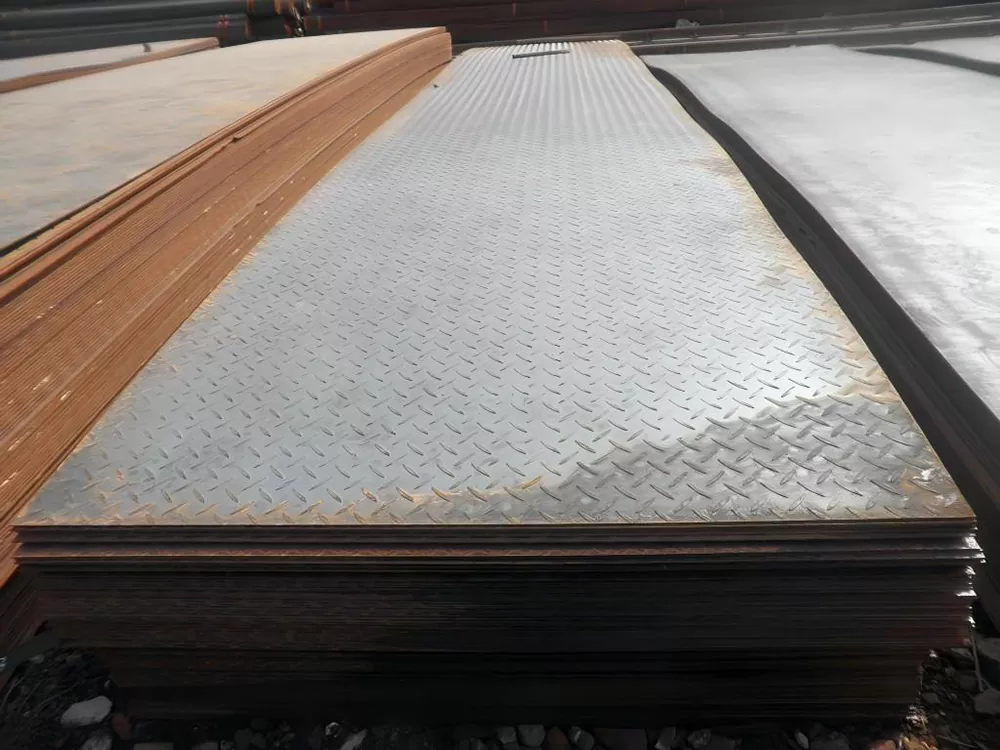
Black hot rolled, oiled, painted, hot-dip galvanized |
|
Documents |
MTC per batch, class society certificates as required |
Applications
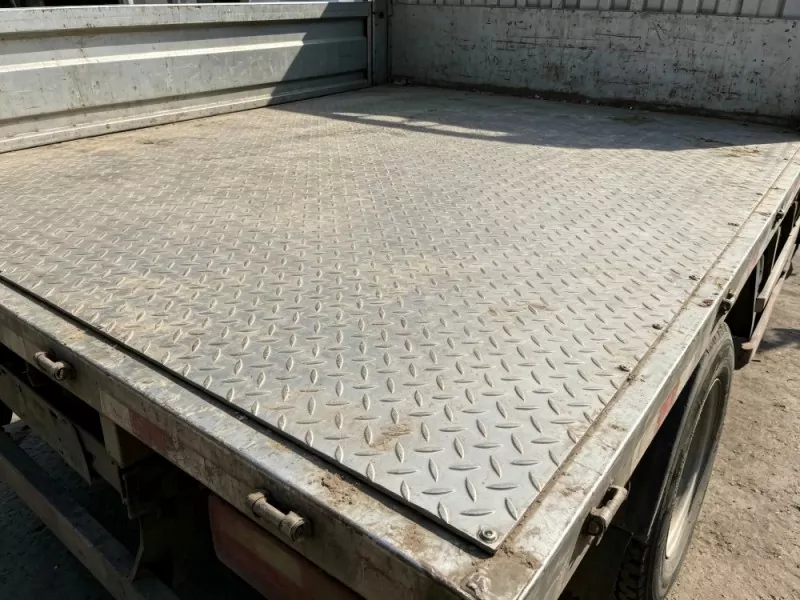
· Weather deck plating and deck walkways, including helicopter landing area borders where specified. Shipbuilding hot rolled carbon steel checkered plate is ordered by location on the vessel, because deck and engine room plate carry different grade requirements.
· Engine room floor plates, pump room floors and machinery space walkways.
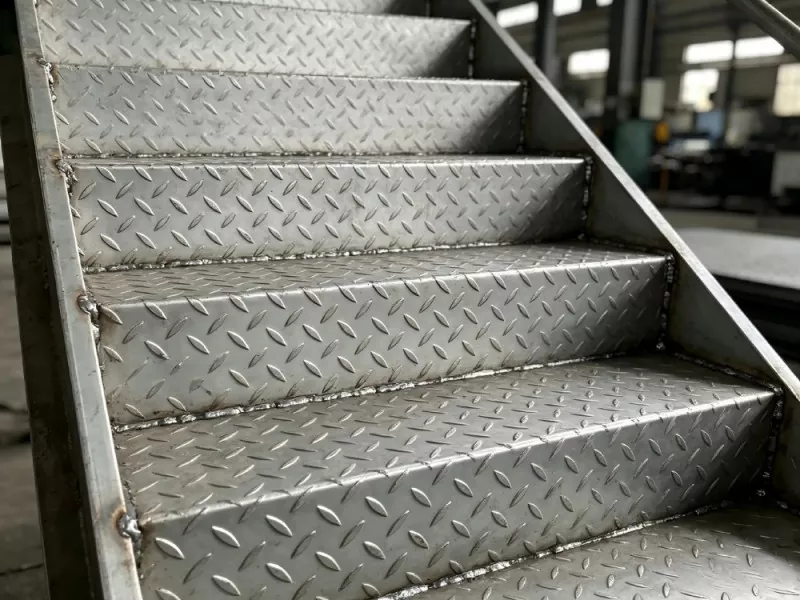
· Stair treads, ladder platforms and access landings in wet and oily zones.
· Catwalks, gangways and inspection platforms around tanks and cofferdams.
· Hatch covers, tank tops and cargo hold flooring where grip and durability are both required.
Certification for Class Society Projects
For vessels built or classed under a classification society, the base plate grade is accepted against that society's rule, and the certificates are issued as part of the consignment. the company supplies the mill test certificate for each batch and arranges class society certification and third-party inspection where the contract calls for it. Every shipbuilding hot rolled carbon steel checkered plate batch is certified against the class rule the vessel is built to.
Documentation is prepared before loading rather than after: mill certificates, inspection reports where ordered, packing lists and customs files travel with the goods. That is what allows the plate to be accepted at the yard instead of being held in quarantine awaiting paperwork.
Customer feedback
“We’ve used your plates on our open pit mine frames for almost 10 months, and they are holding up extremely well with zero cracking issues.
We were concerned at the beginning, as plates from our previous supplier would develop tiny cracks after just a few months. Those frequent failures forced us to stop production repeatedly for replacements.
Your product has solved this pain point perfectly.”
— Jacob, Mining Client

Surface Treatment and Maintenance
Plate is supplied black hot rolled, and oiled for protection during sea transport. Where the plate will be exposed before final coating, hot-dip galvanizing is available, and shop priming can be applied to give the coating system a prepared surface.
Maintenance on board is limited by the pattern itself. The valleys between the raised bars collect scale and cargo residue, so decks are washed and brushed rather than swept, and the pattern is inspected for flattened areas where trolley wheels have polished the grip away. When the pattern height falls below about half its original value in a traffic lane, that section is replaced rather than coated over.
Get a Quote Now
To quote shipbuilding checkered plate, send the base grade and impact class, the classification society, the pattern, the thickness and cut sizes, whether the surface should be black, oiled, primed or galvanized, and the destination port.
Contact: Qingdao Sanhe Steel Co., Ltd., No. 1188, Lanzhou West Road, Jiaozhou City, Shandong, China
Email: sales08@sanhesteels.com
Tel: +86-13376423291.
Shipbuilding hot rolled carbon steel checkered plate is quoted with the base grade, pattern and class requirement stated together.
FAQ
Q1: Can you supply checkered plate in a hull structural grade?
A: Yes. Plate is produced to grades A, B, D, E and the AH / DH high strength series, with the class society certification arranged as the contract requires.
Q2: What thickness is used for ship deck plate?
A: Deck and engine room floor plate is commonly ordered between 2.5 mm and 16 mm. The structural design decides the thickness, and the pattern is rolled into that thickness rather than selected separately.
Q3: Which pattern is best for oily engine room floors?
A: The 5-bar pattern is usually chosen, because water and oil drain between the bar groups. Teardrop and diamond remain common on stairs and walkways.
Q4: Is the shipbuilding hot rolled carbon steel checkered plate hot-dip galvanized?
A: Galvanizing is available on request. Standard supply is black hot rolled with oil protection for transit, or shop primed where a coating system follows.
Q5: What documents are supplied?
A: A mill test certificate for each batch, class society certificates where required, third-party inspection reports if ordered, and the export packing list and customs files.
Send Inquiry
Contact Info
-
Address
No. 1188, Lanzhou West Road, Jiaozhou City, Shandong Province, China
-
Tel
-
Email
Welcome to our website! For inquiries about our products or pricelist, please leave your email to us and we will be in touch within 24 hours.
News Recommendations