
China Q345 Structural Steel Plate With Excellent Toughness Manufacturer, Supplier, Factory
Unlike generic Q345 steel plates manufactured merely to meet minimum strength standards, Q345 Structural Steel Plate With Excellent Toughness is produced with targeted metallurgical control centered on toughness consistency. Our technical team works closely with qualified steel mills to regulate trace alloy elements and limit harmful impurities, avoiding the unstable impact performance that troubles ordinary structural steel. Suitable for projects exposed to cold climates, vibration and repeated impact, this material lowers hidden structural risks and reduces long-term maintenance expenditure for global engineering buyers.
Core Benefits Derived From Superior Toughness
Toughness defines how steel withstands sudden impact and prevents crack expansion, which directly determines structural reliability under harsh operating environments. Q345 Structural Steel Plate With Excellent Toughness gains its performance advantages through precise smelting and controlled rolling procedures.
1. Suppression of crack propagation: Fine and uniform grain structure disperses stress concentration points. Even if local stress overload occurs, cracks develop slowly instead of spreading rapidly to cause overall structural failure.
2. Reliable low-temperature performance: Strict control of sulfur and phosphorus reduces cold brittleness tendency. Graded variants maintain impact property when ambient temperature drops, making them viable for outdoor facilities in seasonal freezing zones.
3. Improved anti-fatigue capacity: Structures enduring continuous vibration and alternating loads face fewer fatigue cracks. This advantage makes the plate ideal for machinery bases, transport infrastructure and dynamic load bearing components.
4. Stable performance after fabrication: Proper toughness retention is maintained after cutting, bending and welding, avoiding localized embrittlement along processing edges that often appears on low-quality regular steel plates.
Grade Selection Guide Based On Toughness Requirements
Each grade of Q345 Structural Steel Plate is defined by specified impact test temperatures, helping purchasers match materials to actual project environmental conditions.
Q345B: Impact tested at 20°C. Recommended for indoor frameworks and outdoor structures without prolonged low-temperature exposure.
Q345C: Impact tested at 0°C. Suitable for regions experiencing regular winter frost and structures exposed to open-air temperature variation.
Q345D: Impact tested at -20°C. Preferred for cold-area engineering, mobile equipment and facilities operating year-round outdoors.
Q345E: Impact tested at -40°C. Designed for extreme low-temperature environments where anti-brittle fracture requirements reach the highest standard.
Buyers should avoid downgrading material grades to cut costs. Improper grade selection will lead to potential safety hazards once the material encounters temperatures below its design threshold.
Performance Comparison: High Toughness Q345 VS Conventional Q345 Plate
The table below clearly displays key distinctions to assist designers and procurement engineers in making informed material decisions.
| Comparison Item | Q345 Structural Steel Plate With Excellent Toughness | Standard Ordinary Q345 Steel Plate |
| Impurity Element Restriction | Tightened S and P limitation, low inclusion content | Complies with basic standard threshold, higher impurity tolerance |
| Low Temperature Impact Stability | Sustained toughness from normal temperature down to -40°C | Toughness declines obviously below zero centigrade |
| Consistency Between Batches | Continuous metallurgical monitoring, small performance deviation | Noticeable property fluctuation among different production batches |
| Resistance To Dynamic Load | Strong anti-fatigue performance under recurring vibration and impact | Vulnerable to fatigue crack after long-term alternating stress |
| Application Risk Level | Suitable for key load-bearing and safety-related components | Mainly for static load structures with low risk demand |
| Third-party Impact Test Pass Rate | Near full compliance for required low-temperature impact trials | Certain batches may fail strict low-temperature impact inspection |
For core structural components where safety cannot be compromised, investing in steel with excellent toughness effectively avoids expensive rework and accident risks during the whole project lifecycle.
Critical Procurement & Construction Precautions
Even premium Q345 Structural Steel Plate can lose expected performance without proper selection, storage and processing. The following guidelines serve as practical references for engineering teams.
1. Clarify operating temperature range before ordering: Confirm the minimum environmental temperature of the project and select corresponding grade. Never use Q345A for outdoor structures requiring impact resistance.
2. Match welding consumables reasonably: Choose welding electrodes and wires developed for low alloy structural steel. Preheating should be considered when welding thick plates under cold weather to reduce welding residual stress.
3. Scientific storage management: Stack plates on support brackets in dry, ventilated spaces. Heavy surface rust will create stress concentration points and negatively affect local toughness during service.
4. Control thermal cutting quality: Excessively high cutting speed and rough edge processing may produce hardening zones. Edge finishing is recommended for parts undertaking heavy load and impact.
5. Reserve reasonable safety margin: Material toughness improves structural reliability but cannot support persistent overload. Design calculations must follow local construction specifications.
Complete After-sales Support System
Sanhe Steel delivers full-cycle service for global buyers purchasing Q345 Structural Steel Plate With Excellent Toughness, solving material-related troubles throughout order execution and project construction.
1. Timely technical consultation: Our engineering team provides guidance on grade matching, processing suggestions and construction problems via online communication. Technical consultation remains available after goods shipment.
2. Quality commitment for factory defects: If delivered plates fail chemical composition test or impact toughness inspection due to factory production issues, we provide solutions including replacement goods or compensation according to contract terms.
3. Document supplement service: Lost or newly required certification papers such as MTC can be reissued to support tender submission and customs clearance procedures.
4. Custom processing coordination: We cooperate with qualified processing workshops to carry out cutting, leveling and surface treatment. All processing plans can be reviewed to prevent damage to material inherent toughness.
5. Communication support for bulk project orders: For large infrastructure and manufacturing projects, we maintain continuous communication to adjust delivery schedules and solve material supply challenges during project advancement.
Quality Control & Qualification Documents
Every batch of Q345 Structural Steel Plate undergoes series testing before leaving the factory to guarantee stable toughness performance.
1. Routine lab testing: Chemical composition analysis, tensile test and Charpy impact test are conducted to verify compliance with standard requirements.
2. Supporting certification: ISO 9001 quality system certification covers production management. Mill test certificates will be provided together with shipments.
3. Third-party inspection acceptance: We support SGS, BV and other recognized inspection organizations to conduct on-site sampling and testing before loading containers.
Typical Application Scenarios
Benefiting from outstanding toughness and low-temperature crack resistance, this steel plate is widely adopted in multiple high-demand sectors.
1. Bridge and municipal infrastructure: Auxiliary load-bearing members, bridge deck components and outdoor municipal steel structures facing seasonal temperature shifts.
2. Heavy machinery manufacturing: Equipment support frames, crane components and machinery housings subjected to frequent impact and vibration.
3. Cold-region construction projects: Factory steel frames, platform structures and support components built in frigid climate zones.
4. Energy industry facilities: Support structures for power equipment, pipeline brackets and outdoor station engineering components.
FAQ
Q1: What makes Q345 Structural Steel Plate With Excellent Toughness different from regular Q345 plate?
A: The core difference lies in metallurgical control and low-temperature impact behavior. This product adopts stricter impurity control to reduce brittleness risk and delivers more stable toughness under low temperature and dynamic load, while ordinary plates mainly satisfy basic tensile and yield strength targets.
Q2: Does high toughness Q345 steel demand special welding technology?
A: Conventional welding processes are applicable for most thickness sizes. For ultra-thick plates or construction under extremely low ambient temperature, appropriate preheating is advised. Our team can offer targeted welding suggestions based on your plate thickness and working environment.
Q3: Can the toughness property be damaged after thermal cutting?
A: Improper high-speed cutting may form hardened edges. Edge grinding or machining can remove affected zones and restore the original material performance for load-bearing connections.
Q4: Can you arrange customized cutting according to customer drawings?
A: Yes. We support customized size cutting. Processing schemes will be evaluated to avoid operations that may impair the toughness performance of finished plates.
Q5: How to confirm material toughness before shipment?
A: Original factory test reports will be provided. You are also welcome to arrange independent third-party sampling inspection before container loading.
Related Products

Hot Products
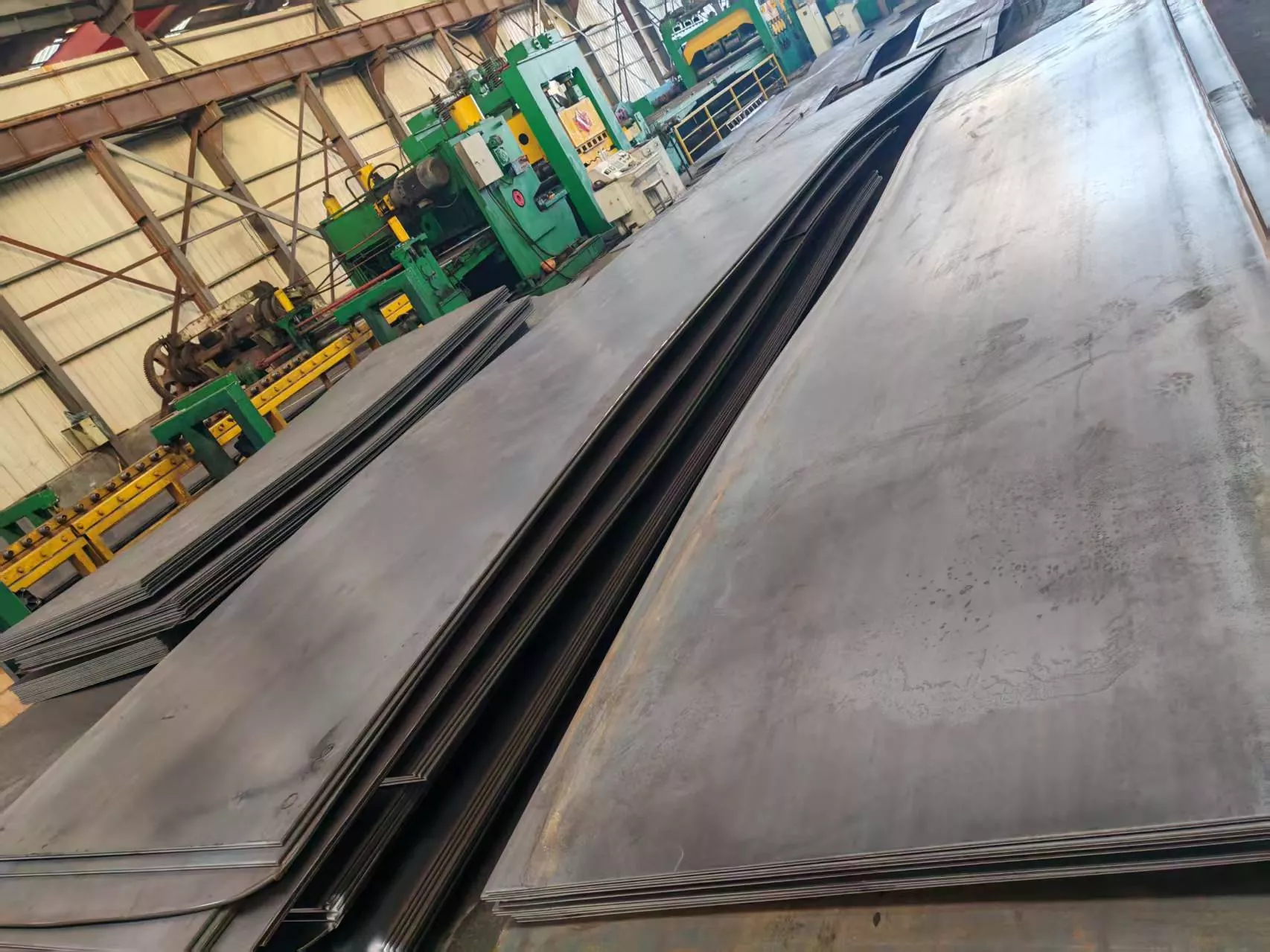
Q345 Steel Plate
Sanhe Steel is a professional manufacturer and supplier of Steel Plates. As a leading entity in the industry, we focus on operating various types of steel products such as Q345 steel plates, strictly controlling product quality and performance, and covering all grades and specifications.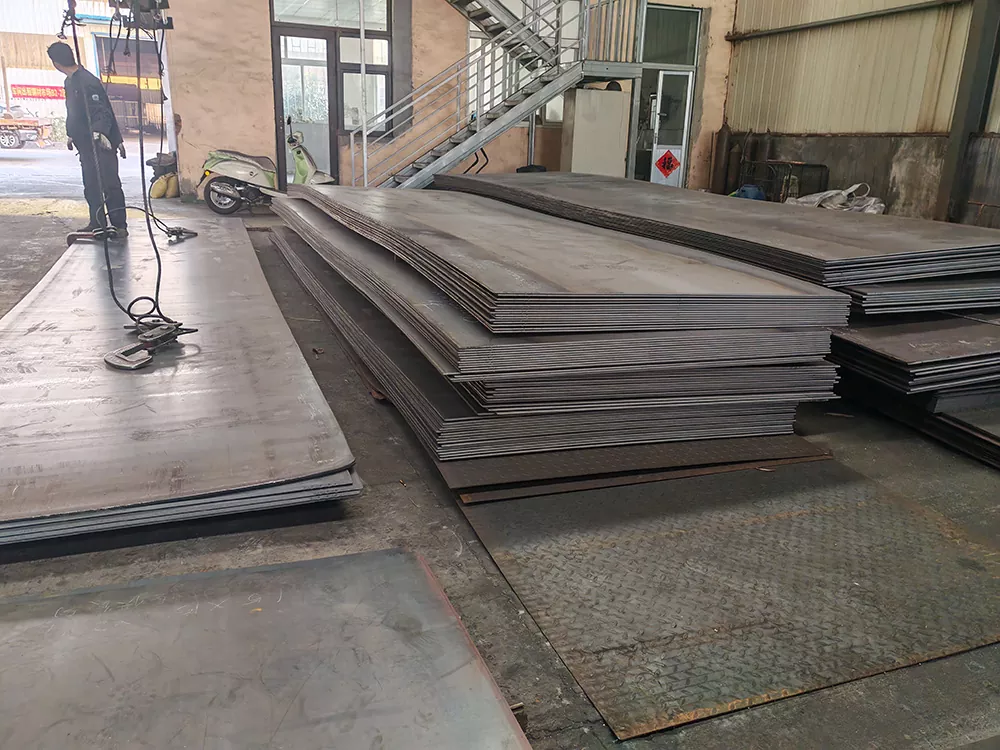
Hot Rolled Steel Plate 6mm
Hot Rolled Steel Plate 6mm supplied by Sanhe Steel is produced through standardized continuous rolling with step furnace heating, high-pressure water descaling, and computer-controlled finishing for consistent thin-gauge structural performance. Featuring 47.1kg/m² theoretical weight and good ductility suitable for forming and bending operations, this light-to-medium gauge plate balances material cost with sufficient load capacity for general fabrication needs. Backed by ISO 9001 certified quality control and our in-house leveling equipment that optimizes flatness beyond as-rolled condition, we maintain ample spot inventory with custom cutting services for construction, light machinery, ductwork, and general manufacturing buyers with fast turnaround from our Qingdao port facility.
1.5-100mm Checkered Plate for Bridge Walkway
Sanhe Steel is a direct China steel plate manufacturer and factory supplier producing durable 1.5-100mm checkered plate for bridge walkway and industrial floor systems. Sanhe Steel manufactures heavy-duty raised-pattern floor plates, offering ultra-durable checkered plate for bridge walkway systems, elevated platform decking, stair treads, and heavy machinery steps.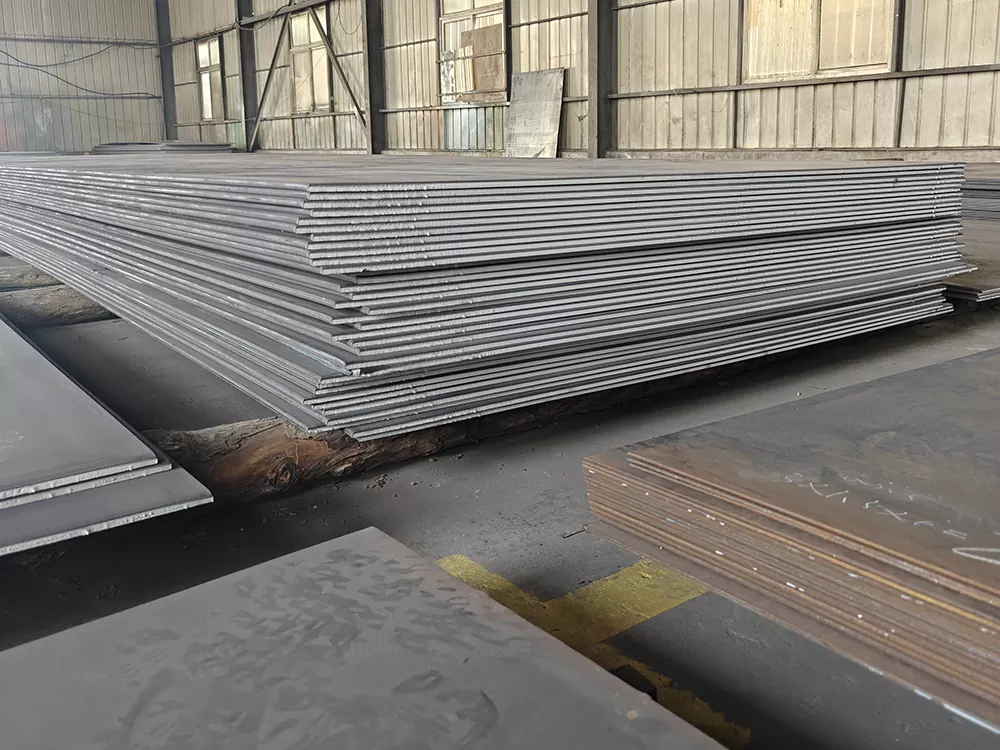
High Strength Steel Plate
In response to the procurement demand for high-quality High Strength Steel Plate, Sanhe Steel, as a leading supplier in the industry, has long provided comprehensive steel solutions to global buyers.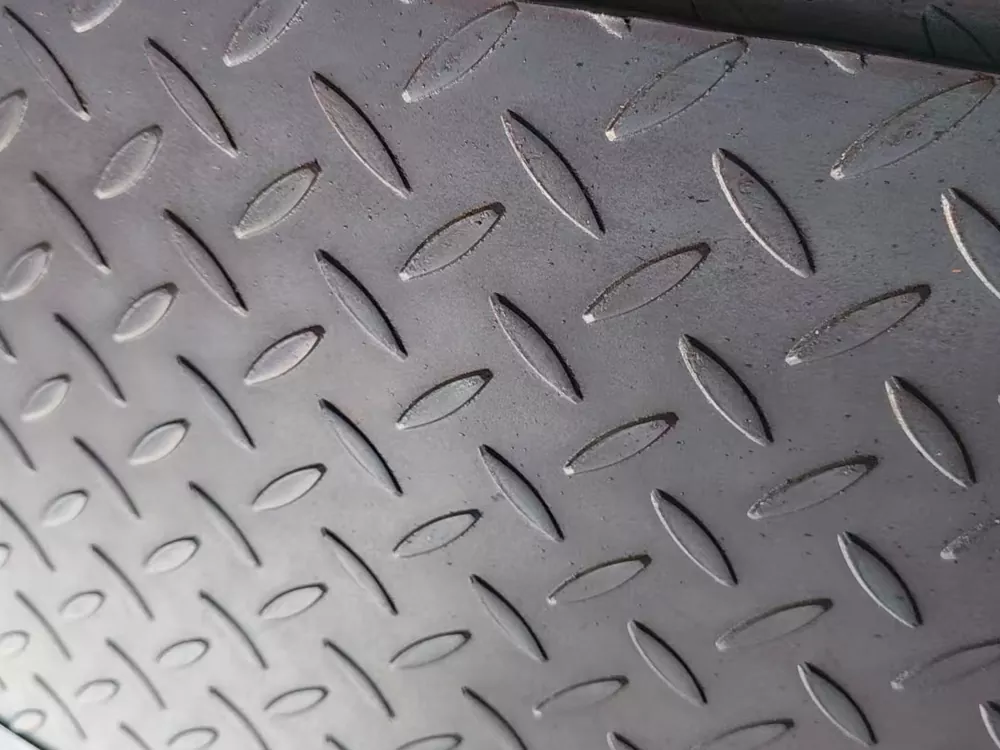
Tread Plate
Sanhe Steel is a professional HQ235B Tread Plate Manufacturer and Supplier in China that integrates steel trading and processing. As a leading physical Factory in the industry, we offer a variety of pattern types and a complete range of specifications. With high-quality anti-slip performance and comprehensive customized processing services, we meet the needs of multiple industries.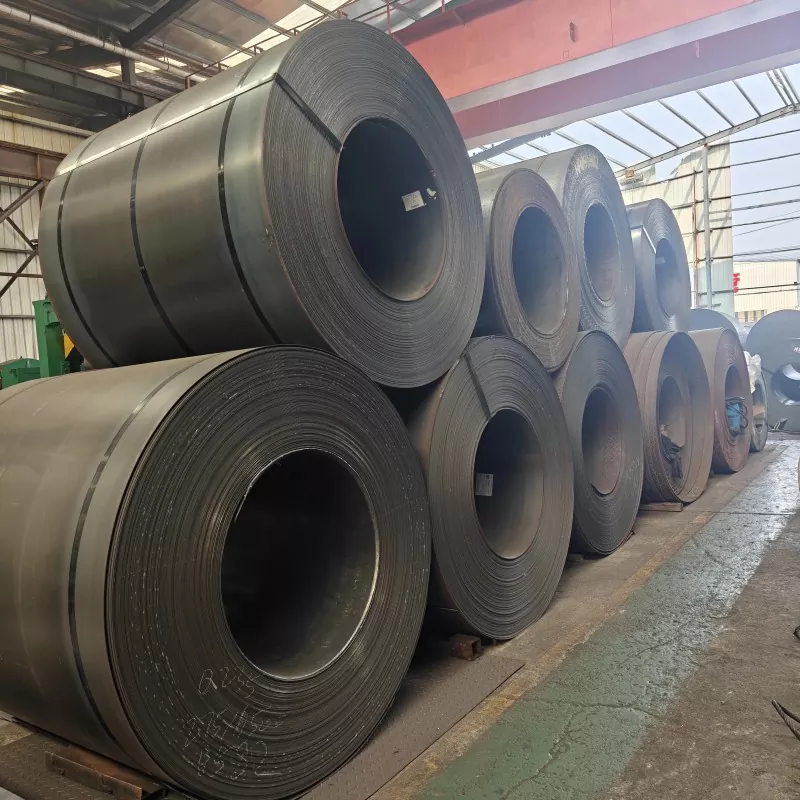
Hot Rolled Steel Plate 8mm
If you plan to purchase bulk hot rolled steel plates for structural fabrication, Sanhe Steel welcomes your inquiry, sample request and custom cutting orders. We maintain sufficient stock of Q235B & Q355B grade hot rolled steel plate 8mm. Sanhe Steel support to help wholesale buyers cut material waste and lower overall procurement costs for bridge frames, mechanical parts and pipeline support projects.
- Related Blog
- Reviews